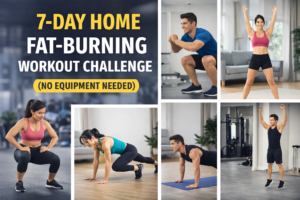
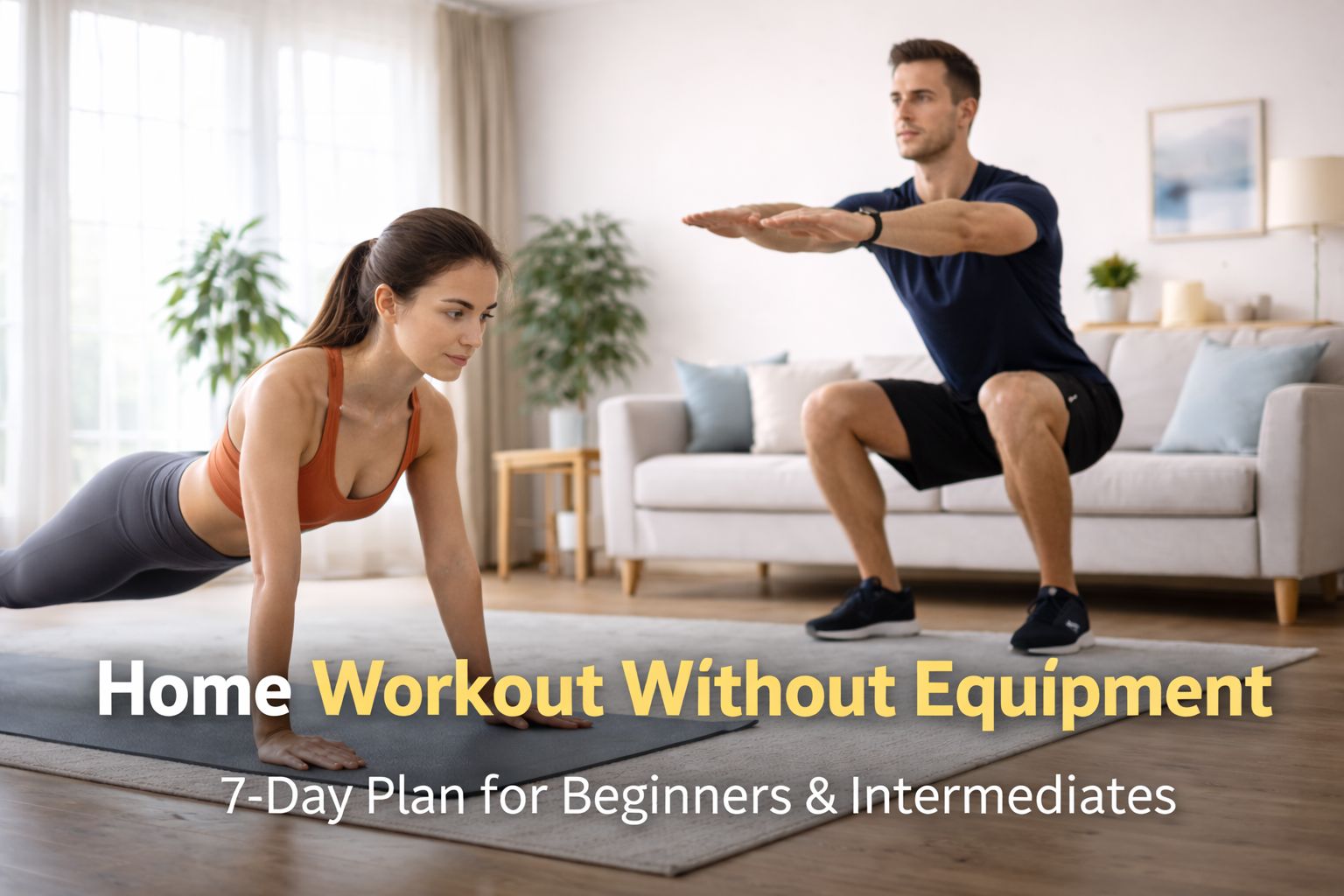
Bodyweight workouts (no equipment needed) can be incredibly effective. Strength training at home supports overall health, mood, and function without a gym membership. In fact, certified trainers note that even simple moves like squats, push-ups, and lunges can be scaled to any fitness level. You don’t need fancy gear – just your body and a little space. The convenience of at-home routines means you can exercise anytime. And research shows that regular bodyweight training can improve strength, flexibility, sleep quality, and even reduce the risk of chronic diseases.
Warm-up and cool down are crucial parts of each workout. A quick 5–10 minute warm-up (like marching in place, arm circles, or light jogging) raises blood flow and loosens muscles. Dynamic stretches (leg swings, lunges with a twist, hip circles, etc.) prepare the specific muscles you’ll use. Studies find that proper warm-ups can boost performance by up to 20% while reducing injury risk. After your main workout, do a cool-down: walk or march lightly for a few minutes, then stretch gently. Holding static stretches (each for 15–30 seconds) after exercise increases flexibility and helps muscles relax. Cooling down also aids recovery and reduces next-day soreness.
Why Choose a Home Workout Without Equipment?
A no-equipment workout is not just convenient—it’s highly effective.
Benefits:
- No gym membership required
- No expensive equipment
- Can be done anytime, anywhere
- Beginner-friendly and safe
- Improves strength, endurance, and flexibility
Bodyweight exercises like squats, push-ups, lunges, and planks train multiple muscle groups at once, making them ideal for full-body fitness at home.
How to Warm Up Before Home Workouts (5–10 Minutes)
Never skip your warm-up. It prepares your body and reduces injury risk.
Simple warm-up routine:
- March or jog in place – 2 minutes
- Arm circles & shoulder rolls – 1 minute
- Hip rotations – 1 minute
- Jumping jacks – 1–2 minutes
- Light bodyweight squats – 10 reps
The 7-Day No-Equipment Workout Plan
Below is a balanced week of at-home workouts (no equipment required). Each day includes a warm-up, a set of exercises, and a cool-down. Work at your own pace: aim for good form rather than speed, and adjust reps/sets as needed. If any exercise feels too hard, slow down, do fewer reps, or take breaks. Rest days and active recovery are built in – listen to your body and take it easy if you’re very sore or tired.
Day 1: Upper Body (Push & Press)
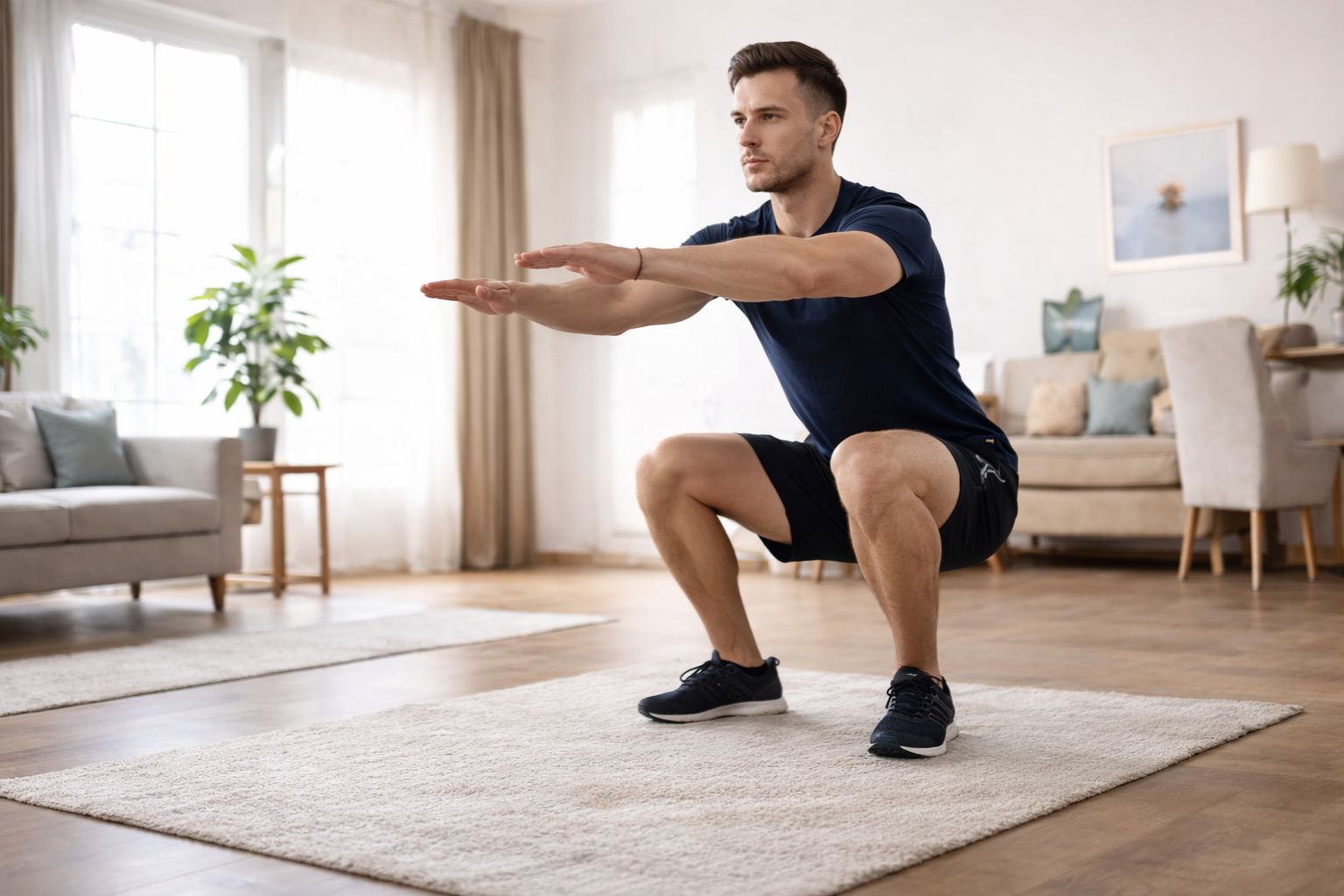
Warm-up (5–10 min): Jog in place or do jumping jacks; arm circles forward/backward; torso twists; wrist rolls. This gets shoulders, arms, and core ready.
Workout (2–3 sets of 10–15 reps each):
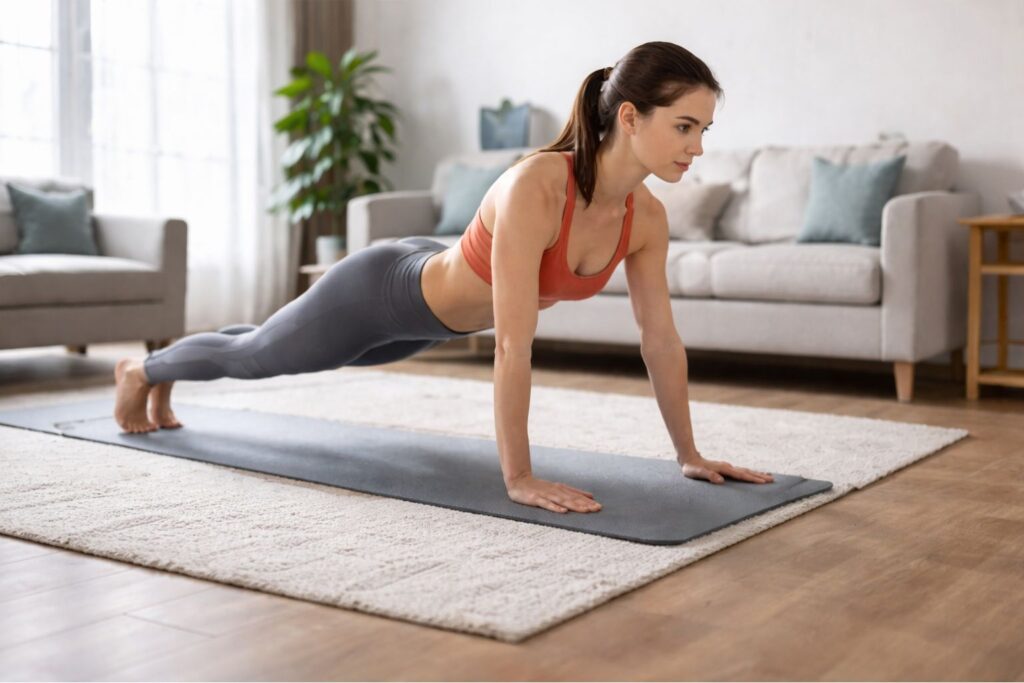
Bent-knee push-ups: (knees on floor) Focus on a straight line from head to hips. To make it harder later, switch to full push-ups on toes.
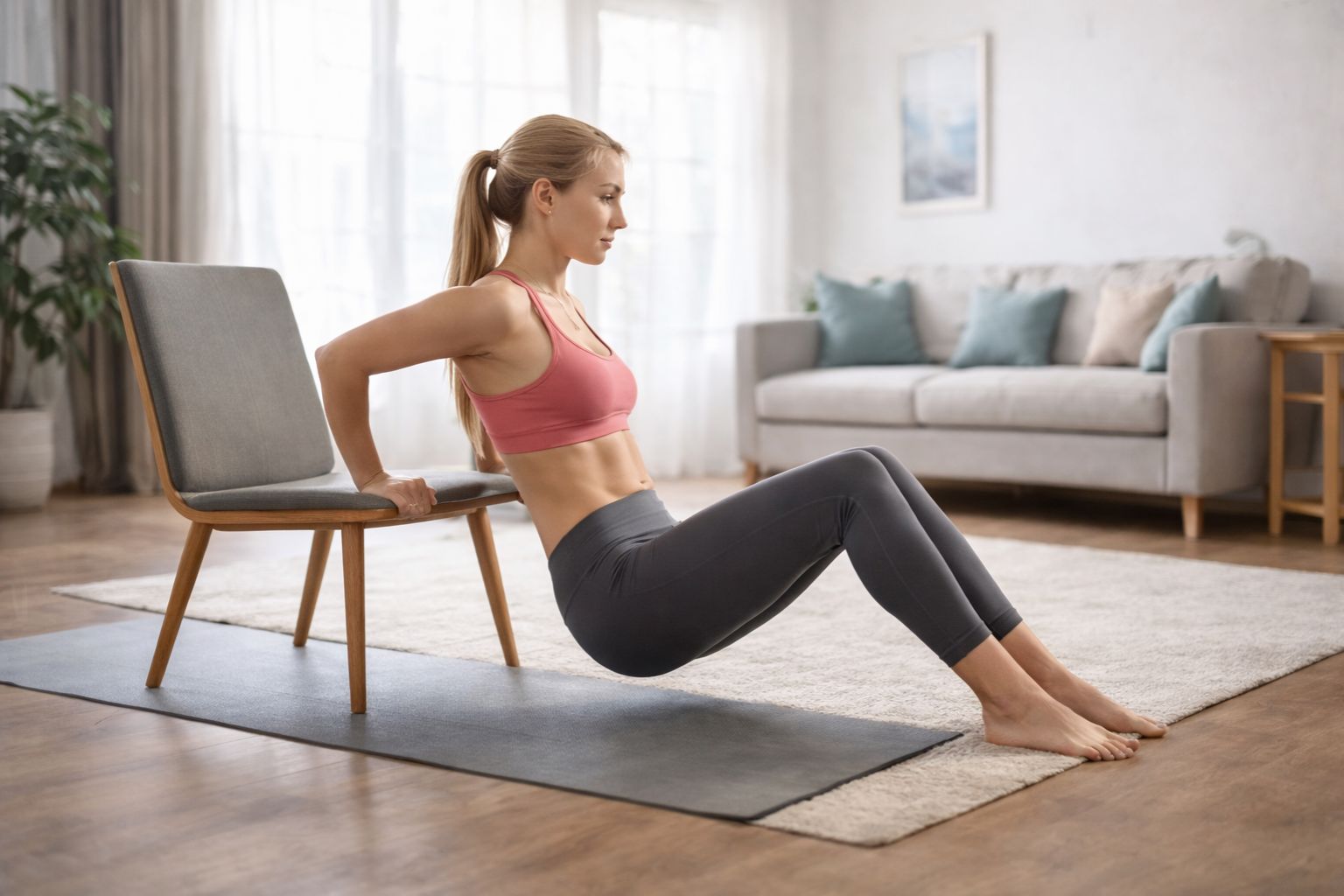
Triceps dips: Use a stable chair or couch edge. Bend your elbows straight back to work the backs of your arms.
Wall shoulder presses: Stand facing a wall and “press” your hands up along it, keeping elbows tucked in. (It mimics an overhead press.)
Plank (core hold): Hold a forearm or straight-arm plank for 20–45 seconds. Keep your body in a straight line and squeeze your core.
Optional: Bicep curls using a household item (water bottle or canned food) for light weight – 10–15 reps.
Cool-down: Walk in place for 5 minutes, then stretch the muscles you worked (e.g., triceps and chest stretch by extending your arm overhead or against a wall).
Tip: Move slowly and breathe steadily. Good form beats heavy reps. Engaging your core and keeping a neutral spine will protect your back.
Day 2: Lower Body (Legs & Glutes)
Warm-up (5–10 min): Light jog on the spot or brisk walk; leg swings front-to-back (10–15 each leg); bodyweight squats (10 reps) with a hip-hinge (sit your hips back). This readies quads, hamstrings, and glutes.
Workout (2–3 sets):
Glute bridges: Lying on your back with knees bent, lift hips up and squeeze glutes – 12–15 reps.
Bodyweight squats: Stand feet hip-width apart, squat down as if sitting back in a chair. Push through heels. (Slow the lowering for more challenge.) – 12–15 reps.
Reverse lunges or step-ups: Step one leg back (knee bent, knee not touching floor) and bend both knees. Then switch sides. Do 10–15 reps per leg. Or step up onto a stair/step.
Romanian deadlifts (hip hinge): Hinge at hips, slight knee bend, lower torso while keeping back flat, then squeeze glutes to rise – 12–15 reps.
Clamshells: Lying on one side with knees bent, lift top knee while keeping feet together (works gluteus medius) – 15–20 reps per side.
Calf raises: Stand on one foot or both and raise up on tiptoes – 10–20 reps.
Cool-down: 5–10 minutes walking or gentle movement; then stretch legs (hold each stretch ~20–30 seconds) – e.g., quad stretch (pull heel to glutes), hamstring stretch (reach toward toes), calf stretch on a step.
Tip: Slow down your squat and lunge movements for extra difficulty. If available, a resistance band around the thighs can intensify glute bridges and squats. Focus on keeping your knees aligned with your toes, and don’t let your lower back over-arch.
Day 3: Active Recovery
Activity: Go for a 20–30 minute brisk walk, or try a gentle yoga/stretching routine. The goal is light movement – you should feel refreshed, not wiped out.
Try cat-cow stretches, hip openers, shoulder rolls, and easy rotations. Foam rolling or self-massage can help, too.
Why: Low-intensity activity boosts circulation to tired muscles, helping them recover. This day helps reset without strain.
Tip: Keep the pace easy. Stretching deeply (15–30 sec per stretch) can increase flexibility and stave off soreness.
Day 4: Cardio (Heart Health)
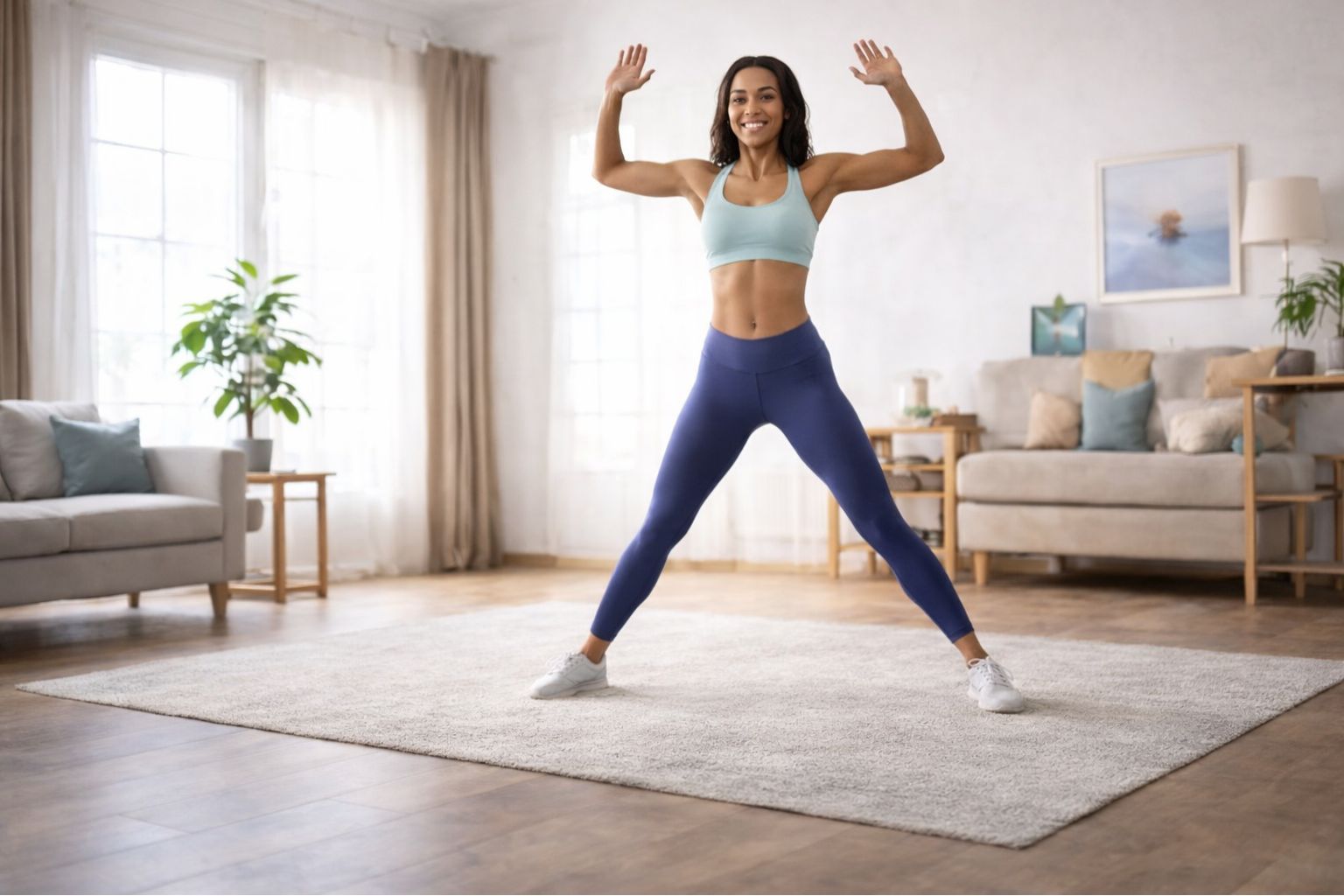
Workout: Aim for 30–60 minutes of cardio movement. Options at home include: jogging around the block, brisk walking outside, running in place, or a cardio circuit (jumping jacks, high knees, butt kicks, mountain climbers, dance). If you have stairs, run up and down a flight for 20–30 minutes.
Intensity: Keep a pace where you’re breathing faster and can hold a conversation only in short sentences (“moderate intensity”).
Benefits: Cardiovascular exercise strengthens your heart and lungs, burns calories, and boosts mood. It’s part of a balanced fitness week.
Tip: No equipment? No problem – think of creative cardio moves (burpees or side shuffles). Mixing up activities prevents boredom. Remember to warm up and cool down as usual (light walk + full-body stretch).
Day 5: Core & Abs
Warm-up (5 min): Light jog or march in place; dynamic cat-cow stretch (on hands/knees, arching and rounding back); “thread the needle” twists (on hands/knees, slide one arm under the other); torso twists.
Workout (1–2 sets):
Dead Bug: Lie on your back, arms extended toward the ceiling, lift feet (knees bent 90°). Slowly extend opposite arm and leg towards the floor, then switch – 10–15 reps per side.
Pilates roll-up (bent knee): Lying on back with knees bent, roll up vertebra by vertebra to seated, then roll down – 10 reps.
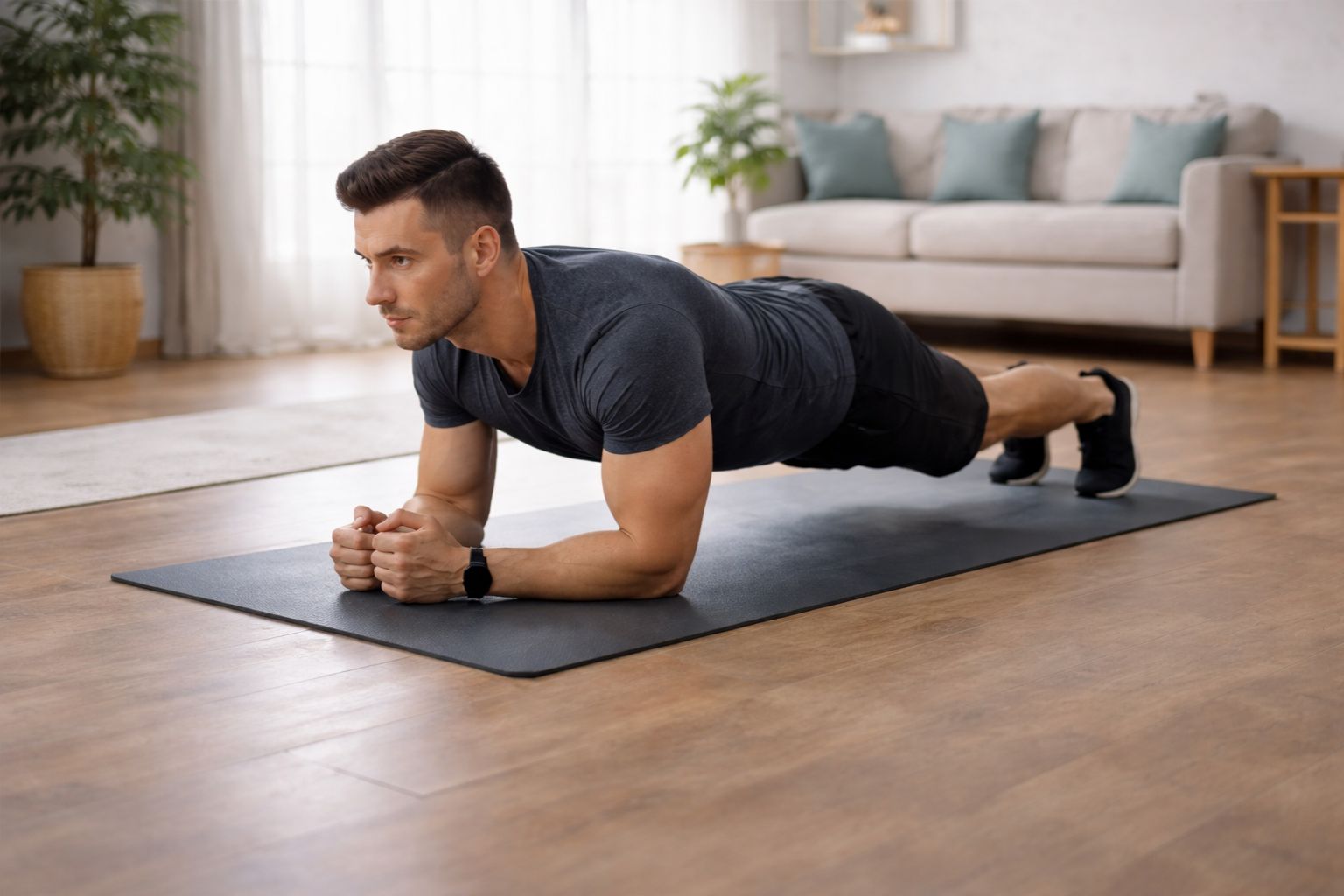
Forearm plank: Hold a straight-arm or forearm plank 20–45 seconds. Keep hips level. (Drop to knees if needed.)
Bicycle crunches: Lie on your back, hands behind your head, alternate touching elbow to opposite knee (slowly and with control) – 15–20 reps per side.
Bird-dog: On hands/knees, extend right arm and left leg (keeping hips square), pause, then switch sides – 10–15 reps per side.
Cool-down: Stretch gently: hold Child’s Pose 30 sec, Cobra stretch (lengthening abs) 15–30 sec, Knee-to-chest stretch (one knee at a time) 15–30 sec. Lie on your back and take a few deep breaths to relax.
Tip: Focus on core engagement throughout. Don’t rush through reps – move deliberately so you feel muscles working. If any move strains your lower back, stick to easier variations (e.g., reduce crunch range or keep one foot on the floor during bicycle crunches).
Day 6: Full Body or Repeat Workout
Option 1 (Full-Body Circuit): Repeat the following sequence 2–3 times, resting 30–60 sec between sets:
- Bodyweight squats – 10–15 reps
- Push-ups (knees or full) – 10–15 reps
- Walking lunges – 10 reps each leg
- Plank hold – 30+ seconds
- Wall sit – 30+ seconds
Option 2 (Repeat a Favorite Day): Choose one earlier workout (e.g., Upper or Lower Body) that felt good and do it again. You can also mix exercises from different days.
Warm-up/Cool-down: Use a similar warm-up as Day 1 or 2 (light cardio + dynamic stretches) and the same cool-down stretches (legs, arms, back).
Tip: A full-body day ties everything together. Increase the challenge by adding one extra set or a few more reps. For instance, if knee push-ups get easy, try full push-ups. If bodyweight squats are too easy, slow down the lowering phase or add a pause at the bottom.
Day 7: Rest Day
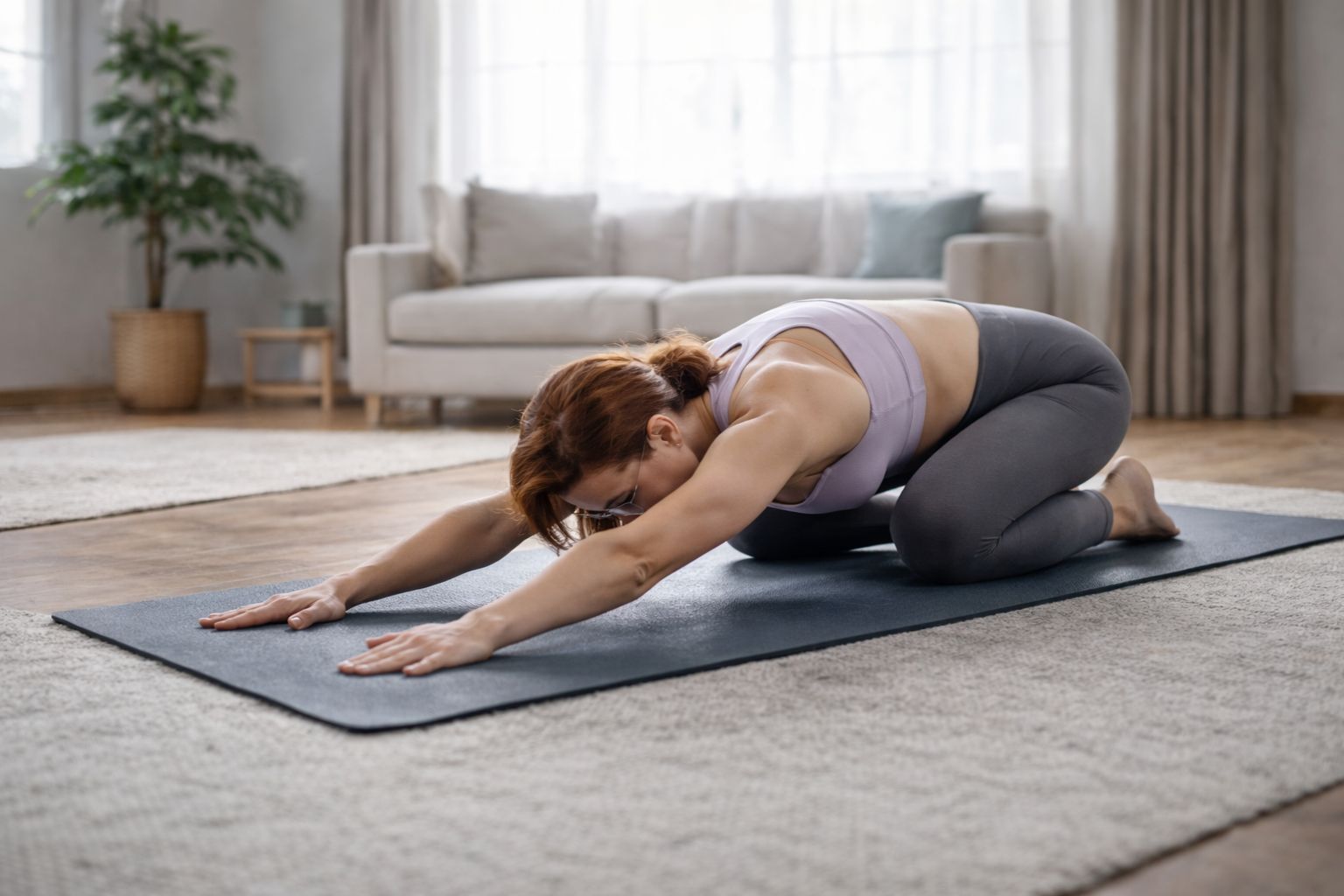
Activity: Complete rest or very light movement only. Sleep in, take it easy, maybe go for a gentle stroll or do some light yoga/stretching if you feel like it.
Why: Your muscles need time off to recover and grow stronger. Don’t skip rest days! Neglecting recovery can lead to overtraining, fatigue, or injury.
Tip: Use this day to hydrate, eat nourishing foods, and maybe foam-roll any tight spots. Aim for 7–9 hours of sleep so your body can rebuild.
Proper Form and Common Mistakes to Avoid
Maintain neutral spine: Keep your back straight (no hunching or overarching) in squats, planks, push-ups, etc. Imagine a straight line from head to tailbone.
Engage core: Brace your abs and glutes during nearly every move. This protects your back and gives exercises more effect.
Control your movements: Don’t rush through reps. Slow, controlled motions (especially on the way down) maximize muscle engagement and reduce the risk of strain.
Breathe properly: Exhale on the effort (e.g., as you push up from a squat or press up from a push-up), inhale on the easier phase. Good breathing helps maintain stability and energy.
Avoid these common mistakes: Skipping warm-ups or cool-downs (risking injury and stiffness); using poor form (e.g., locking elbows, rounding back); repeating the same routine every day (leads to plateaus); overtraining without rest (burnout); rushing reps instead of quality; and neglecting stretches (which causes stiffness). Hydration and nutrition also matter – drink water and eat a balanced diet to fuel recovery (skipping water can impair muscle performance).
Track Your Progress
Keep a simple workout journal or use an app. Write down what you did (exercises, sets, reps, times) and how you felt. This lets you see improvements over time (more reps or longer holds) and keeps you accountable. Logging workouts also motivates you to train on days you might feel lazy – your written plan nudges you to stick with it.
Beyond numbers, note small wins: maybe you held a plank 10 seconds longer today, or your squat felt smoother. Celebrate these. You can also track body measurements, energy levels, or even take progress photos (if that helps). The key is making progress measurable. Health experts advise using the SMART approach to goals: be Specific and Trackable. For example, aim to “do 3 workouts a week” rather than vague “exercise more.” Log each workout completed, set reminders on your phone, or mark calendars – every checkmark builds momentum.
Stay Motivated and Consistent
Sticking with exercise is the hardest part, so keep it fun and realistic. Here are some tips:
Set achievable goals: Maybe it’s “work out 4 days this week” or “do 15 unmodified push-ups.” As experts say, consistency is key – start with a goal you know you can stick to.
Create a schedule: Pencil your workouts into a planner or calendar. Treat them like important appointments. For example, block off “Workout – 7 PM” on Monday, Wednesday, Friday, etc. Studies show that scheduling sessions and setting reminders helps adherence.
Be accountable: Tell a friend or family member about your plan. Share your goals or post updates. Even starting a friendly challenge (who can do 10 lunges faster?) adds fun accountability.
Mix it up: Variety keeps workouts interesting and trains your whole body. Try different cardio (dance vs. run), swap in yoga on some days, or add new bodyweight moves (mountain climbers, chair squats, tricep push-ups). Enjoyable routines are easier to maintain.
Track and celebrate: Use your log to see patterns. Every week you complete is a win. Reward yourself (a healthy treat, a new workout playlist, or comfy workout gear) for milestones reached.
Remember, fitness is a journey with ups and downs. Some days you’ll feel amazing, others just satisfied you showed up. Be patient with yourself. If you miss a day, just get back on track the next one. Reflect on why you started (better health, more energy, stress relief) and let that motivate you on tough days.
Duration and Frequency
Each workout (days 1, 2, 5, 6) will take about 20–30 minutes of active exercise, plus warm-up and cool-down. The cardio day (Day 4) is longer (30–60 minutes). Beginners should start on the lower end (15–20 minutes strength work, or 30 min cardio) and build up. In a week, aim for roughly 2–3 days of strength training, 2–3 days of cardio or movement, plus rest/stretch days. This balanced “three-legged stool” of strength, cardio, and mobility prevents burnout.
As you adapt, gradually increase the challenge (more reps, extra sets, or less rest). This progressive overload helps you improve. For example, one week do 10 squats per set, next week 12 per set. Or add a few seconds to your plank. The plan above even suggests repeating harder workouts on Saturday for an added boost. If you feel fully recovered, go for it; if not, give an extra rest day. Always prioritize listening to your body.
By following this seven-day, no-equipment workout plan, you’ll hit all major muscle groups and keep things interesting without any special gear. Remember to warm up and cool down each day, focus on proper form, and rest when needed. Track your progress, set small goals, and celebrate each improvement. Before you know it, doing home workouts will become a healthy habit. Keep it up—you’ve got this!
Source: Evidence-based fitness plans and expert tips informed this guide eatingwell.com sportswestathleticclub.com, centr.com, health.com, among others.
Is Home Workout Without Equipment Effective?
Yes, absolutely. If done consistently and correctly, a home workout without equipment can help you:
- Lose fat
- Build lean muscle
- Improve endurance
- Stay mentally active
❓ Frequently Asked Questions (FAQs)
✅ Is a home workout without equipment effective?
Yes, a home workout without equipment is highly effective when done consistently. Bodyweight exercises like squats, push-ups, lunges, and planks help build strength, improve endurance, burn calories, and support overall fitness without needing a gym.
✅ Can beginners do home workouts without equipment?
Absolutely. Home workouts without equipment are ideal for beginners because exercises can be easily modified. Beginners can start with knee push-ups, half squats, and short plank holds, then progress gradually as strength improves.
✅ How many minutes should I work out at home without equipment?
For beginners, 20–30 minutes per day is enough. Intermediate users can aim for 30–45 minutes. Consistency matters more than long workout duration.
✅ Can I lose weight with a home workout without equipment?
Yes. You can lose weight with a home workout without equipment if you stay consistent and follow a healthy diet. Combining strength exercises with cardio movements increases calorie burn and fat loss.
✅ How many days a week should I do home workouts?
A 7-day plan with 4–5 workout days and 2 rest or active recovery days works best. This allows your muscles to recover while maintaining progress.
✅ Do I need rest days in a home workout plan?
Yes. Rest days are very important. They help muscles recover, prevent injuries, and improve performance. At least 1 full rest day per week is recommended.
✅ When will I start seeing results from home workouts?
Most people notice improved energy and stamina within 2 weeks. Visible physical changes usually appear in 4–6 weeks, depending on consistency, diet, and sleep.