You are currently viewing Standing Workouts for Knee Pain: The Best 2026 Guide to Strengthen Knees, Reduce Pain & Improve Mobility

Standing Workouts for Knee Pain: The Best 2026 Guide to Strengthen Knees, Reduce Pain & Improve Mobility

Knee pain is one of the most common complaints among adults, especially those who sit for long hours, lead busy lifestyles, or deal with arthritis and old injuries. But here’s the good news: you don’t need high-impact exercises or equipment-heavy workouts to strengthen your knees and feel better. Standing workouts are one of the safest and most effective ways to build supportive muscles around the knee, improve mobility, and reduce everyday discomfort — all without getting on the floor.

Unlike traditional routines, standing exercises put minimal pressure on the knees, making them ideal for beginners, older adults, and anyone dealing with stiffness or mild-to-moderate knee pain. With consistent practice, you’ll experience better balance, smoother movement, and improved confidence in daily activities like climbing stairs, walking, and standing up from a chair.

This comprehensive guide breaks down everything you need: safety tips, warm-up exercises, step-by-step standing routines, mobility work, stretching, and a weekly schedule to follow. Whether you’re just starting or rebuilding strength, these exercises help you move with ease — one pain-free session at a time.

Who this standing workouts for

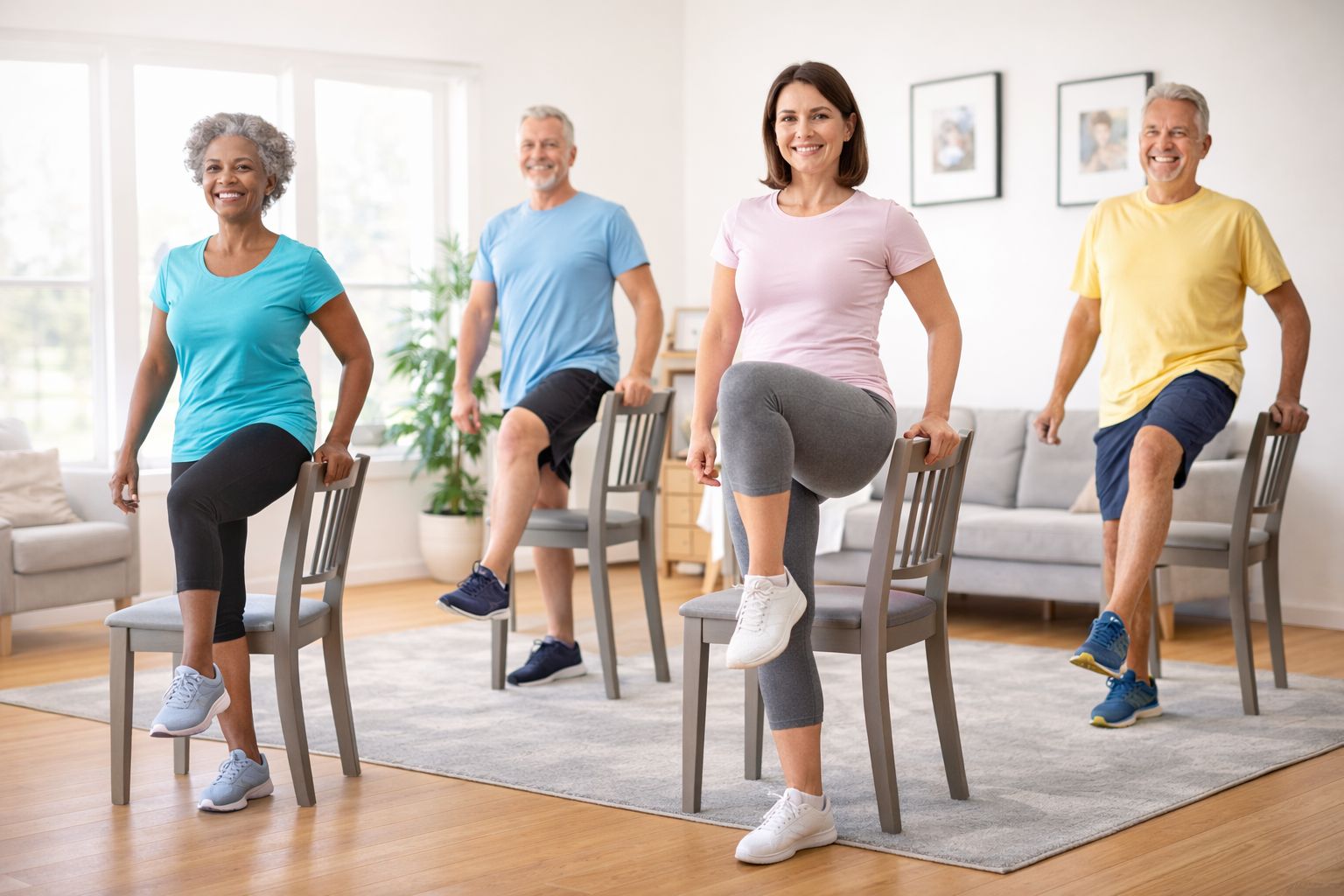
A diverse group of middle-aged and older adults performing simple standing workouts in a bright living room.
  • Middle-aged and older adults who experience mild to moderate knee pain
  • People looking for standing, low-impact workouts (no floor work required)
  • Beginners who need safe, progressive exercises they can do at home

Quick safety note (read this first)

Before starting any exercise plan, especially if you have chronic knee pain, severe arthritis, a recent injury, or recent surgery, check with your doctor or physical therapist. If you feel sharp pain, swelling, or instability while doing an exercise, stop and consult a healthcare professional. This program is designed to be gentle, but you know your body best — work within your comfort zone.

Table of contents

  1. Why standing workouts help with knee pain
  2. Safety guidelines before you start
  3. Warm-up (5–7 minutes)
  4. The standing workout routine — exercises with instructions, sets, and modifications
  5. Low-impact cardio options (optional)
  6. Cool-down and stretches
  7. Weekly plan and progression
  8. Common mistakes to avoid
  9. Tips to Protect Your Knees Long-Term
  10. FAQs
  11. Conclusion

1. Why Standing Workouts Help Knee Pain

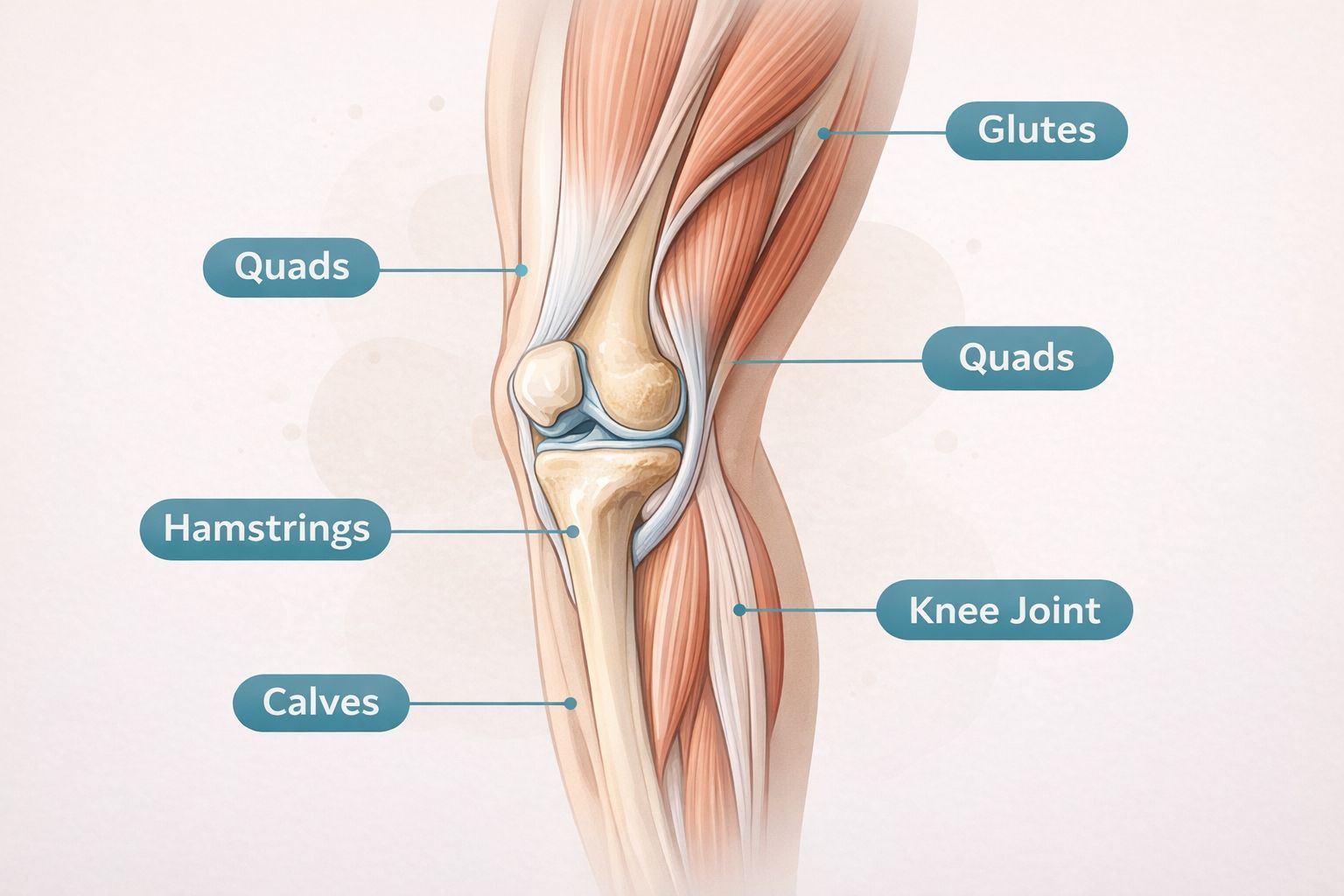
A clean illustration of the knee joint showing quadriceps, hamstrings, glutes, and calves in soft colors.

Standing workouts offer a gentle yet powerful way to strengthen your lower body without straining your joints. Unlike high-impact floor exercises or deep knee-bending movements, standing routines help distribute your body weight more evenly, reducing pressure on the knee joint. This minimizes compression and prevents unnecessary irritation of cartilage and ligaments.

These standing workouts target key muscle groups — quads, hamstrings, glutes, and calves — which act as shock absorbers for the knee. When these muscles are stronger, the knee can track properly during movement, lowering the risk of misalignment or instability.

They also improve functional movement patterns you use every day — walking, standing, climbing stairs, or shifting weight. And because standing workouts are easy to scale, you can tailor the intensity depending on pain level, age, or mobility.

The primary goal is simple: strengthen support, improve control, and reduce pain so your knee moves efficiently with less strain.

2. Safety Guidelines Before You Start

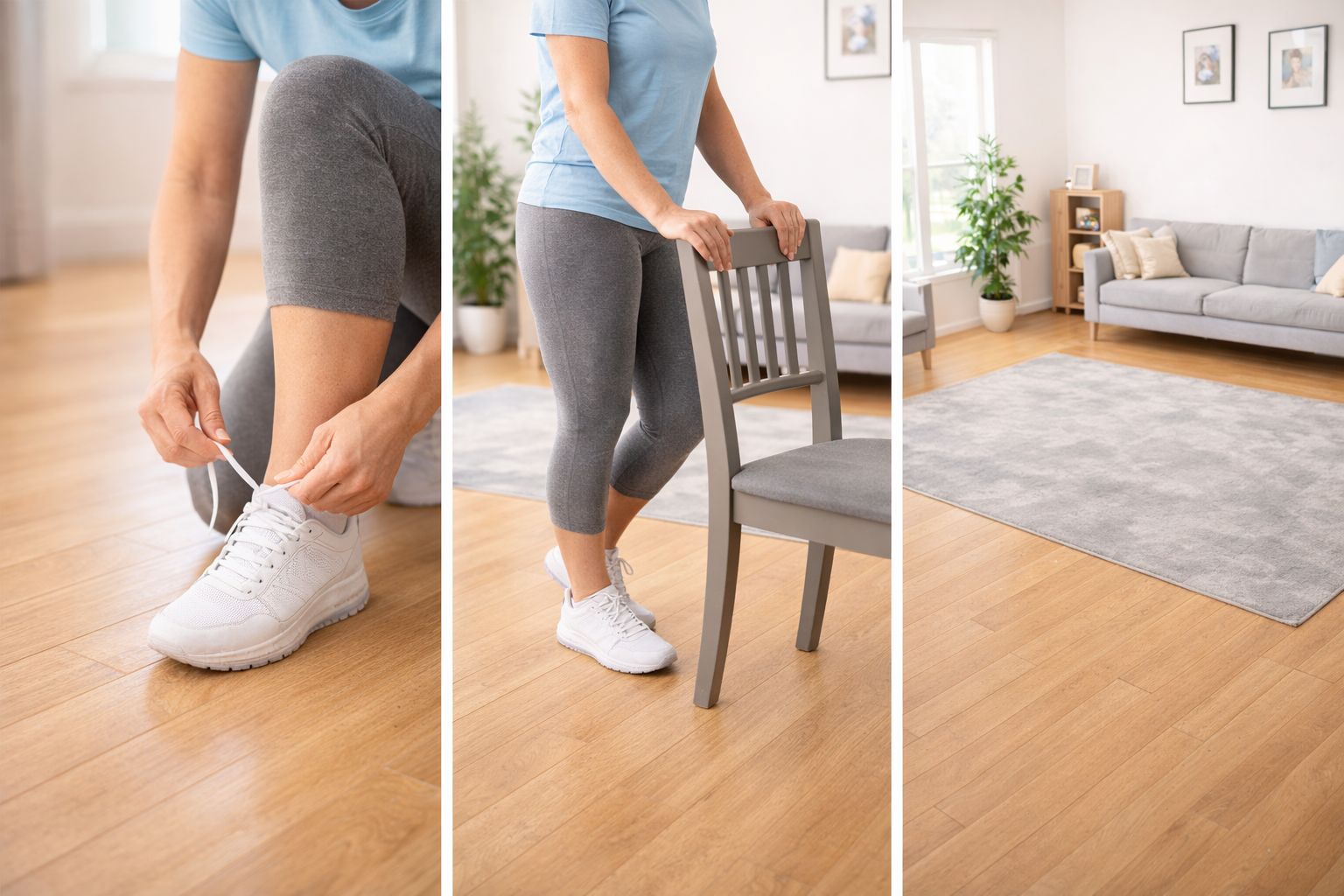
A person checking athletic shoes and adjusting a chair in a bright living room before starting a workout.

Before beginning any knee-focused routine, safety should be your priority — especially if you have a history of joint issues. If you’ve recently had surgery, have severe arthritis, or have undergone a joint replacement, consult your healthcare provider to make sure these exercises are suitable.

Wear proper footwear with cushioning and a non-slip sole to help absorb shock and prevent slips. Avoid doing these exercises barefoot or in socks on smooth floors, as this increases the risk of slipping.

Use a stable support like a chair, wall, or countertop to maintain balance for certain exercises. Start with shorter sessions lasting 10–20 minutes, three times a week, and gradually increase duration as your strength improves.

Remember: mild muscle burn or low-level discomfort is normal, but sharp, sudden, or increasing knee pain is a warning sign to stop immediately. Always warm up before you begin and finish with a cool-down to prevent stiffness and enhance recovery.

3. Warm-Up: Gentle Standing workouts Movements (5–7 minutes)

A warm-up primes your muscles, lubricates your joints, and prepares your body for safe movement. Proper warm-up reduces pain and improves exercise effectiveness.

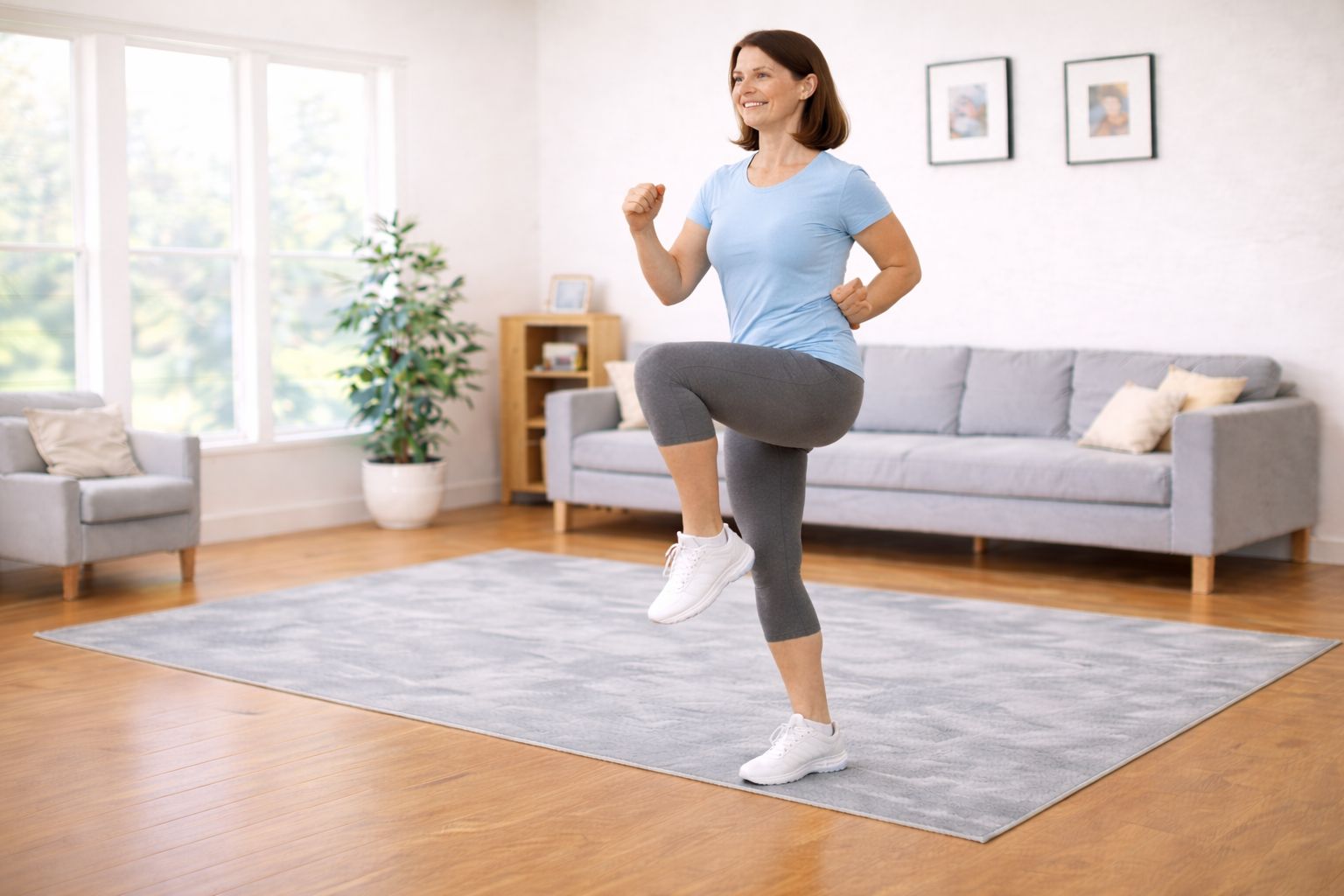
Standing March (1–2 minutes)

A woman performing a gentle standing march in a bright living room with relaxed arm swings.
A light standing march warms up the hips, knees, and lower body before exercise.


Stand tall and start alternating knee lifts in a gentle marching motion. Keep the movement small if your knees feel stiff. Adding a natural arm swing helps improve circulation and warms the upper body as well. This simple movement activates the hip flexors and quads while getting blood flowing to the knees.

Ankle Circles (30–45 seconds each ankle)

A person holding a chair for balance while performing standing ankle circles in a home setting.
Controlled ankle circles improve ankle mobility and support proper knee alignment.


Lift one foot slightly off the floor and rotate the ankle slowly in both directions. This improves ankle mobility, which plays a direct role in knee alignment and stability, especially during standing exercises.

Arm Swings with Light March (1 minute)

A woman lightly marching in place while swinging her arms forward and backward in a bright room.
Arm swings paired with a light march help warm up the upper and lower body simultaneously.

While lightly marching, swing your arms front to back in a controlled motion. This raises your heart rate and loosens tight upper-body muscles, allowing for smoother movement throughout the workout.

Tip: Keep your pace steady and movements controlled — the goal is warmth and mobility, not fatigue.
4. Standing Workouts Routine for Knee Pain

Perform the following standing workouts in a circuit or individually. Start with 1–2 sets of 8–12 reps per exercise. Rest 30–60 seconds between sets. Adjust depth, range, or tempo based on comfort.

4.1 Standing Leg Lifts (Front)

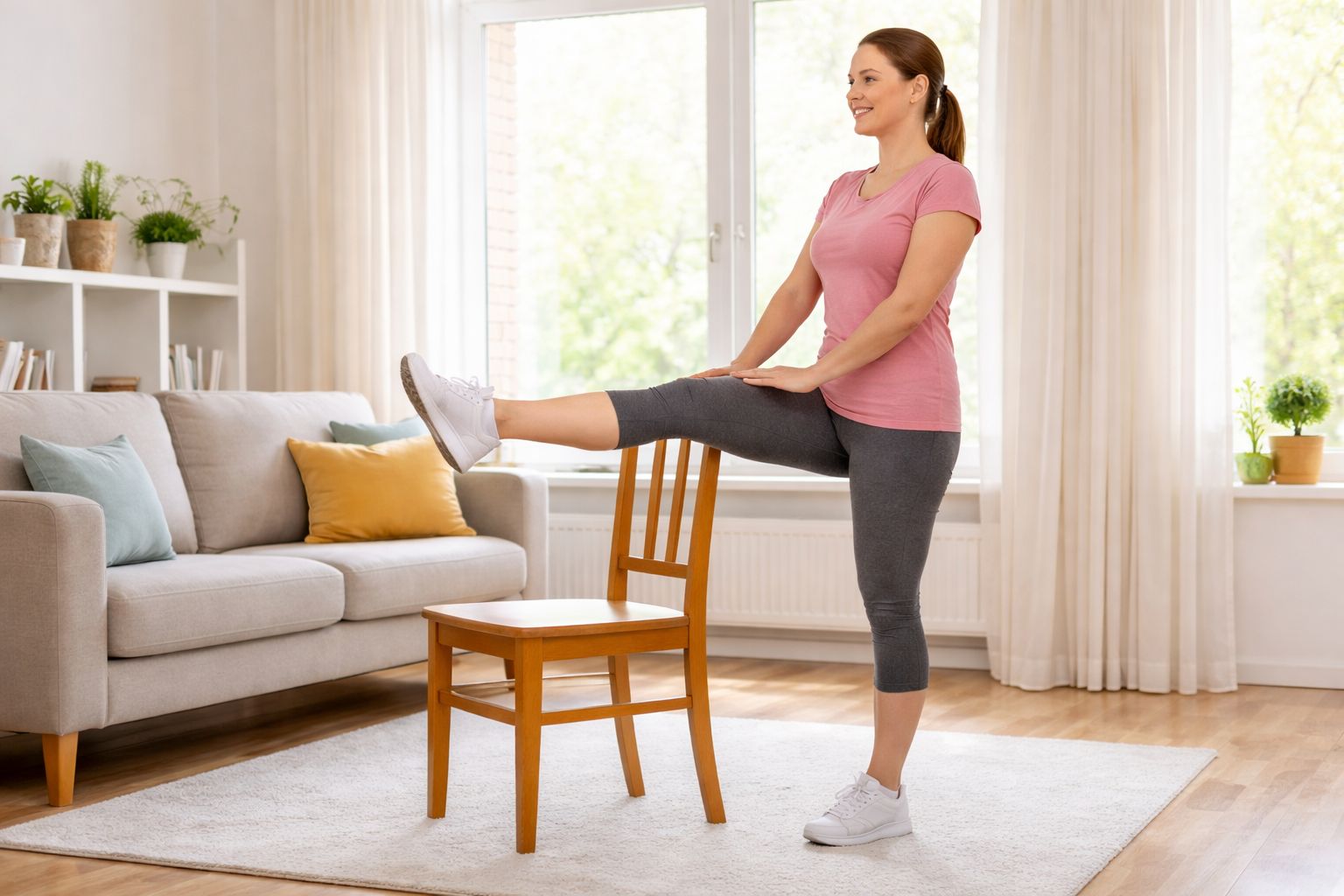
A person standing behind a chair lifting one straight leg forward 6–12 inches in a controlled motion.

This exercise targets the quadriceps and hip flexors, which help stabilize the knee.

How: Stand behind a chair and hold it for support. Keeping the knee straight but relaxed, lift one leg forward 6–12 inches. Lower slowly.

Why: Strengthens the front thigh muscles responsible for absorbing impact at the knee.
Modifications: Slightly bend the supporting knee or reduce the lift height.
Advanced: Add ankle weights or increase repetitions.

4.2 Calf Raises (With Support)

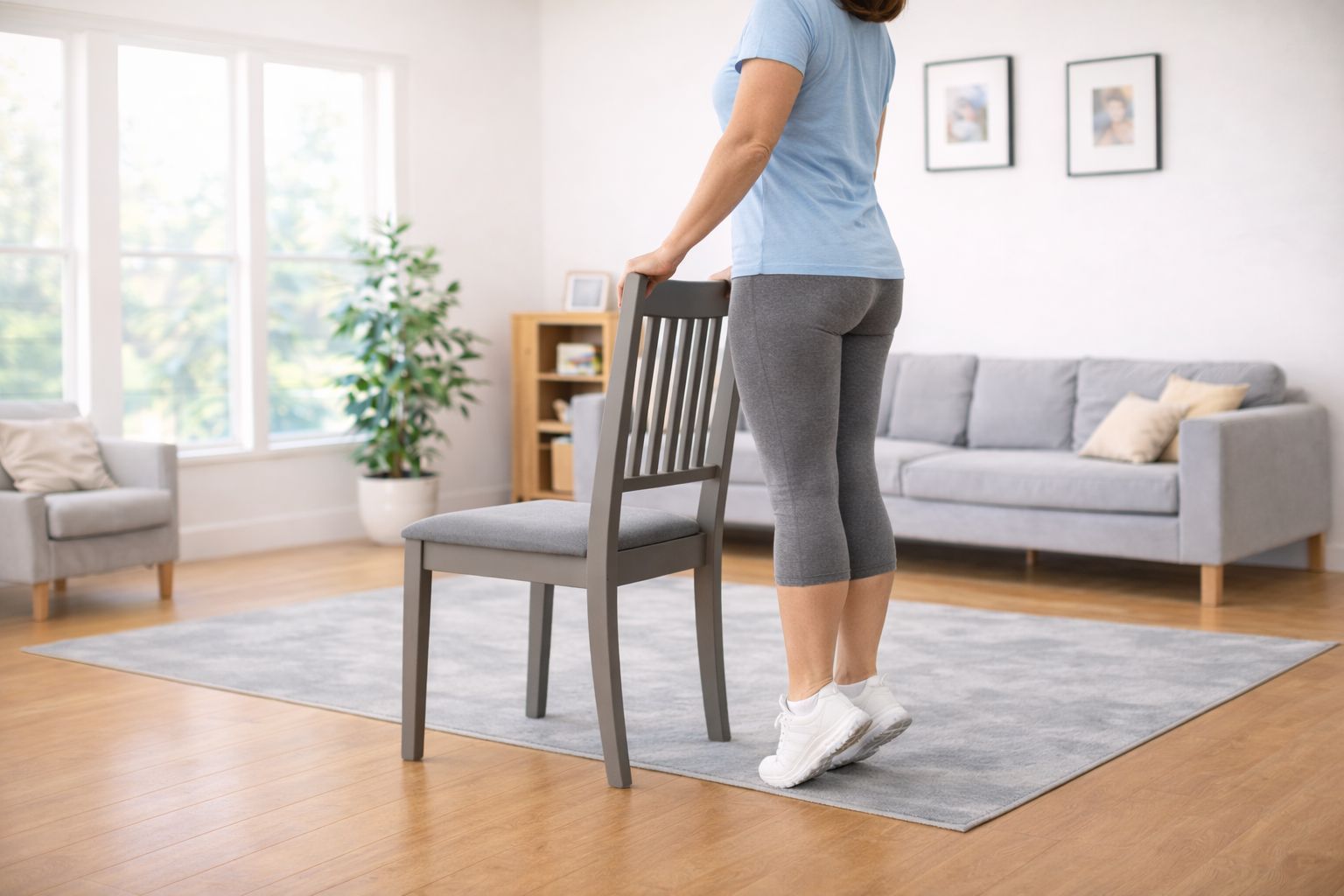
A person holding a chair while rising onto the balls of the feet in a slow, controlled calf raise.

Strengthens the calves, which play a major role in ankle and knee control.

How: Hold a chair, rise onto the balls of your feet, pause at the top, then lower slowly.

Why: Supports proper knee alignment during walking and standing.

Tip: Slow movements protect your joints and build deeper muscle strength.

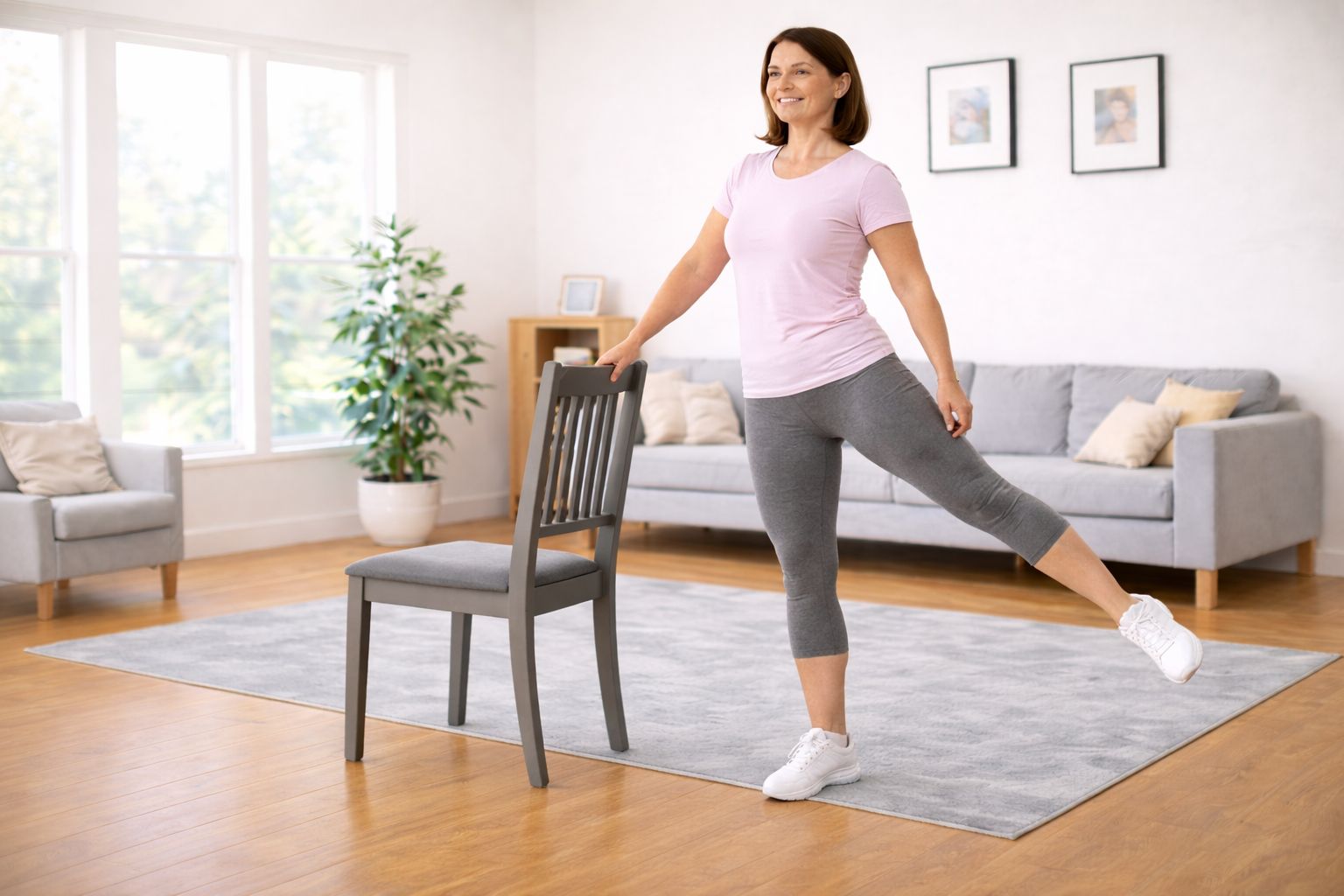
4.3 Side Leg Raises

A person lifting one leg out to the side while holding a chair for balance in a bright home setting.

Targets the gluteus medius, a key muscle preventing inward knee collapse (valgus).

How: Hold a chair, lift one leg out to the side while keeping toes forward and torso upright.


Why:
Strengthens lateral hip muscles to reduce strain on the knees.


Tips: Keep the toe pointing slightly down to avoid hip rotation.

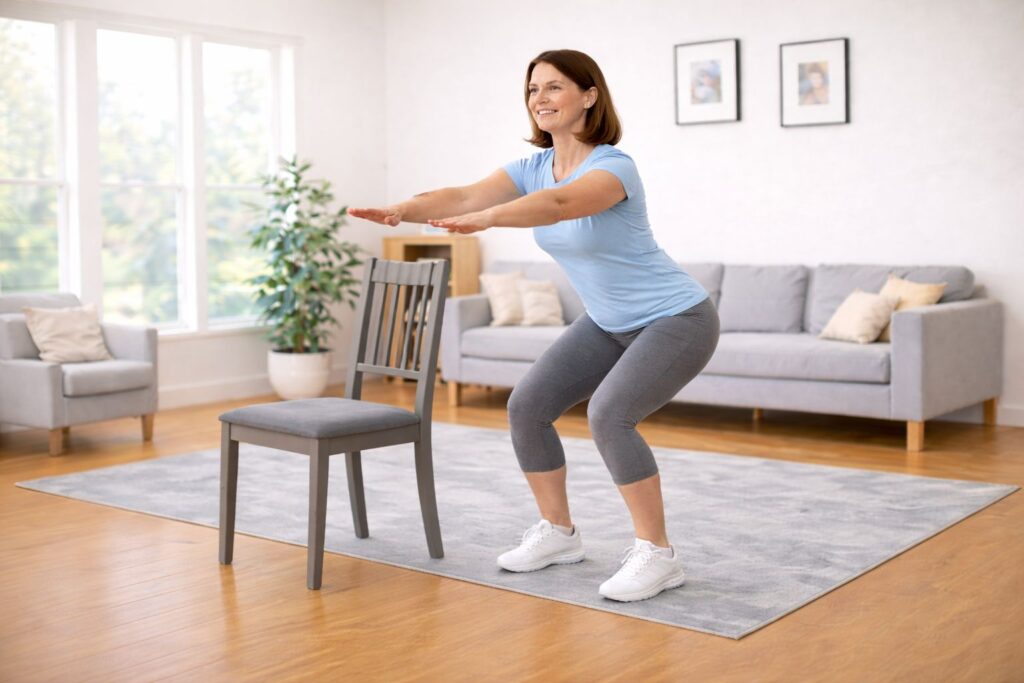
4.4 Chair-Assisted Mini Squats

A person performing a mini squat in front of a chair, hips pushed back, knees aligned safely.

A safe, beginner-friendly squat variation to strengthen quads, glutes, and hamstrings.

How:
Stand in front of a chair, lower your hips back until you just touch the seat, then rise.


Why: Trains everyday movement patterns like sitting, standing, and bending.


Modifications: Use a higher chair or keep your hands on a countertop for more support.

4.5 Standing Hamstring Curl

A person bending one knee to bring the heel toward the glutes while holding a chair for balance.

Strengthens the back of the thigh, helping balance quad strength.

How:
Bend one knee, bringing the heel toward your butt, then lower slowly.


Why:
Hamstrings support knee stability and prevent overextension.


Tip: Move slowly to avoid jerky motions.

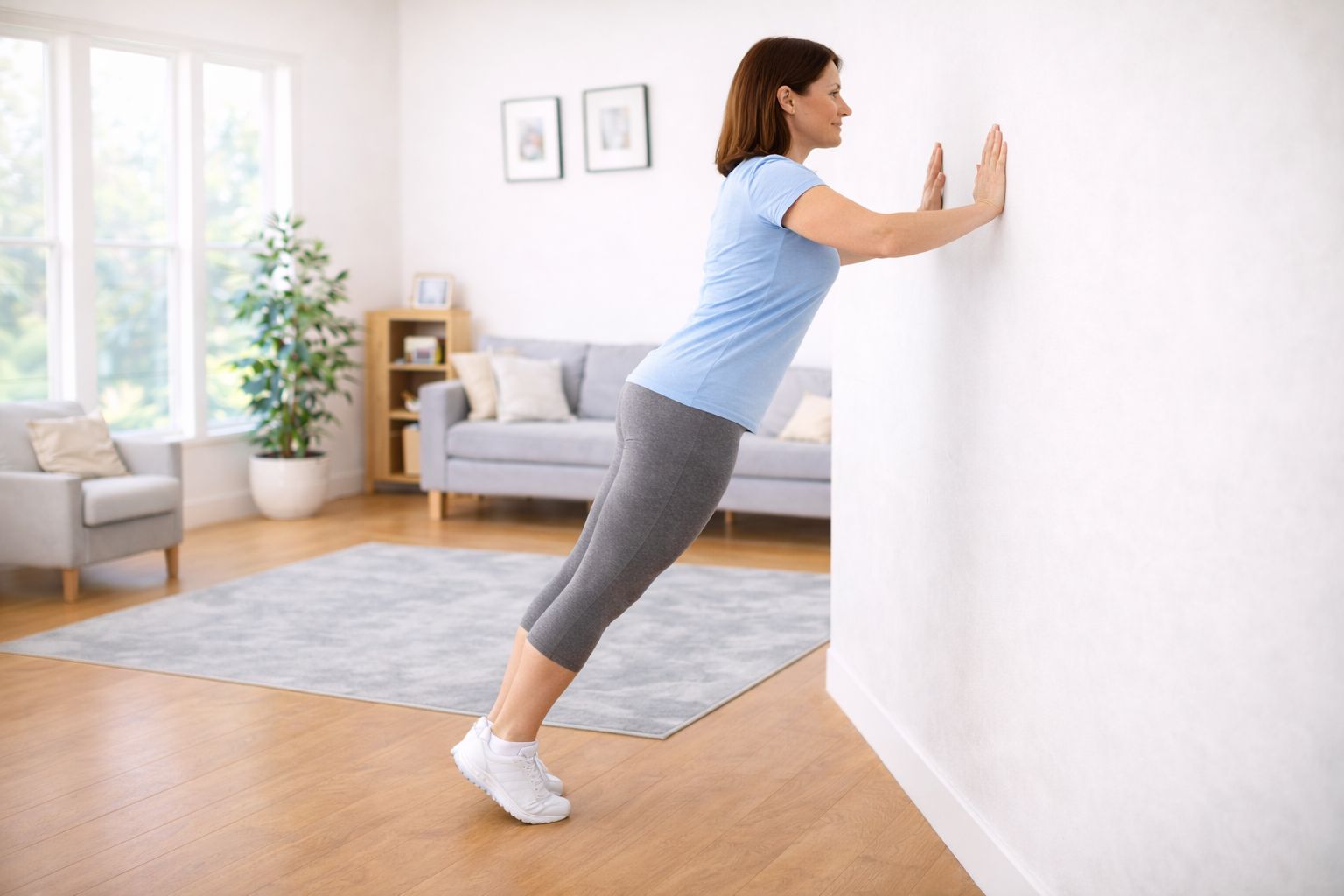
4.6 Wall Push-Ups

A person performing wall push-ups with straight body alignment in a home environment.

Strengthen the upper body and core with zero load on the knees.

How: Stand facing a wall and perform controlled push-ups.


Why: Helps improve posture, which indirectly affects knee alignment by balancing overall body mechanics.

4.7 Standing Heel Slides (Modified)

A person sliding one foot backward while holding a chair to create a gentle knee bend.

A gentle mobility exercise to improve knee flexion.

How: Slide one foot back as if taking a small step; bend the knee comfortably, then bring it forward.


Why: Helps improve knee joint mobility for smoother daily movement.

5. Low-Impact Cardio Movements (Optional)

A person performing gentle standing cardio movements such as marching or side stepping at home.

Adding low-impact cardio helps improve circulation, burn calories, and reduce stiffness — all beneficial for knee health.

Try gentle marching, side steps, heel-tap shuffles, or toe-taps on a low step. These movements improve heart health without stressing the knee. Keep your pace slow to moderate and focus on smooth, controlled motions.

6. Cool-Down and Standing Stretches (5–7 minutes)

Cooling down prevents soreness, reduces tension, and promotes better long-term flexibility.

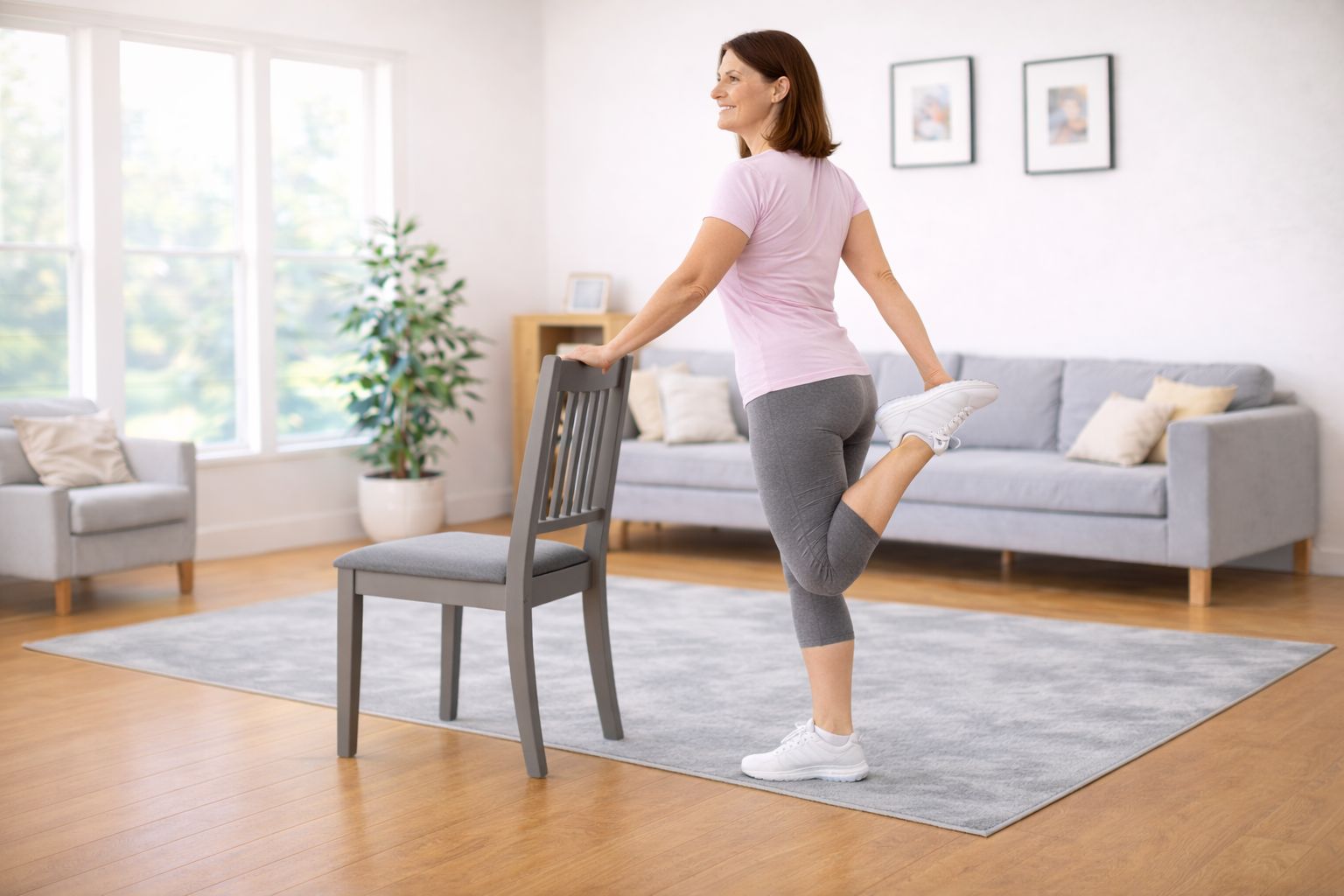
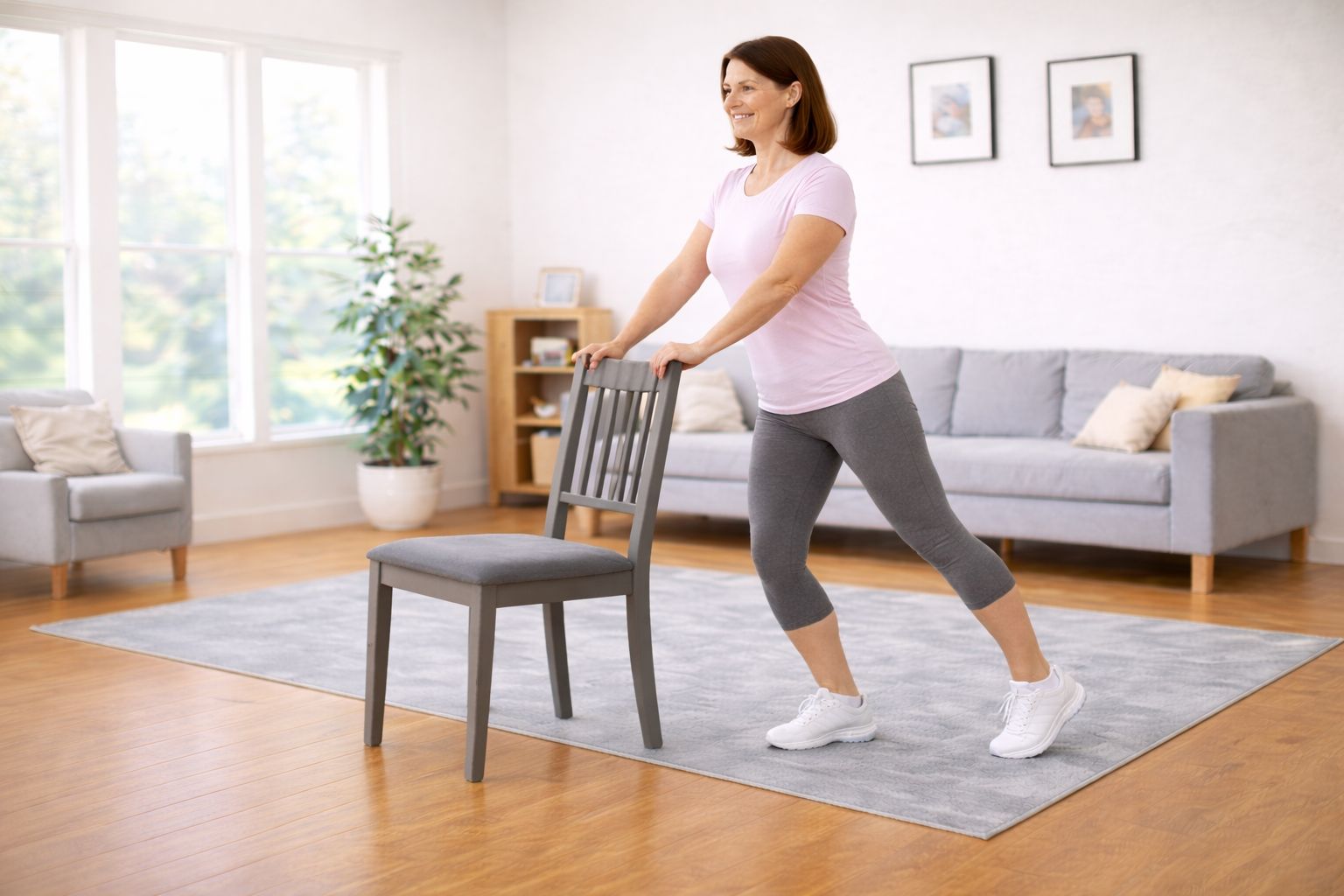
Standing Quad Stretch

A person holding a chair while pulling one foot toward the glutes to stretch the quadriceps.
A simple standing quad stretch eases tightness in the front of the thigh.

Gently pull one foot toward your glutes. If this causes discomfort, switch to a hip flexor stretch instead.

Calf Stretch Against Wall

A person leaning into a wall while pressing the back heel down to stretch the calf.
The wall calf stretch reduces tightness that contributes to knee discomfort.

Step back with one leg, keep the heel pressed down, and lean forward. This reduces tightness that may contribute to knee pain.

Standing Hamstring Reach

A person placing one foot on a low step and hinging forward to stretch the hamstring.
A beginner-friendly hamstring stretch that reduces tension behind the knee.

Place your heel on a low step, hinge at the hips, and lean forward until you feel a gentle stretch — not pain.

Upper Body Relaxation Stretch

A person reaching arms overhead while stretching the upper body in a calm home setting.
A gentle stretch to release upper-body tension after the workout.

Interlace hands overhead to release tension in the back, shoulders, and chest.
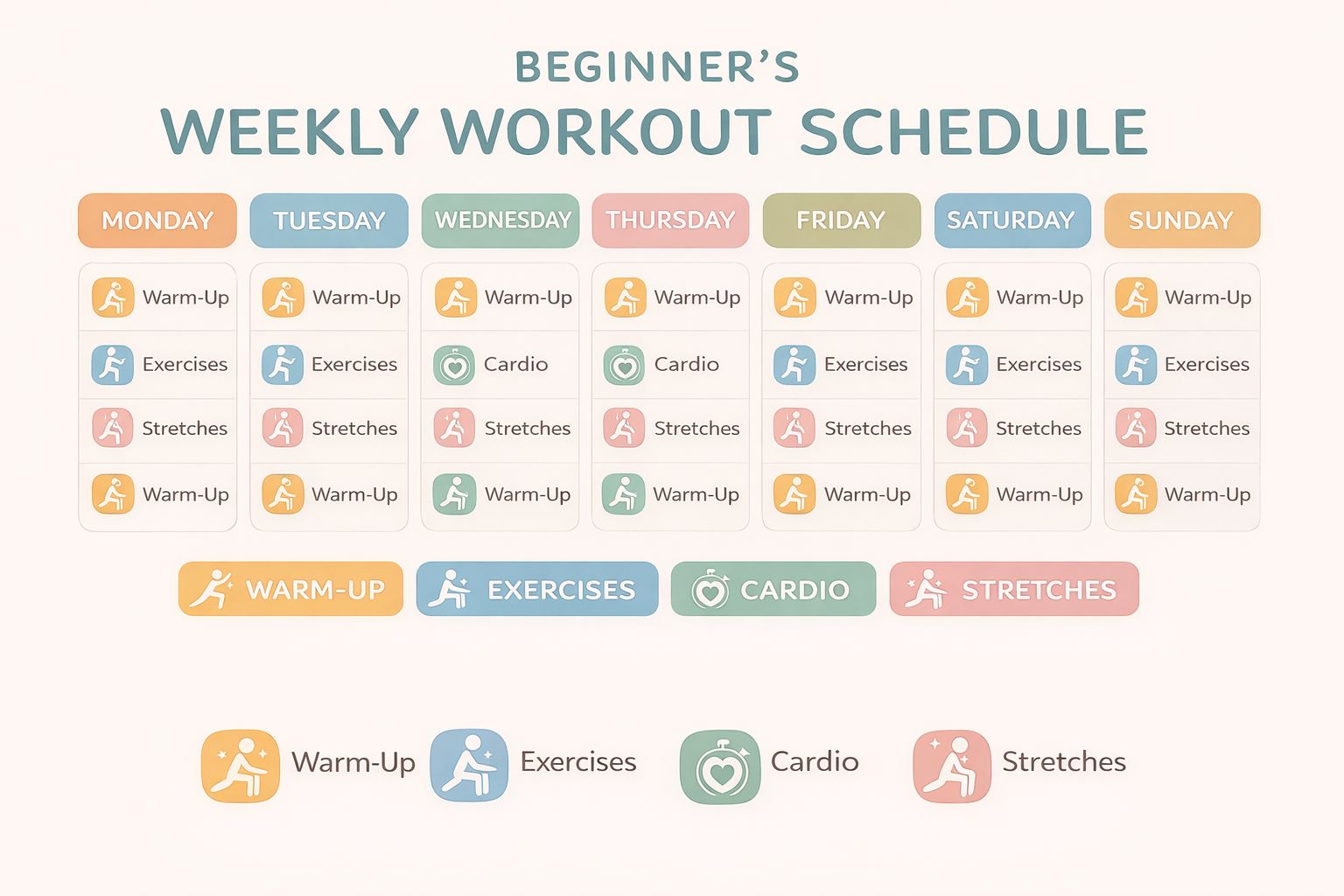
7. Weekly standing Workouts Schedule & Progression

A clean infographic showing a 3–4 day weekly workout plan for knee-friendly standing exercises.

Consistency is key. Start slow and build gradually.
Beginners should follow a 3-day schedule with 1 set of each exercise.
Intermediate individuals can increase to 3–4 days a week with 2 sets plus optional cardio.

Prioritize increasing sets before repetitions and focus on a smoother range of motion over intensity. Small ankle weights or bands can be added later with professional guidance.

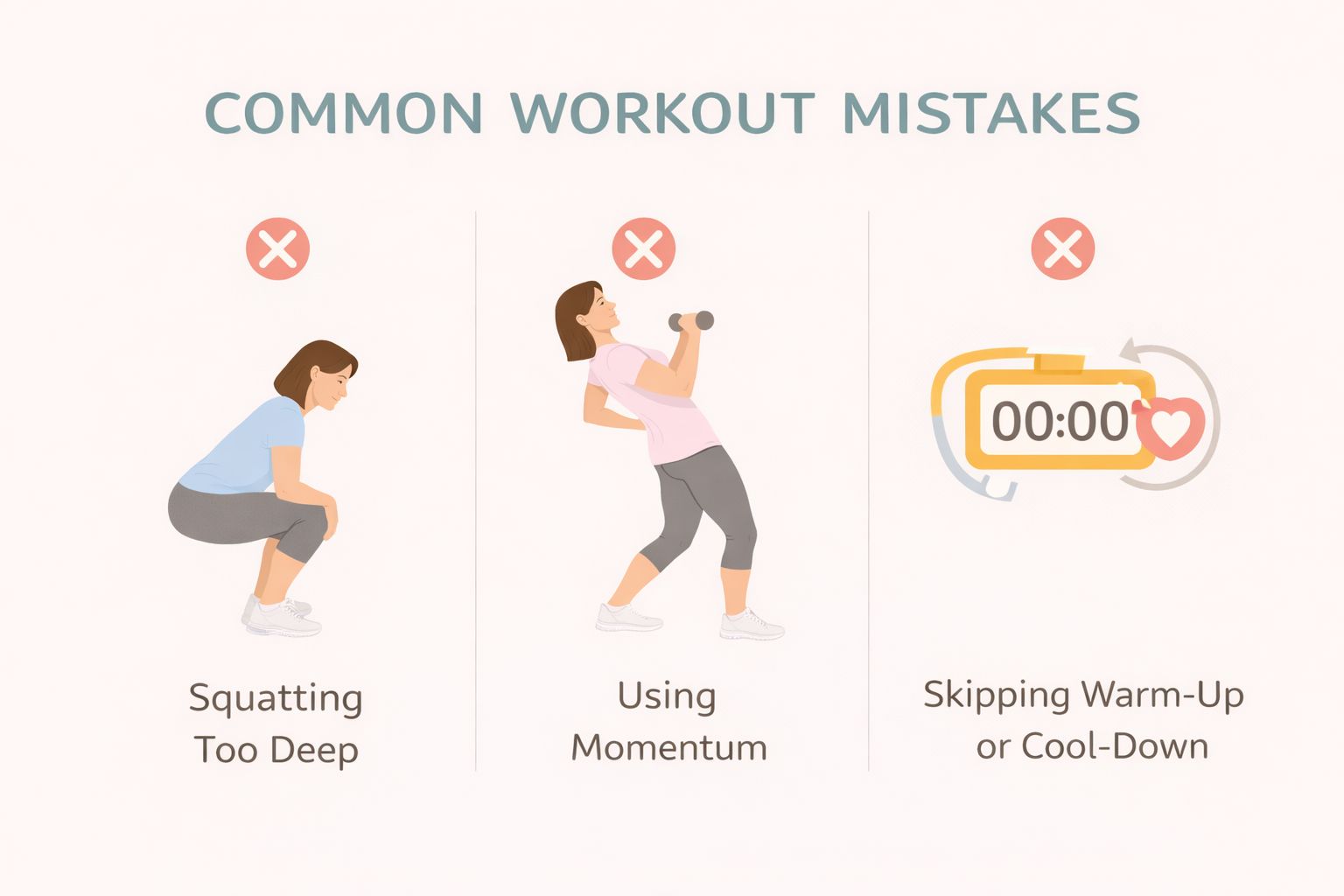
8. Common Mistakes to Avoid

An infographic showing common exercise mistakes like squatting too deep or using momentum.

Avoid going too deep into squats or moving too fast. Skip momentum — controlled reps reduce stress on the knee. Make sure you warm up and cool down, and avoid strengthening only one muscle group. Above all, never push through sharp pain.

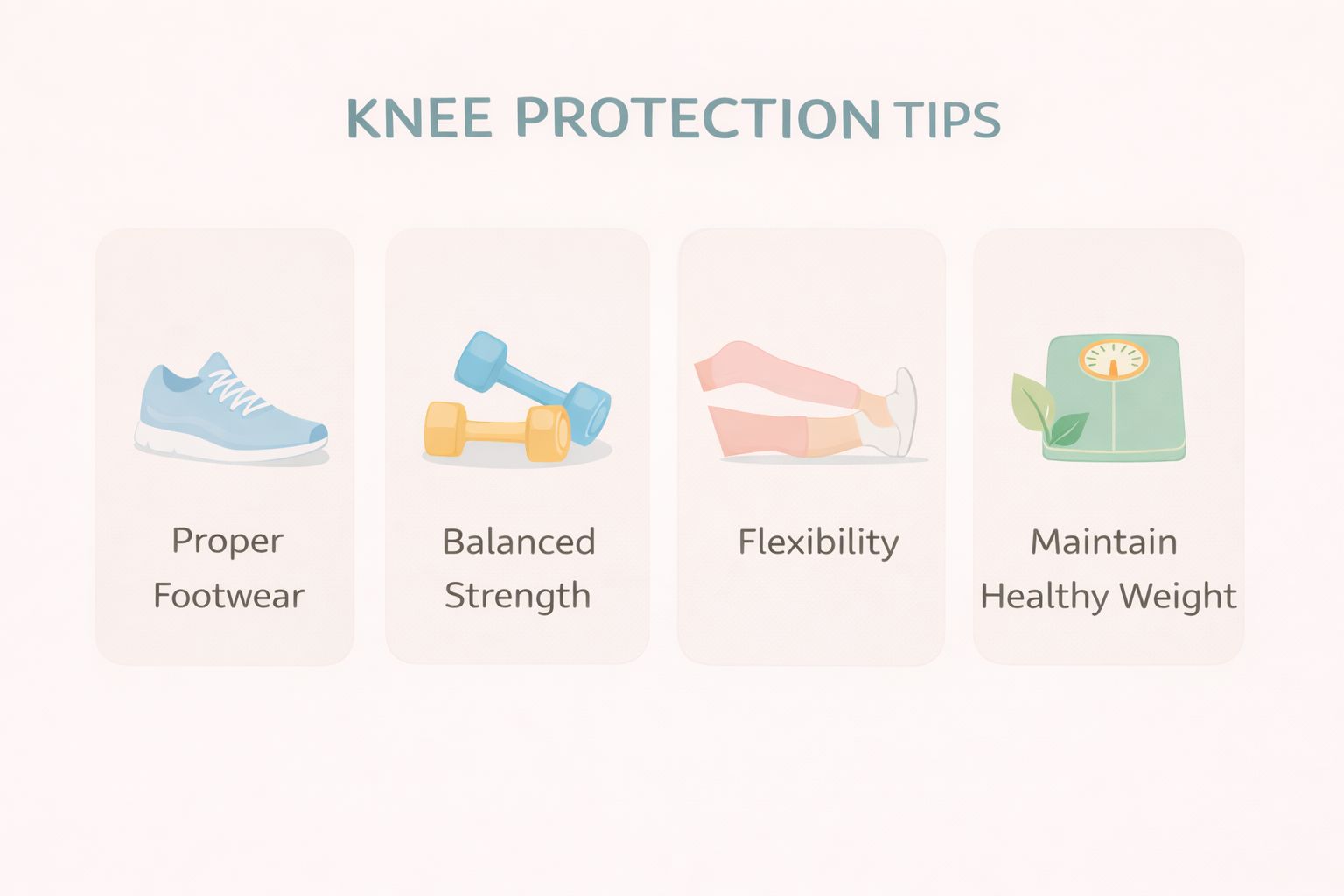
9. Tips to Protect Your Knees Long-Term

An infographic with tips for knee protection, including strength training, flexibility, and proper footwear.

Maintaining a healthy weight, wearing supportive shoes, improving flexibility, and training all major leg muscles will help keep your knees strong and pain-free. Regular habits matter more than perfection. If you have a specific knee condition, guidance from a physiotherapist can make your routine even safer and more effective.

10.FAQs

1. Can I do standing workouts if I have arthritis in my knees?
Most people with mild to moderate arthritis can safely perform gentle standing exercises. However, you should avoid movements that cause sharp pain and consult your doctor if you have severe arthritis or recent surgery.

2. Is it normal to feel muscle soreness after these standing workouts ?
Mild muscle soreness is normal as your muscles strengthen. Sharp or worsening joint pain is not normal — stop immediately if you feel it.

3. What standing workouts are safest for knee pain?
Some of the safest and most beginner-friendly movements include:

  • Standing leg lifts
  • Side leg raises
  • Calf raises with support
  • Chair-assisted mini squats
  • Standing hamstring curls
  • Wall push-ups
  • Standing heel slides

4. How long will it take to see improvement in my knees?
Most people notice better mobility and reduced stiffness within 2–3 weeks of consistent practice. Strength improvements are typically seen within 4–6 weeks.

5. Should I avoid squats if I have knee pain?
Deep squats may worsen knee pain, but mini squats or chair-assisted squats are safe alternatives that build strength without overstressing the joint.

6. Can these exercises help me walk or climb stairs more comfortably?
Yes. Strengthening supporting muscles and improving joint control makes daily movements like climbing stairs, standing up, and walking significantly easier.

Conclusion

A smiling adult relaxing after completing a home workout in a bright living room.

Knee pain doesn’t have to limit your movement or interrupt your daily life. With simple standing exercises, you can build strength, improve mobility, and support your joints — all without complicated equipment or high-impact routines. When practiced consistently, these movements help you walk, climb stairs, and stand with more confidence and less discomfort.

Remember to start slowly, listen to your body, and progress gradually. Every small step you take today builds a stronger, healthier foundation for tomorrow. Keep showing up, protect your knees, and celebrate the progress you make along the way — your future self will thank you.