

Losing weight is mostly about burning more calories than you eat, so many wonder if the time of day matters. Some people swear by dawn workouts, others by late workouts. In fact, hormone levels, energy, and even motivation vary by the hour. In this in-depth analysis, we compare morning versus evening workouts for fat loss. We’ll cover the science, pros and cons of each timing, expert insights, and practical tips for beginners and fitness buffs. Whether you’re a morning person or a night owl, you’ll get the facts to make your workouts work for your goals

Morning Workouts

Many fitness enthusiasts start their day with a sweat session. Morning exercise offers several advantages for fat loss, but there are some drawbacks to consider too:
- Boosted Fat Burning (Fasted State): Exercising before breakfast means your body has used up much of its overnight glycogen. In this fasted state, studies show your body may burn more fat during and after the workout. For example, one recent trial found fasted morning cardio significantly increased 24-hour fat oxidation compared to the same workout in the evening.
- Appetite Suppression: Morning workouts can help control hunger all day. Research indicates that people who exercise in the morning tend to eat slightly less overall. One study reported that morning exercisers consumed about 5–6% fewer calories than evening exercisers. This natural suppression of appetite can create a bigger daily calorie deficit for weight loss.
- Routine & Consistency: Getting your workout done early means fewer schedule conflicts later. Morning exercise “eliminates the worry about finding time for exercise later” in the day. It builds a strong habit since your day hasn’t yet filled up. In fact, research suggests exercising at the same time each day aids long-term adherence, and consistency is one of the most important factors in successful fat loss.
- Hormone and Mood Boost: Cortisol (the “stress hormone”) and testosterone peak in the morning. Moderate exercise can help utilize this cortisol spike to mobilize fat for fuel, and jump-start endorphin release for energy. Clinicians note that “exercise early in the day has been shown to lower cortisol levels throughout the remainder of the day, helping regulate stress. Starting your day with a workout also gives an ‘ego boost’ and sets a positive, disciplined tone.
Drawbacks of Morning Workouts:
- Lower Energy/Performance: Your body temperature and alertness are usually lower in the early morning. Muscle strength, flexibility, and anaerobic power tend to peak later in the day. That means very intense workouts may feel harder in the morning. You might not lift as heavy or run as fast right after waking, which could limit calorie burn per session.
- Fuel and Cortisol Concerns: If you haven’t eaten, a hard workout can spike cortisol even more, which might impede muscle repair or cause fatigue. Also, very strenuous exercise on an empty stomach could trigger gluconeogenesis (breaking down protein), which isn’t ideal. Beginners or those prone to low blood sugar may need a light snack or a balanced pre-workout meal to maintain performance.
- Body Temperature: Core temperature is cooler upon waking. This can slightly reduce metabolic rate and warmth of muscles, so a good warm-up is extra important in the morning.
Evening Workouts

For night owls and busy professionals, working out after work or school is more practical. Evening exercise has its own advantages:
- Peak Performance: The body’s strength, flexibility, and cardiovascular efficiency tend to peak in the late afternoon or early evening. Oxygen uptake is more efficient in the evening, allowing higher intensity training. Studies show that short-term power, muscle performance, and stamina often hit their max around 4–8 PM. In other words, if heavy lifting or sprints are your goal, you may lift more or run faster later in the day.
- Greater Calorie Burn per Session: With better energy from meals during the day, you might push harder or train longer in the evening, burning more calories in one session. Some research even suggests evening workouts might slightly increase fat oxidation in men compared to morning workouts (possibly due to circadian hormone patterns).
- Stress Relief and Relaxation: Exercising after a long day can help unwind and lower stress hormones. “Working out after a long day provides valuable stress relief by enhancing relaxation,” notes experts. Reducing daytime stress can indirectly help fat loss, since chronically high stress (and cortisol) is linked to abdominal fat.
- Scheduling Convenience for Some: If you’re not a morning person or if work/family commitments fill early hours, the evening might be the only practical time. Skipping early alarm clocks might improve your motivation and mood, making you more likely to complete the workout.
Drawbacks of Evening Workouts:
- Sleep Disruption: A major concern is timing. Vigorous exercise too close to bedtime can keep you awake. Late-night workouts (especially above moderate intensity) spike adrenaline and cortisol, making it harder to fall asleep. About 20–30% of people report poorer sleep if they exercise within 1–2 hours of sleep. If you hit the gym at 9 PM and can’t unwind, it might offset some fat-loss benefits by disrupting hormones.
- Consistency Challenges: Evenings are full of social events, family time, errands, etc. This may lead to skipped sessions. After a tiring day, motivation can dip. Research notes that adherence can be lower for evening programs compared to morning (one source reported ~58% adherence for evenings vs ~72% for mornings). Making it a routine can be trickier.
- Digestive Comfort: If you’ve eaten dinner or a late snack, exercise might be uncomfortable. Heavy meals before a workout can cause indigestion or cramps.
Scientific Studies and Expert Insights
The research on workout timing and fat loss is mixed. Many scientists agree that overall exercise volume and consistency matter more than clock time. For instance, a large 12-week randomized trial found that overweight adults lost weight with both morning and evening aerobic programs, and there was no significant difference in weight loss between the groups. In other words, you’re likely to lose fat exercising in the morning or evening, as long as you stick with it.
However, some studies highlight small timing effects:
- Reduced Obesity Risk with Morning Exercise: An observational study of 5,285 U.S. adults (NHANES data) reported that people who habitually exercised in the morning (7–9 AM) had a lower average BMI and waist circumference than those who mainly exercised midday or evening. This suggests a correlation between morning activity and leanness, though causation isn’t proven.
- More Fat Loss in Women Morning Exercisers: In a smaller controlled study by Dr. Paul Arciero (AARP report), middle-aged women performing a mixed workout routine in the morning lost significantly more belly fat than women doing the same program in the evening. Men in the study lost similar fat regardless of timing, possibly because they had more to lose initially. Arciero notes that fewer morning food calories and overnight fasting likely boosted fat burning in the women’s group.
- Increased Fat Oxidation (Small Trial): A 2023 study on young men found that fasted morning exercise (before breakfast) significantly increased fat oxidation during and after the workout, compared to the same exercise done in the evening. The authors concluded that morning workouts “effectively boost the body’s fat oxidation for the subsequent 24 h. However, this was a short-term trial, so long-term effects on weight are still unclear.
- Conflicting Findings: Other research has found the opposite or no difference. For example, one systematic review noted that an evening cardio session sometimes produced higher fat-burning rates than the same morning workout. Another analysis of exercise timing found no significant difference in 24-hour calorie intake or total energy expenditure by time of day.
Overall, the consensus of high-quality evidence is that total exercise matters more than whether it’s AM or PM. If you can only exercise once a day, pick the time you’ll maintain. Dr. Nieca Goldberg (cardiologist) sums it up: “No matter what time you work out, combine a healthy diet with exercise to lose weight.”
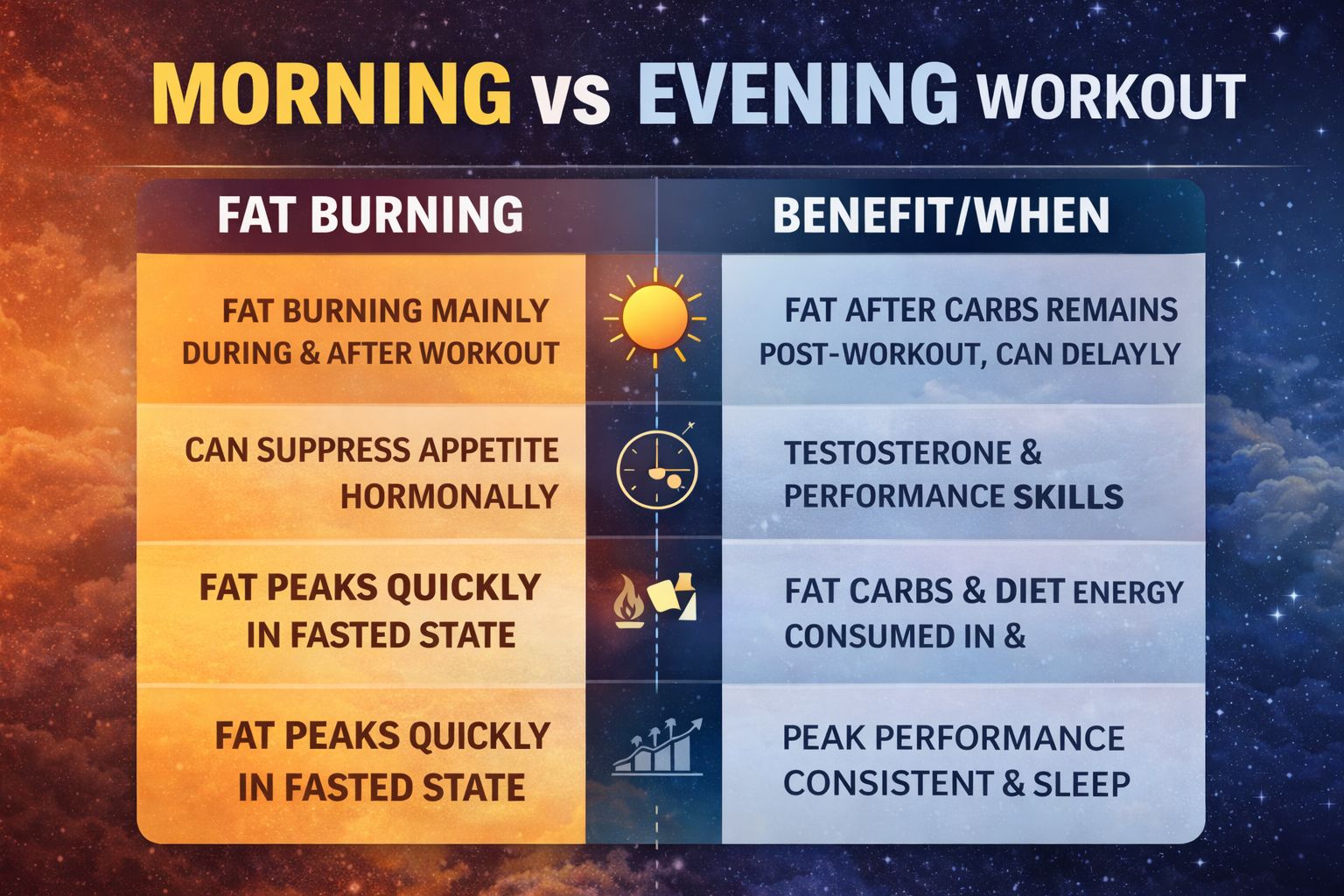
Key Factors to Consider
When choosing your workout time for fat loss, think about these critical factors:
- Fat Burning Potential: Morning workouts, especially before eating, can increase the proportion of fat used for fuel. One theory is that the overnight fast and lower insulin levels mean a higher percentage of calories burned come from fat. For example, fasted AM exercise can elevate post-workout fat usage for hours. On the other hand, exercising later in the day may burn more total calories simply because you can work out harder or longer. The bottom line: both morning and evening workouts burn fat, but the mechanism differs. If your goal is to maximize fat oxidation, a fasted morning cardio session is worth trying.
- Hormones and Cortisol: The stress hormone cortisol is naturally highest in the early morning. A morning workout will add to this cortisol surge. Chronic high cortisol can be catabolic, but a single workout-induced spike is normal and usually resolved by the body. Interestingly, regular exercise can improve your cortisol rhythm: “Exercise early in the day has been shown to lower cortisol levels throughout the remainder of the day,” helping to reset its cycle. In the evening, cortisol is normally lower, so an intense workout may raise it more than usual, which could impair sleep if done too late.
- Energy Levels and Performance: Most people’s strength and endurance are slightly higher later in the day. Muscle power and flexibility are enhanced in the late afternoon/early evening (roughly 4–8 PM) due to warmer body temperature and circadian rhythms. This means you may lift heavier weights or run faster at that time, burning more calories during the workout. If you prioritize performance and muscle gain (which in turn boosts resting metabolism), the evening might be better. Conversely, if you struggle with grogginess or low energy in the morning, saving high-intensity training for later could make workouts more effective.
- Sleep Quality: Late-night high-intensity workouts can interfere with sleep. Exercise raises adrenaline and core temperature, which can take time to settle down. A vigorous workout within 1–2 hours of bedtime can delay the release of sleep hormones, making it harder to fall asleep. If you notice poor sleep or insomnia, try to schedule your workout at least 3–4 hours before bed, or opt for lighter activity in the evening. Morning or afternoon exercise, by contrast, may even improve sleep quality. Some experts recommend morning workouts to help establish a solid sleep-wake cycle.
- Consistency and Lifestyle: The best workout time is one you can stick with. If you have early commitments (work, school, childcare), evenings may be your only option. If your evenings are unpredictable or you hit the snooze button often, morning workouts before anything else might ensure you actually move. As research shows, “exercising at the same time each day is important for long-term maintenance. Think about when you feel your best and least likely to skip workouts. Adjust your schedule, but also plan flexibility (e.g., if you miss an AM run, can you do a quick home workout at lunch?).
Practical Tips for Each Workout Time

Preparing for Morning Workouts:
- Sleep Early: Aim for good sleep so you can wake up energized. Gradually adjust bedtime earlier if needed.
- Hydrate and Light Snack: If you feel weak, try water or a small carb snack (banana, yogurt) 15–30 minutes before. It can boost performance without ruining fat burn much.
- Consistency Tools : Lay out clothes and gear the night before. Use an alarm trick (move it across the room) or plan a workout buddy to keep you accountable.
- Nutrition Post-Workout: Refuel with a balanced breakfast (protein + carbs) after. This helps recovery and prevents overeating later.
Making Evening Workouts Work:
- Schedule It: Put it in your calendar like an appointment. Inform family or friends so they support your plans.
- Mind Your Meals: Allow at least 1–2 hours after dinner before a tough session to avoid discomfort. For moderate workouts, a small snack is fine.
- Wind Down After: Plan a calming routine post-exercise (stretching, shower, dim lights) to ease into sleep mode. If your workout ends late, consider relaxation techniques to help settle cortisol.
- Stay Energized: If you feel drained after a day’s work, boost energy with a short walk or light snack 30 min prior to exercise.
General Tips (Both):
- Warm-Up Thoroughly: Especially in the morning, take time to warm up fully to raise body temperature and reduce injury risk.
- Track Consistency: Keep a log of workouts. Seeing consistent progress (whether AM or PM) can motivate you.
- Listen to Your Body: If you’re exhausted one day, it’s okay to swap times (some weeks AM, others PM) as long as you keep moving. Flexibility can improve adherence.
- Combine with Strength: Include resistance training either morning or evening to build muscle, which raises resting metabolic rate for fat loss.
Who Should Choose When?

For Beginners or Fat-Loss Prioritizers: Morning workouts can jump-start your metabolism and help control appetite, making it slightly easier to lose fat. They also eliminate the “I was too tired later” excuse. If you’re specifically targeting stubborn fat (like belly fat in women), try adding a couple of weekly fasted cardio sessions in the AM, as research suggests extra benefit.
For Performance Goals or Night Owls: If you value strength and speed, evening might suit you better. Performance and hormone peaks are later in the day. Night owls often find it easier to hit the gym after work rather than drag themselves out of bed. Just be mindful of winding down properly afterwards.
For Weight Management with Diabetes or Blood Pressure Concerns: Some experts note that afternoon exercise can help glucose control and blood pressure better than morning, though this depends on the individual. Consult your doctor if you have specific health issues.
Ultimately, consistency beats timing. One study’s take-home: “There does not appear to be an optimal time to exercise” for weight loss. Dr. Nieca Goldberg (NYU cardiologist) emphasizes that combining any exercise routine with healthy eating is key to weight loss. So pick the time you will do it, stick with it, and dial in your diet.
Conclusion

In the morning-evening showdown, neither side “wins” universally. Both morning and evening exercise have unique advantages for fat loss. Morning workouts (especially fasted) may enhance fat oxidation and appetite control, giving a small metabolic edge. Evening workouts can allow more intense performance and flexibility after fueling, which might burn more calories in a session. Consider your lifestyle, work schedule, and when you personally have the most energy. A busy parent might only find time at dawn, while a late-shift worker may prefer night training. The best recommendation is to exercise when you can do it regularly.
Remember, fat loss ultimately comes from overall calorie deficit: regular exercise, sensible nutrition, and good sleep. Use this guide to inform your decision, but don’t overthink it. Whether you choose a sunrise run or an after-work gym session, commit to it and keep moving. Over weeks and months, that consistency will be what truly drives weight loss, not the clock.
FAQs
Q: Is it true that morning workouts burn more fat than evening workouts?
Not necessarily. Some studies show fasted morning workouts boost fat oxidation during the session, but others find little difference in total fat loss between AM and PM exercise. The key is total calories burned and eaten. If you do the same workout, the difference in fat loss is usually small. Choose based on when you feel best and can stick with it.
Q: How does cortisol affect exercise timing?
Cortisol naturally peaks in the early morning. Exercising in the morning adds to this, but regular morning exercise can also help normalize cortisol rhythms. In the evening, baseline cortisol is lower, but intense workouts can spike it when you’re trying to wind down. To avoid sleep issues, finish high-intensity exercise at least a few hours before bed. Overall, exercise (AM or PM) helps lower chronic cortisol over time.
Q: Will an evening workout ruin my sleep?
It depends on timing and intensity. Gentle exercise (like yoga or walking) in the evening can even promote sleep, but vigorous workouts late at night may interfere with falling asleep. Aim to finish your workout at least 1–2 hours before bedtime. If you notice poor sleep quality when exercising late, try moving your session earlier or opting for lighter activities in the evening.
Q: Should I do fasted cardio in the morning to lose weight?
Fasted cardio (exercising before breakfast) can increase the use of fat for fuel during the workout. However, the long-term weight loss benefit is unclear. Some experts warn that fasted exercise can raise cortisol and hunger, potentially offsetting gains. If you feel strong and not dizzy, you can try a fasted session, but it’s not a magic bullet. Listen to your body: if you feel weak, have a small pre-workout snack (e.g., a banana or a protein shake) to maintain performance.
Q: Do I need to stick to one schedule?
Consistency is more important than strict timing. It’s fine to vary between morning and evening if needed. Many people mix it up due to work/family demands. Research suggests keeping a routine (same time each day) helps form habits, but ultimately, doing the workout matters most. If you miss a morning session, don’t skip exercise completely – just swap to later in the day.
Q: What if I only have time for a short workout?
Quality beats quantity if time is short. A brief high-intensity workout (HIIT or circuit training) can burn significant calories and stimulate fat loss, whether done in the AM or PM. Some evidence even suggests short bursts are effective in the morning for maintaining metabolic rate. No matter the length, make sure it’s intense enough to raise your heart rate.
Q: Any supplements or products to enhance morning vs evening fat burn?
Supplements can complement your routine, but they don’t override timing. Common fat-loss aids include caffeine (a.m. energy), green tea extract, or protein powders for recovery. If you exercise in the morning, a cup of coffee can boost alertness and fat oxidation. In the evening, avoid stimulants that might disturb sleep. Always combine supplements with a proper diet and exercise rather than relying on them alone.
Q: How can beginners ease into morning or evening workouts?
Start small. If you’re not used to morning exercise, begin with 10–15 minutes of light cardio or walking after waking. Gradually increase duration and intensity as you adapt. For evenings, ensure you’re energized by taking a short walk or doing some light stretching after work to transition into workout mode. Set realistic goals and reward consistency to build the habit, regardless of timing.
Q: Are there any differences for men vs women in timing?
Some studies hint at sex differences. For example, women may experience slightly more belly fat loss from morning exercise than evening, possibly due to hormonal cycles. One source notes men might oxidize a bit more fat in evening workouts. However, these differences are modest. Both men and women lose weight when they regularly burn more calories than they eat, so focus on a schedule that fits you.
Q: What’s the best overall advice?
The best time is the time you will actually work out consistently. If that’s early morning every weekday, go for it. If evenings work better with your lifestyle and energy, do that. Ensure you get at least 150 minutes per week of moderate exercise (CDC recommendation), no matter when. Combine exercise with a balanced diet, adequate sleep, and stress management for the greatest fat-loss success. As one fitness researcher puts it: “the real key is to exercise consistently” – that’s what will win the fat-loss race, morning or night.
Sources: Authoritative research studies and expert articles have been cited throughout, including recent scientific trials, Harvard Health reports, and expert interviews. These inform the balanced, science-backed advice above.