

Introduction
In recent years, home workouts have surged in popularity. In fact, a 2023 survey found that 52% of U.S. adults exercise regularly at home, compared to only 28% at a gym. Despite this shift, many people report exercising consistently but not seeing the scale budge. Why is that? Simply put, exercise alone is often not enough for weight loss – diet and exercise must work together.

As Harvard Health notes, “if you don’t also control your calories, it’s hard to lose weight just by exercising.” The good news is that many people unknowingly make common home workout mistakes that slow down progress. This guide will expose the most common home workout mistakes that stop weight loss and explain how to fix each one for better fat-burning results.
Mistake #1: Not Training With Enough Intensity

Many home exercisers fall into the trap of staying in their comfort zone – doing light workouts that feel easy. The problem is that low-intensity workouts burn far fewer calories. Research from the National Academy of Sports Medicine (NASM) shows that the same duration of high-intensity exercise burns more total calories and fat than low-intensity exercise. In other words, pushing harder yields a larger calorie burn overall. If you’re coasting along and could easily hold a full conversation or sing while exercising, you might not be working hard enough. (By contrast, the CDC’s “talk test” says that during moderate exercise you should be able to talk but not sing – a sign that you need slightly elevated effort.)
Low effort means low calorie burn, so workouts under 50% effort barely dent your energy needs. To break out of the comfort zone and avoid one of the most common home workout mistakes, focus on making your workouts more challenging. Try these quick fixes:
Add intervals (HIIT): Alternate short bursts of all-out effort (sprints, fast burpees, mountain climbers) with brief rests.
This form of high-intensity interval training spikes your heart rate, increases total calorie expenditure, and continues burning fat even after the workout ends.
Use resistance: Incorporate dumbbells, resistance bands, or loaded objects to make bodyweight moves harder. Even adding a weighted vest or performing slow, controlled reps boosts intensity, builds more muscle, and helps accelerate fat loss during home workouts.
Track effort: Use a heart-rate monitor or perceived exertion scale. Aim for at least 70–80% of your max heart rate or a “7–8 out of 10 effort” for many exercises. If you can hold an easy conversation throughout your workout, it’s time to increase intensity for better results.
By consistently raising workout intensity, you’ll burn more calories per session, overcome this common home workout weight-loss mistake, and significantly improve fat-loss outcomes.
Mistake #2: Doing the Same Routine Every Day

Repetition is great for practicing a skill, but not for weight loss. The human body adapts quickly to familiar stresses. Repeat the same exercises in the same order day after day, and your muscles and metabolism become more efficient at those movements. At first, you may improve, but soon progress stalls. Fitness experts note that repeating the same workouts trains your body to perform them with less effort, eventually causing a weight-loss plateau. In plain terms, a routine that was challenging at first will feel easy, and calorie burn drops due to one of the most common home workout mistakes—lack of variety.
To keep progress going, introduce variety into your plan. Changing up exercises and formats constantly shocks your body out of autopilot, forcing it to work new muscles and burn extra energy. For example, alternate your workouts each day: one day HIIT cardio, next day strength training, another day yoga or mobility work. Incorporate different styles like circuits, bodyweight AMRAPs (as many reps as possible), or dance workouts. This not only prevents plateaus but also keeps you mentally engaged, so your home workouts for weight loss remain effective.
Quick fix: Don’t do “Monday, Tuesday, Wednesday” with identical moves. Instead, vary your workouts by using different exercises (push-ups vs. dips), changing rep schemes, adding new equipment, or alternating cardio modes (running one day, cycling or jump rope another) to constantly challenge the body and avoid falling into repetitive home workout routines that slow fat loss.
Mistake #3: Ignoring Strength Training

Cardio (walking, cycling, jogging) is great for heart health, but doing only cardio misses a crucial piece of the weight-loss puzzle. Without any resistance training, you won’t build or preserve muscle. Why does that matter? Muscle tissue is metabolically active – it burns more calories at rest than fat does. Harvard Health explains, “muscle burns more calories than fat… the more muscle mass you have, the higher your BMR [basal metabolic rate] will be.” In other words, adding lean muscle through strength training raises your metabolism, meaning you burn more calories throughout the day, even when not working out. This makes skipping strength work one of the most common home workout mistakes for weight loss.
Neglecting strength work can also slow progress because your body has fewer “muscle engines” to burn fat. Cardio alone, especially at low intensity, can even cause muscle loss if you’re in a calorie deficit. To maximize fat loss, blend cardio with resistance. At-home strength training (push-ups, lunges, squats, plank rows, etc.) builds muscles in your arms, legs, core, and back. Each pound of muscle you gain can burn an extra ~6–10 calories per day, making strength training a key part of effective home workouts for fat loss.
Quick fix: Add bodyweight or dumbbell exercises 2–3 times per week. For example, replace a “jog” day with a full-body strength circuit: squats, push-ups, rows (with bands or weights), glute bridges, and plank holds. Even just 15–30 minutes of focused resistance work per session can elevate your metabolism long-term and help break through home workout plateaus.
Mistake #4: Not Tracking Calories or Nutrition

A relentless workout routine won’t produce weight loss if you’re unknowingly overeating. Remember the rule of thumb: weight loss requires a calorie deficit (burn more than you eat). Many exercisers overestimate how much they burn. In fact, one analysis found that formal exercise makes up only about 5–10% of our daily energy expenditure, and fitness trackers often “wildly overestimate” calories burned. Meanwhile, it’s easy to underestimate portions of food eaten, which turns into one of the most overlooked home workout mistakes that stop weight loss.
Harvard Health warns that burning calories through exercise alone is much harder than cutting calories from food. For example, a one-hour moderate-intensity workout might burn ~300–500 calories, but a single fast-food meal can exceed that. If you treat the workout as a “free pass” to indulge, the net effect can be weight gain or stalled fat loss. This is why tracking intake is essential: use food-tracking apps (MyFitnessPal, LoseIt, Cronometer) or a food scale to log meals accurately. Similarly, track your workouts (time, intensity) to get a realistic idea of burn and avoid this common home workout weight-loss mistake.
Quick fix: Monitor your calories and macros. Log everything you eat for a week to gauge actual intake. Compare that to estimated exercise calories (from your tracker or manual tables). Adjust so that you end up with a deficit of about 300–500 calories per day for steady fat loss. Simple tools (apps, kitchen scale, meal logging) bring awareness — and often reveal hidden snacks or larger portions that stall progress during home workouts for weight loss.
Mistake #5: Long Rest Periods and Low Workout Efficiency

Effective workouts keep your heart rate elevated. Ironically, taking long breaks between sets or doing very short sessions can undermine calorie burn. If you rest for several minutes between moves or finish workouts quickly, you miss out on potential calories. Fitness experts advocate using circuits or supersets (back-to-back exercises with little rest) to maintain intensity. According to the NASM, circuit training “keeps the heart rate up, which increases the calorie burn” compared to traditional sets. In a circuit, you move quickly from one exercise to the next (e.g., 10 squats, 10 push-ups, 10 lunges in sequence), only resting after completing the full cycle — helping you avoid one of the most common home workout mistakes related to rest timing.
By limiting downtime, circuits tap into more muscle groups and create a mini “afterburn” effect, where your metabolism stays elevated post-workout. Studies show that shorter, more intense workouts can burn more calories in the same time frame than an easy pace with long rests, making them highly effective for home workouts for weight loss.
Quick fix: When strength training, try supersets (pair exercises like chest press + row with no rest between) or circuit rounds (3–5 exercises in a loop, then repeat). Keep rest periods under 30 seconds if you can. This approach boosts workout efficiency so you do more work (and burn more fat) in less time — helping you overcome home workout plateaus tied to low intensity and long rest breaks.
Mistake #6: Poor Exercise Form
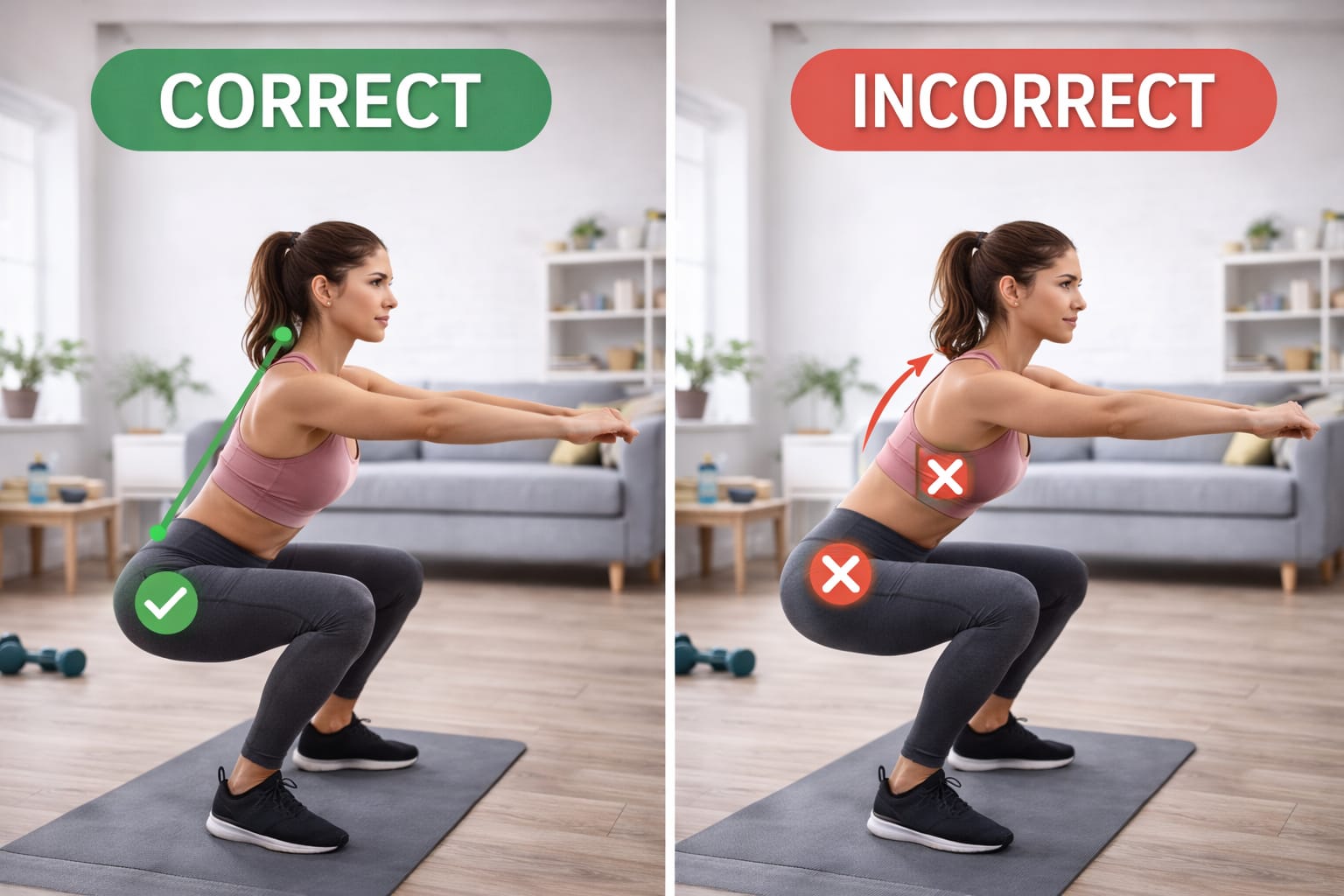
Form matters. Executing moves with sloppy technique not only makes them less effective, but it also increases injury risk. If you’re bending incorrectly or using momentum, your target muscles aren’t fully working. For instance, leaning forward during a squat shifts the load away from the glutes to the lower back. Rushing through reps or rounding your shoulders in a push-up means your muscles aren’t engaged properly — one of the most overlooked home workout mistakes that reduces calorie burn and limits fat-loss results.
In fact, research shows that unsupervised exercisers often lose proper form over time. One study found that “the majority of participants did not use the instructed exercise form” after just two weeks of at-home workouts. The takeaway: without feedback, people drift to safer but less effective postures. Poor form means you’re getting less out of every rep, and you might get hurt (sprained joints, strained muscles, etc.), making this a major home workout mistake that stops weight loss.
Quick fix: Prioritize quality over quantity. Use mirrors or a video to check alignment. Look up short tutorials or apps to learn proper technique (plenty of fitness apps show form cues). Start with easier modifications if needed (knee push-ups, wall squats) and slowly progress. Focus on slow, controlled reps with a full range of motion. Even adding a 1–2-second pause at muscle contraction points helps cement good form. Remember: a slower, perfect rep engages more muscle, improves fat-burning efficiency, and is far better for home workout results than a fast, sloppy one.
Mistake #7: Skipping Warm-Up & Cool-Down
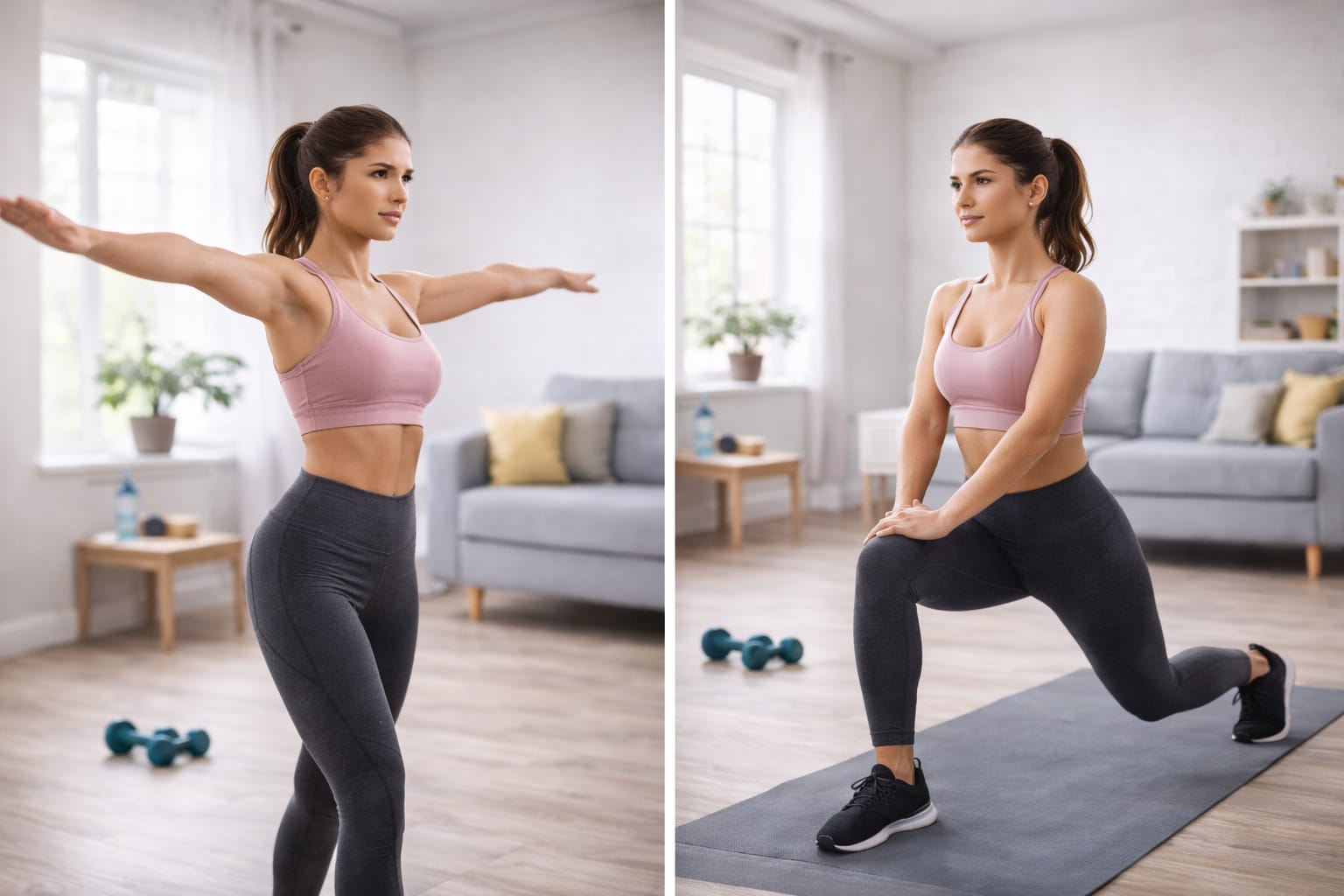
It’s tempting to jump straight into the workout (or log off and relax immediately after), especially at home. However, skipping a proper warm-up or cool-down can hurt performance and recovery. A dynamic warm-up (light cardio and mobility moves) raises muscle temperature and blood flow, preparing your body to work harder. Warm muscles are more flexible and efficient, which not only improves workout performance but also reduces injury risk. For example, even 5–10 minutes of brisk walking or jumping jacks gradually raises heart rate, primes muscles, and helps prevent strains — making this one of the easiest home workout mistakes to fix.
Likewise, a gradual cool-down at the end aids recovery. Stopping abruptly can leave blood pooled in the legs, causing lightheadedness. A proper cool-down (slow walking or gentle cycling) lets your heart rate and breathing taper down safely. Including stretching or foam rolling while muscles are still warm can also help reduce post-workout stiffness by dispersing lactic acid, which improves long-term results from your home workouts for weight loss.
Quick fix: Always start with 5–10 minutes of warm-up before intense effort. This could be jogging in place, arm circles, dynamic lunges, or yoga flows that target the muscles you’ll use. After the main workout, spend a few minutes cooling down (walking, gentle bike, or static stretches). This small habit improves performance, reduces injury risk, and helps you recover faster — preventing another common home workout mistake.
Mistake #8: No Progressive Overload
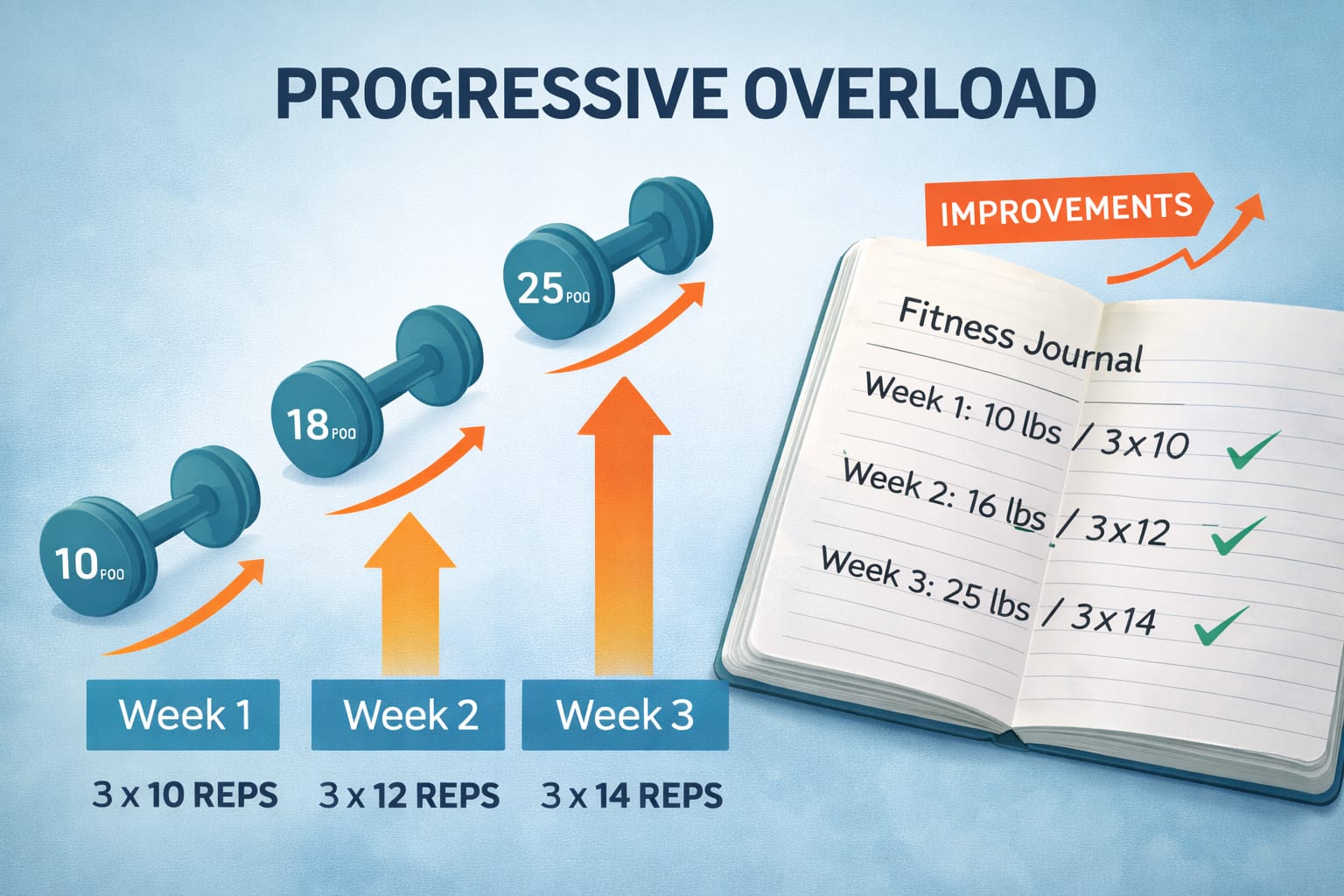
Your body needs a reason to get stronger and lose fat. If you do the same workout every week – same weights, reps, and pace – your body never has to adapt. Progressive overload is the principle of gradually increasing the demands on your muscles. Without it, gains plateau. As one expert guide explains, a “gradual overload is necessary to constantly achieve strength adaptations. If you do not apply the principle of overload, your strength and hypertrophy improvements quickly plateau.” This makes failing to progress intensity one of the most common home workout mistakes that stop weight loss.
In practice, progressive overload can mean adding weight, more reps, an extra set, or reducing rest over time. At home, that might be adding a few extra push-ups each week, increasing dumbbell weight, or trying a harder variation (e.g., decline push-ups). Even intensity can progress by slowing tempo or increasing range of motion. The key is consistent, incremental increases so the body is continually challenged and your home workouts for fat loss stay effective.
Quick fix: Track your workouts and tweak them weekly. Example strategies include: increase reps by doing 1–2 more push-ups or squats each session; increase sets by adding an extra round to a circuit; increase weight or resistance by using heavier dumbbells or tighter bands; alter difficulty by jumping instead of squatting or adding a pause to make it harder. These small changes force new adaptation – for instance, upping squat reps from 10 to 12 next week – so you’re always pushing a bit beyond comfort and avoiding home workout plateaus.
Mistake #9: Not Getting Enough Sleep

Underestimating sleep is a sneaky roadblock. Inadequate or poor-quality sleep disturbs the hormonal balance that regulates hunger and fat storage. Research shows that sleep deprivation raises ghrelin (“hunger hormone”) and lowers leptin (“satiety hormone”), making you feel constantly ravenous. Additionally, chronic sleep loss disrupts cortisol and insulin, promoting fat storage (especially around the belly) and increasing cravings for high-calorie foods. As one expert explains, “inadequate sleep disrupts hormone levels, which dysregulates one’s metabolism and makes individuals hungrier… [leading to] weight gain.” This makes poor sleep one of the most underestimated home workout mistakes that stop weight loss.
In short, even if your workouts are solid and your diet is on point, skimping on sleep can negate progress. Poor sleep also means you’ll have less energy, making tough workouts harder to tackle. This fatigue can reduce workout intensity and ultimately slow fat-loss results from your home workouts.
Quick fix: Aim for 7–9 hours of quality sleep per night. Establish a regular bedtime routine (no screens 1 hour before bed, cool dark room). If busy life encroaches on sleep, remember the cycle: less sleep → worse hunger control → poor eating → stalled weight loss. Treat sleep as part of your fitness routine. Proper rest helps your fat-loss hormones reset and ensures you have the stamina for intense home workout sessions that actually deliver results.
Mistake #10: Inconsistent Workouts
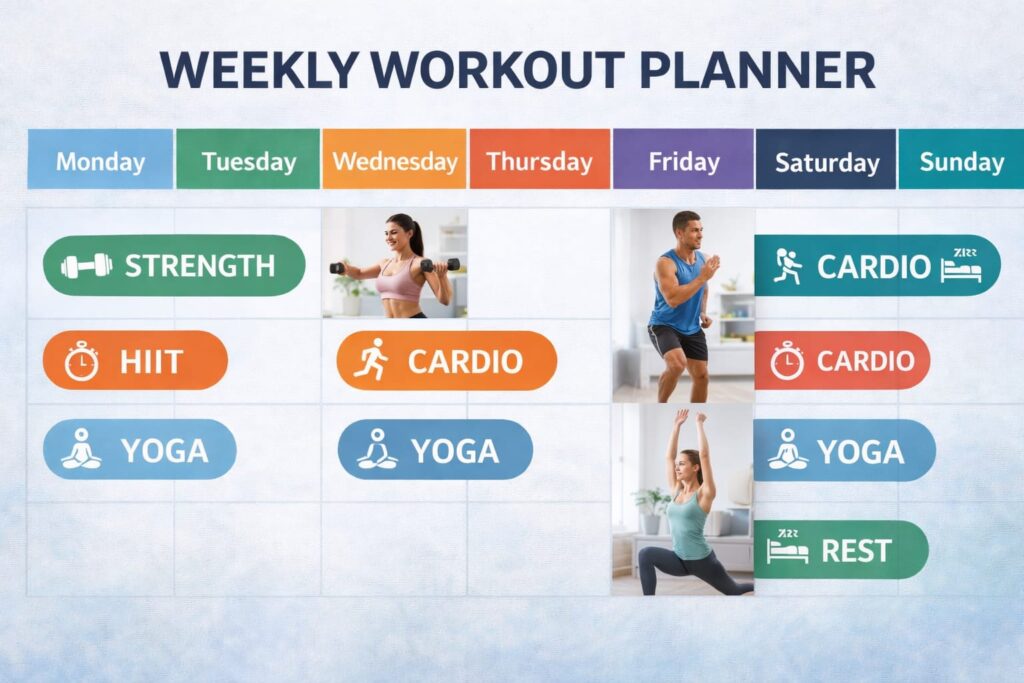
All the planning in the world can’t help if it’s not carried out consistently. Skipping workouts or going long gaps between sessions slows progress. Consistency is the engine of fitness gains – your body thrives on regular signals to burn fat and build muscle. Missing too many workouts causes your weekly calorie burn to drop and your metabolism to downshift. It’s like taking two steps forward, one step back; progress stalls, and you fall into one of the most common home workout mistakes: lack of consistency.
Building a disciplined habit is crucial. As one health article succinctly put it: “Consistent exercise is good for a person’s health and well-being—that much is well-known.” Scheduling workouts like appointments helps too – treat them as non-negotiable. If motivation flags, remember that any amount of activity is better than none. (Even walking the dog counts!) Regular movement keeps your metabolism active and prevents home workout plateaus that slow weight loss.
Quick fix: Plan your workout days and stick to them. Mark them on your calendar or set reminders. If one day didn’t happen, don’t skip the rest; just resume your schedule ASAP. Over time, consistency becomes habitual. Keep telling yourself “I exercise X times per week,” and show up for it. Even a short session beats none – focus on being regular rather than perfect, which is essential for effective home workouts for weight loss.
Bonus: Hidden Lifestyle Habits That Block Weight Loss

Sometimes, subtle daily habits outside the gym can cancel out your hard work. Two big culprits are chronic stress and prolonged sitting — both of which contribute to hidden home workout mistakes that slow weight loss:
- Stress & Cortisol: Chronic stress raises cortisol, the “stress hormone,” which can drive fat storage (especially around the midsection). Sustained high cortisol also increases appetite and cravings. Studies show that sleep loss or stress can spike cortisol and insulin, promoting belly fat accumulation. If work-life is constantly stressful, incorporate relaxation techniques (deep breathing, meditation, walks) to blunt cortisol’s effect and support better results from your home workouts for fat loss.
- Sitting Too Much: Even if you exercise, excessive sitting the rest of the day is harmful. Research links long sitting periods to obesity and metabolic issues. Sitting “too much” can slow your metabolism, making it harder to break down body fat. Combat this by taking breaks: stand, stretch, or walk briefly every 30–60 minutes. Use a standing desk or pace while on calls. These small bouts of movement burn extra calories cumulatively and help prevent hidden weight-loss plateaus.
- Reward Snacking: After a tough workout, it’s tempting to “treat yourself” to snacks. The problem is, we often overshoot calories that way. In one study, people overestimated exercise burn by up to 4x and then ate 2–3 times the calories they burned. In other words, that extra post-workout cookie can easily wipe out your deficit. Be mindful of “I deserve it” snacking. Instead, reward yourself with healthy habits (new workout gear, a massage) rather than food. And always log those treats to stay honest about intake so your home workout results actually show.
By addressing these lifestyle factors alongside your workouts, you remove hidden blocks to fat loss and prevent the everyday home workout mistakes that silently stall progress.
How to Fix All These Mistakes: A Simple Weekly Plan
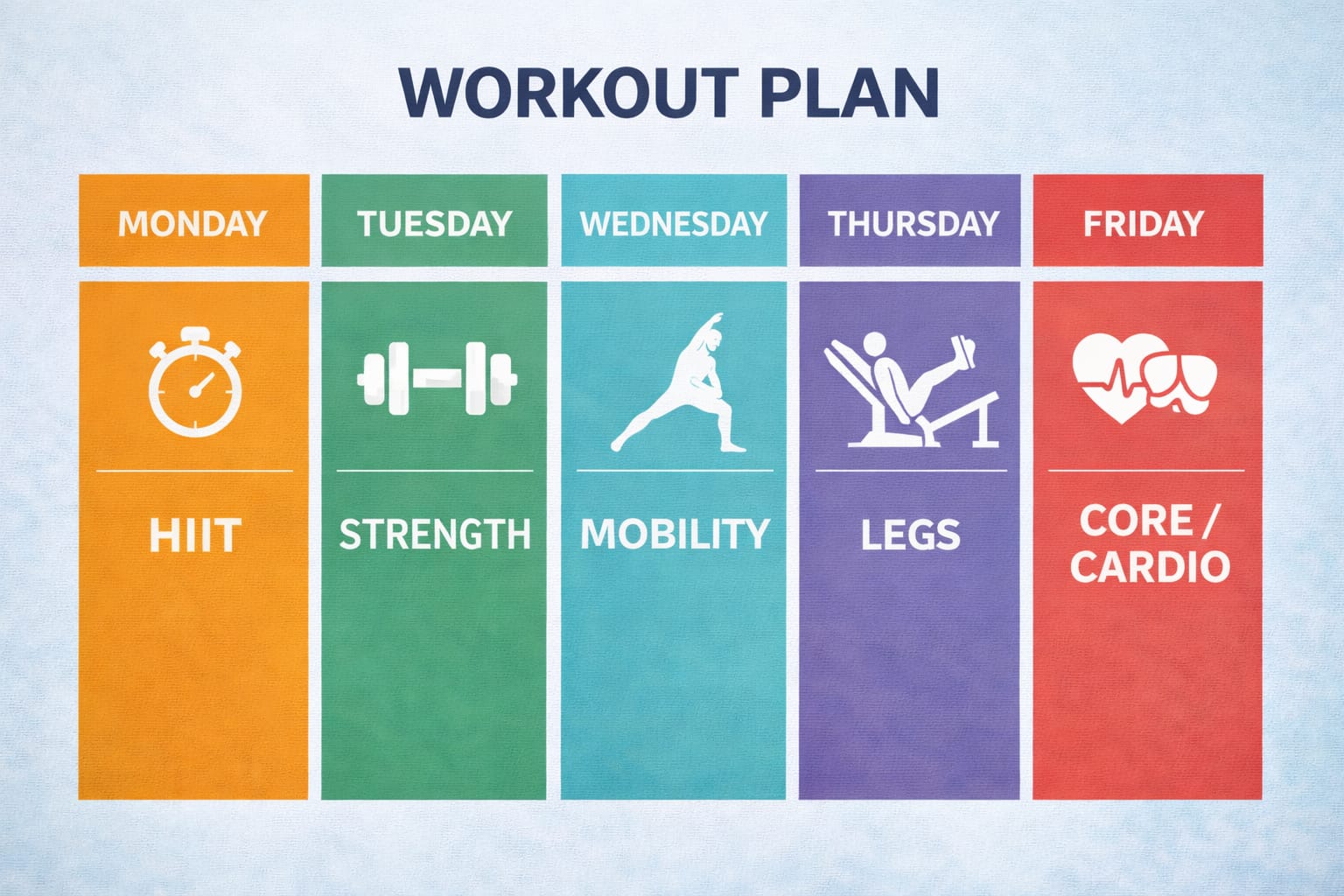
Now, let’s put it all together into a practical structure. A balanced week should mix HIIT/cardio, strength, mobility, and rest, as guidelines recommend. For context, U.S. health guidelines suggest at least 150 minutes of moderate or 75 minutes of vigorous exercise per week, plus muscle-strengthening activity 2+ days a week. Here’s an example 5-day home workout plan that avoids the major home workout mistakes we’ve covered:
- Monday (HIIT/Cardio): 30 minutes of HIIT or vigorous cardio (e.g., sprints, jumping jacks, burpees, high-intensity jump rope). Perform intervals (30–45 sec all-out, 15–30 sec rest). Warm up thoroughly, then cool down with light stretching to support recovery and fat loss.
- Tuesday (Upper-Body Strength): 30–40 minutes strength circuit targeting arms and back. Exercises: push-ups (or variations), dumbbell rows (or back flies with bands), shoulder presses, tricep dips. Do 3–4 circuits with minimal rest to keep heart rate elevated for improved home workout calorie burn.
- Wednesday (Active Recovery/Mobility): 30 minutes of yoga, Pilates, or mobility work. Focus on stretching hips, back, and shoulders; include core stability work. This day aids recovery, flexibility, and injury prevention.
- Thursday (Lower-Body Strength): 30–40 minutes strength circuit for legs/glutes: squats, lunges, glute bridges, calf raises. Again, do multiple sets in circuit fashion. Add resistance (weights or loaded objects) to progress overload and maintain effective home workouts for weight loss.
- Friday (Mixed Cardio & Core): 30 minutes moderate cardio (jogging, brisk walking, cycling) plus a core routine. For cardio, keep a steady pace (moderate intensity, you can speak in short sentences). After cardio, do 2–3 core exercises (planks, mountain climbers, bicycle crunches).
- Saturday & Sunday (Rest/Light Activity): Take full rest or do very light activity (walk, easy swim, foam rolling). Ensure at least one full rest day. Prioritize sleep and good nutrition on these days to support metabolism and recovery.
This plan mixes HIIT (for intensity), strength (for muscle), and mobility, with scheduled rest – aligning with the AHA recommendation of aerobic + strength days. It also addresses all the common home workout mistakes: each workout is intense enough, varied, includes warm-ups and cool-downs, and is balanced across the week. Tailor the durations to your level (even 20-minute versions count) – the key is to keep moving consistently and progressively challenge yourself for better home workout results.
FAQs
- Do home workouts really help with weight loss?
Yes, home workouts can be highly effective for weight loss when done correctly. Weight loss depends on creating a calorie deficit through a combination of exercise, daily activity, and nutrition. Home workouts that include sufficient intensity, strength training, and progressive overload can burn calories, build lean muscle, and boost metabolism—just like gym workouts. The key is structure, consistency, and avoiding common mistakes such as low intensity or poor nutrition control. - Is cardio alone enough for weight loss at home?
Cardio helps burn calories, but cardio alone is not ideal for long-term fat loss. Strength training builds muscle, which increases resting metabolism and improves body composition. The most effective approach is a combination of cardio, strength training, and mobility work. - How many days per week should I work out at home?
For most people, 4–6 days per week works best. This allows enough activity for calorie burn while still giving the body time to recover. At least 1–2 rest or active recovery days are important to prevent burnout and injuries. - Do I need equipment for effective home workouts?
No, but equipment can help. Bodyweight workouts alone can build strength and burn fat. However, adding resistance bands, dumbbells, or kettlebells makes progressive overload easier and improves long-term results. Both approaches are effective when used correctly. - How long does it take to see weight loss results from home workouts?
Most people begin noticing changes in 2–4 weeks, such as increased energy or better endurance. Visible fat loss typically appears within 4–8 weeks, depending on consistency, intensity, nutrition, sleep, and starting fitness level. - What is the biggest mistake people make with home workouts? The biggest mistake is thinking effort alone is enough. Many people work out consistently but ignore intensity, strength training, nutrition, sleep, or progression. Weight loss requires a complete system, not just movement.

Conclusion
Home workouts offer flexibility and convenience, but they must be smart to yield results. We’ve uncovered the 10 most common home workout mistakes – from low intensity and sameness to neglecting strength, nutrition, rest, and recovery. Each mistake on its own can slow progress; together, they can stall weight loss entirely. The fix is simple in theory: train harder, eat wisely, rest well, and keep changing things up. Follow the tips above and integrate them into your routine to ensure your home workouts for weight loss stay effective.
Your home workout journey can accelerate when you avoid these pitfalls. The power is in your hands to correct the course: turn up the intensity, vary your regimen, lift weights, track food, shorten rest periods, use proper form, warm up, sleep enough, and stay consistent. Start your smarter, mistake-free home workout program today, and you’ll finally see the scale move in the right direction — unlocking real, sustainable fat-loss results from home workouts.