
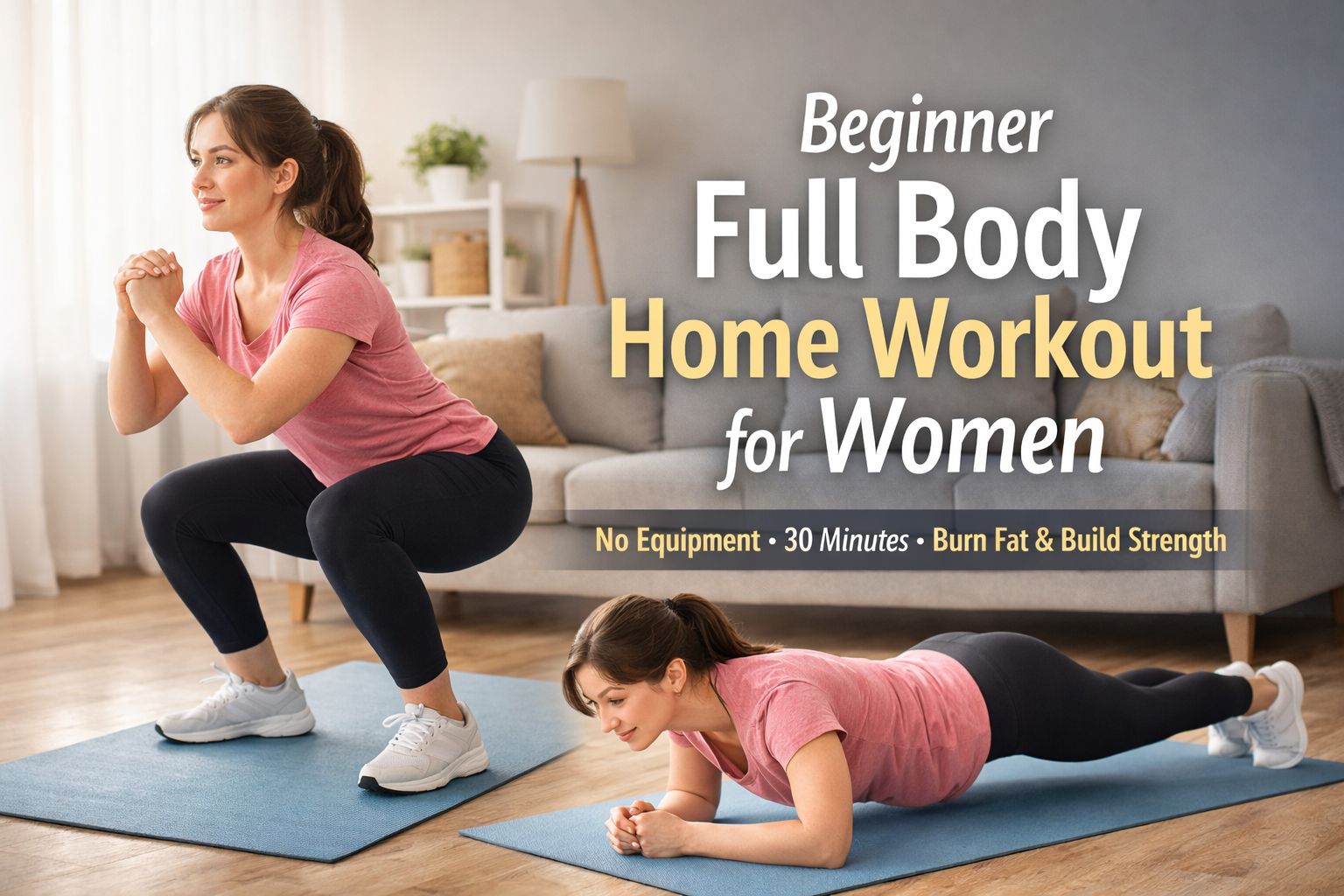
A Safe, Effective, and Realistic At-Home Plan to Build Strength, Support Fat Loss & Feel Stronger in Your Own Body
Starting a workout routine can feel intimidating — especially if you’re new to exercise, restarting after a long break, or trying to fit fitness into an already busy life.
Maybe you’ve thought about joining a gym but felt unsure.
Maybe high-intensity workouts look overwhelming.
Maybe you simply don’t know where to begin.
Here’s the good news: you don’t need a gym membership, expensive equipment, or extreme workouts to start seeing progress.
This beginner-friendly full body home workout routine for women is designed to help you build foundational strength, improve endurance, and support healthy fat loss — all from the comfort and privacy of your home.
No pressure. No complicated moves. Just a structured starting point that meets you where you are.
Why Full Body Workouts Are Ideal for Beginner Women
When you’re just starting, complicated workout splits can feel confusing. Training one muscle group per day isn’t necessary in the beginning.
Full body workouts are effective because they:
- Activate multiple muscle groups in one session
- Support healthy metabolism and muscle tone
- Improve coordination and overall strength
- Require only 3–4 sessions per week
- Reduce injury risk compared to high-impact programs
Instead of overwhelming your body, full-body routines create balanced strength. You build a strong foundation — which is exactly what beginners need.
And when your foundation is strong, progress becomes safer and more sustainable.
What You Need Before You Start
One of the best parts of this routine? It’s simple.
You need:
- A small clear space at home
- Comfortable workout clothes
- Supportive footwear (optional depending on your flooring)
- A yoga mat or soft surface for floor exercises
Optional additions for future progression:
- Light dumbbells
- Resistance bands
Before starting any new fitness program, especially if you have joint pain, medical conditions, or long periods of inactivity, consult your healthcare provider. Beginning safely is always more important than beginning aggressively.
5-Minute Beginner Warm-Up Routine
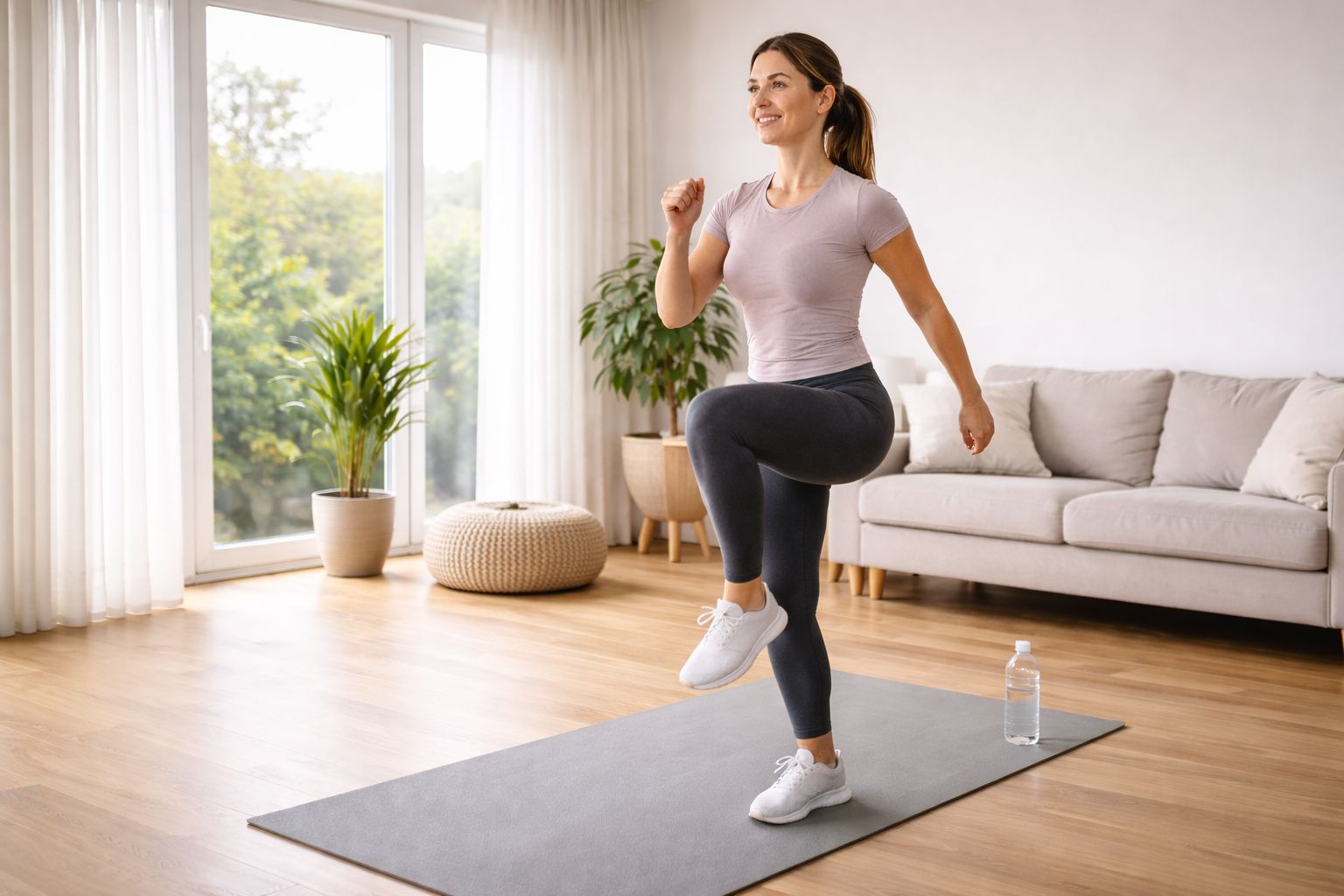
Warming up prepares your muscles, joints, and cardiovascular system for movement. Skipping it increases stiffness and injury risk.
Think of it as gradually switching your body from “rest mode” to “ready mode.”
1. March in Place (1 Minute)
Lift your knees gently. Swing your arms naturally.
Increase your breathing slightly, but keep it comfortable.
2. Arm Circles (30 Seconds Forward, 30 Backward)
Small circles at first, gradually making them larger.
Feel your shoulders loosen up.
3. Hip Rotations (30 Seconds)
Place hands on hips. Rotate slowly in controlled circles.
This wakes up the lower body and improves mobility.
4. Bodyweight Half Squats (10 Reps)
Lower halfway down — not too deep.
Let your legs start engaging gradually.
5. Gentle Standing Stretch (30 Seconds)
Reach overhead. Side bend gently. Roll your shoulders back.
After five minutes, your body will feel warmer and more prepared to move confidently.
Beginner Full Body Home Workout Routine
Frequency: 3–4 times per week
Duration: 25–35 minutes
Rest Between Exercises: 30–45 seconds
Rest Between Rounds: 60 seconds
Rounds: 2–3
If two rounds feel challenging in the beginning, that’s completely normal. Start where you are. Consistency matters more than intensity.
Exercise 1 – Bodyweight Squats
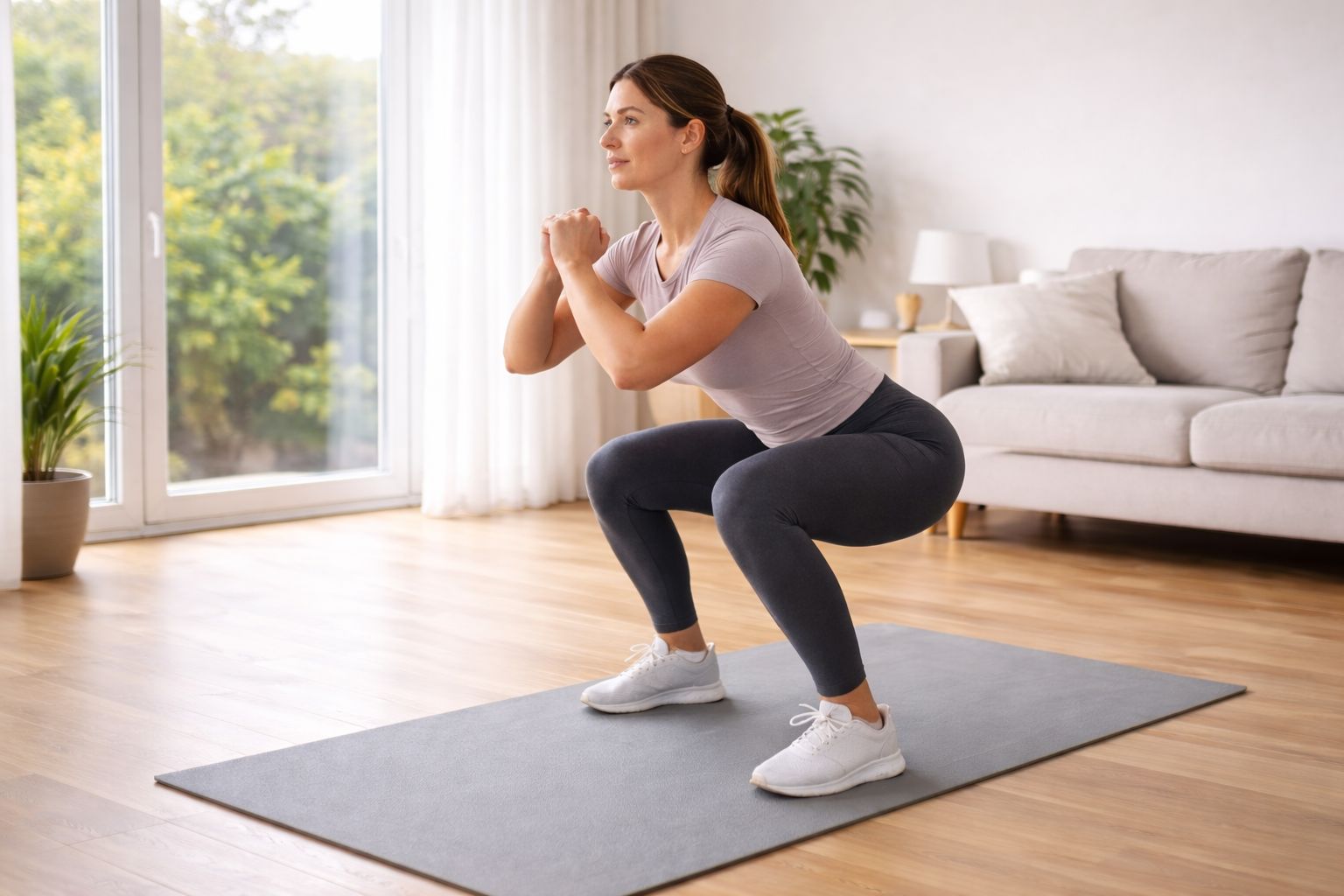
Muscles Worked: Glutes, quadriceps, hamstrings, core stabilizers
Bodyweight squats are foundational for lower-body strength. They also improve balance and support knee health when performed correctly.
How to Perform:
- Stand with feet shoulder-width apart
- Push hips back as if sitting into a chair
- Bend knees and lower until thighs are parallel (or as low as comfortable)
- Press through heels to return to standing
Move in a slow, controlled manner. You may feel your thighs working — that’s expected. Focus on keeping your chest lifted and knees aligned with your toes.
Beginner Modification:
Place a chair behind you and lightly sit before standing again.
Reps: 10–12
Exercise 2 – Wall Push-Ups
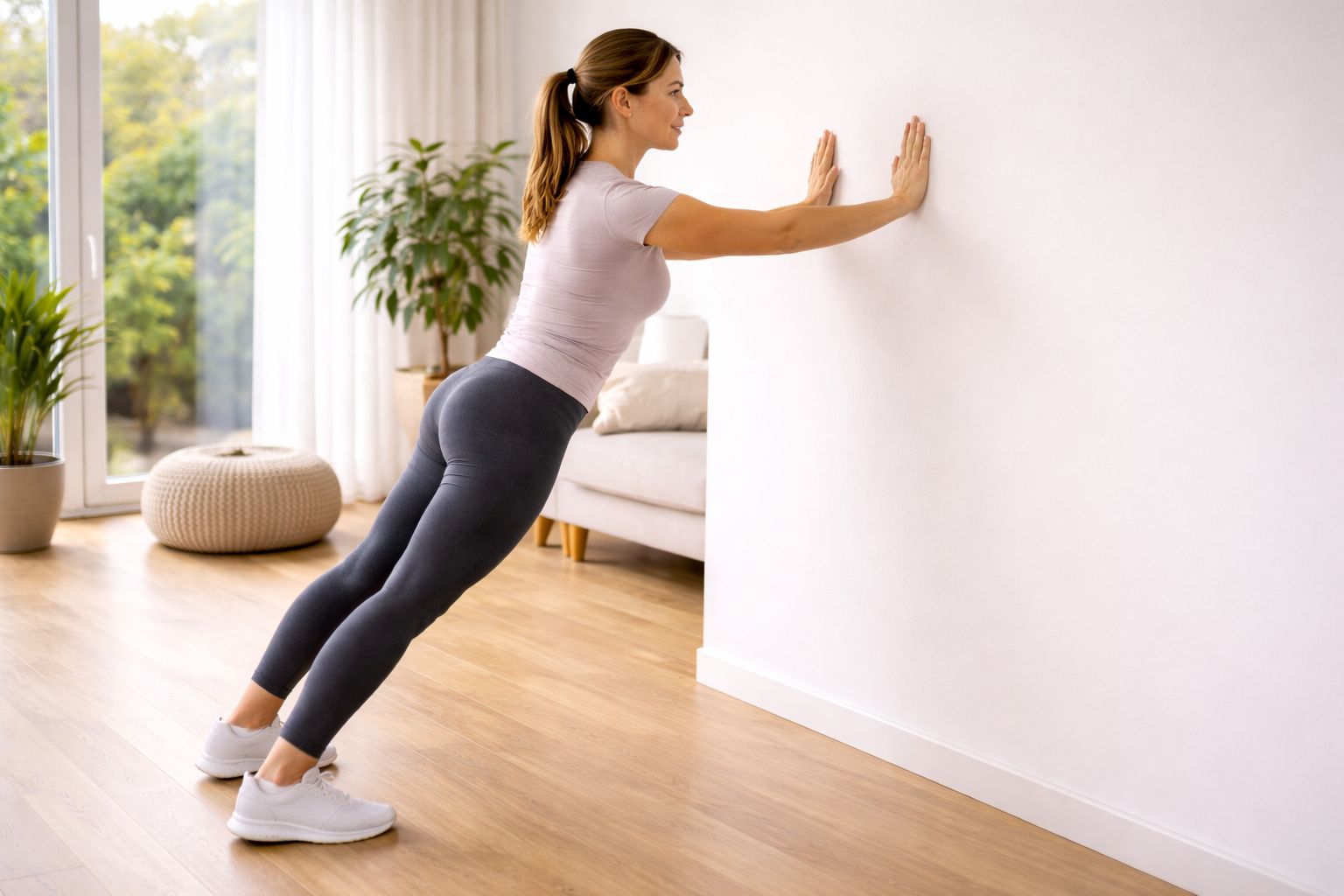
Muscles Worked: Chest, shoulders, triceps
Wall push-ups build upper body strength without placing too much strain on wrists or shoulders.
How to Perform:
- Stand facing a wall
- Place hands at shoulder height
- Step feet slightly back
- Bend elbows and lean toward the wall
- Push back to starting position
Keep your body straight from head to heels. Avoid arching your lower back.
If this feels too easy over time, progress to incline push-ups on a sturdy table or countertop.
Reps: 8–12
Exercise 3 – Glute Bridges
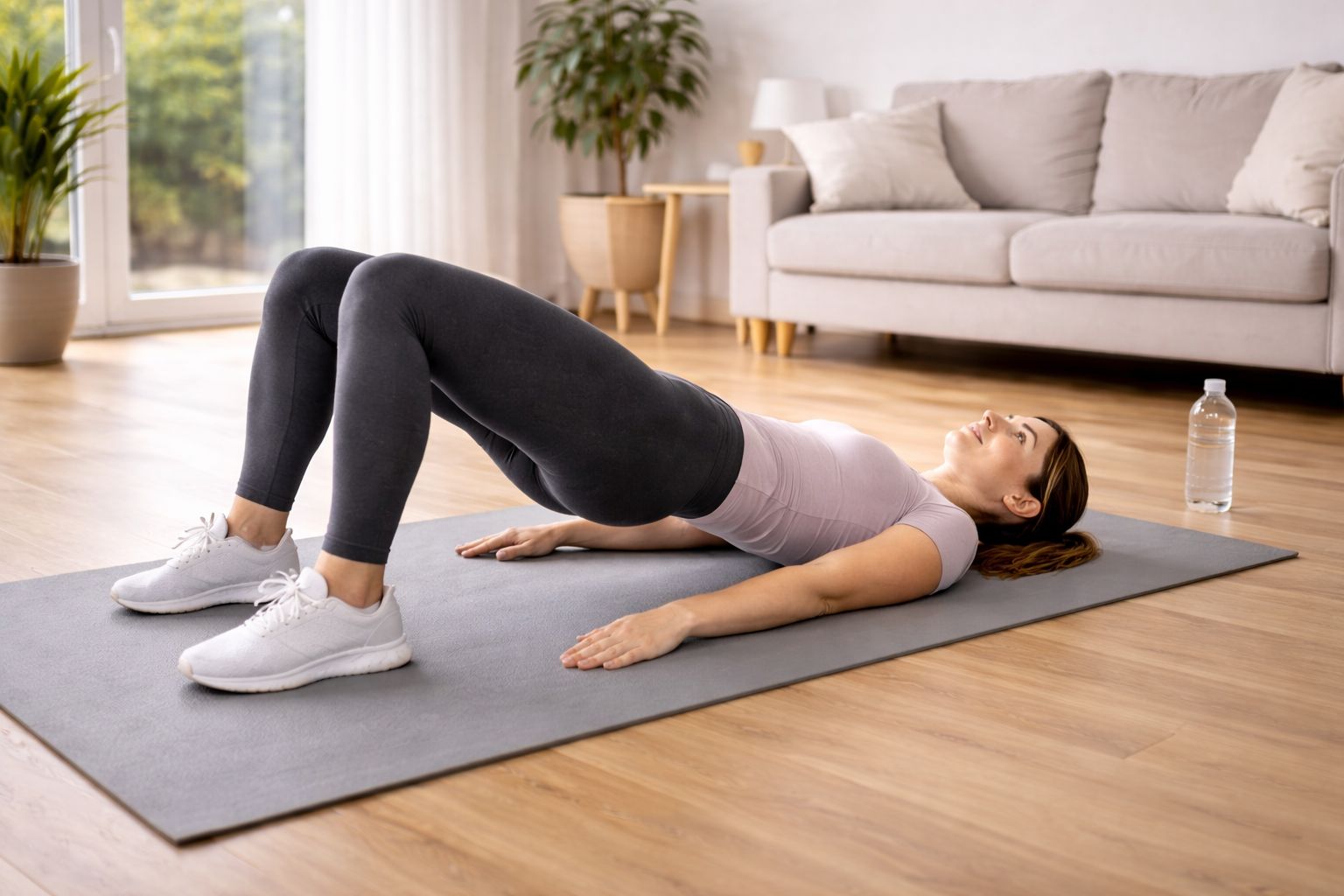
Muscles Worked: Glutes, hamstrings, core
Strong glutes are essential for posture, lower back support, and hip stability.
How to Perform:
- Lie on your back
- Bend knees with feet flat on floor
- Press through heels
- Lift hips until your body forms a straight line from shoulders to knees
- Lower slowly with control
Pause briefly at the top and gently squeeze your glutes.
Avoid pushing through your lower back. The movement should feel controlled and stable.
Reps: 10–12
Exercise 4 – Standing Side Leg Raises
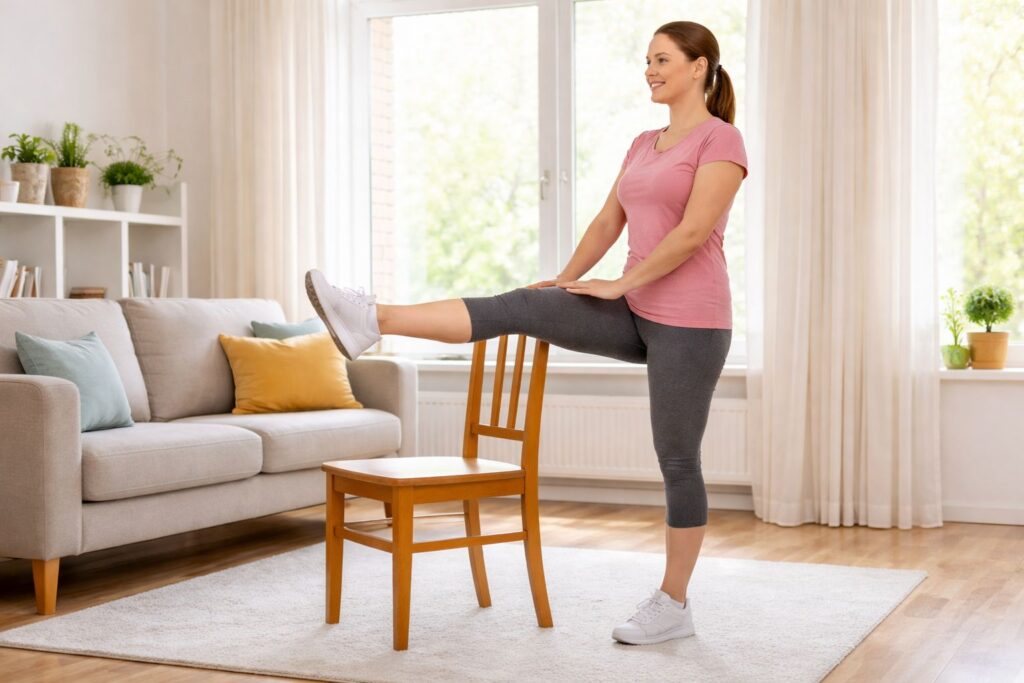
Muscles Worked: Outer thighs, hip stabilizers
This movement strengthens smaller stabilizing muscles that improve balance and reduce injury risk.
How to Perform:
- Stand upright
- Hold a chair or wall for balance if needed
- Lift one leg slowly out to the side
- Lower with control
Keep your torso upright. Avoid leaning.
Reps: 10 per side
Exercise 5 – Modified Plank (Knees Down)
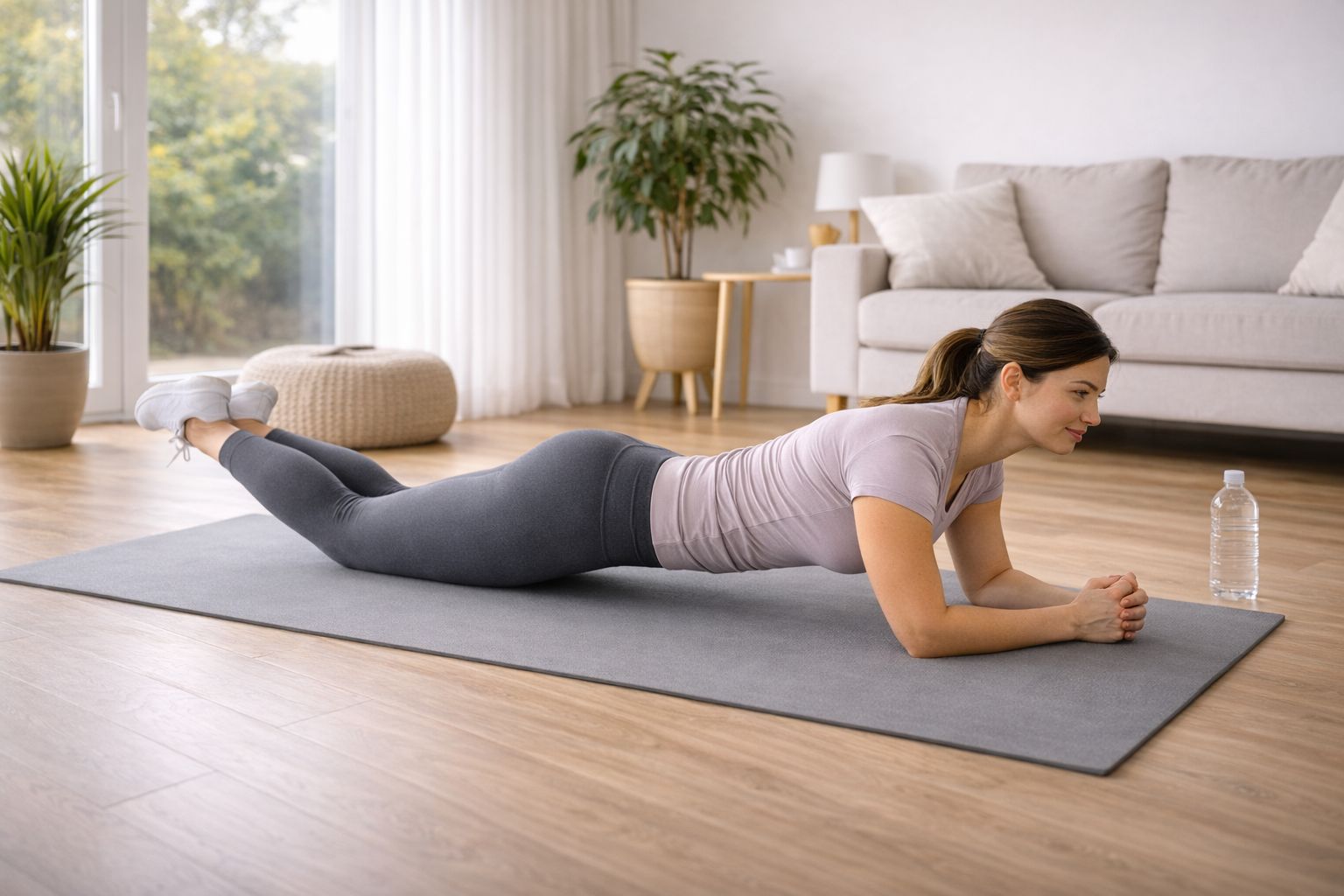
Muscles Worked: Core, shoulders, lower back stabilizers
Core strength supports every other movement in this routine.
How to Perform:
- Place forearms on floor
- Knees on ground
- Lift hips so body forms a straight line from head to knees
- Hold for 20–30 seconds
Keep your neck neutral and engage your abdominal muscles.
If 30 seconds feels challenging, start with 10–15 seconds and gradually increase.
Cool Down and Stretching (5 Minutes)
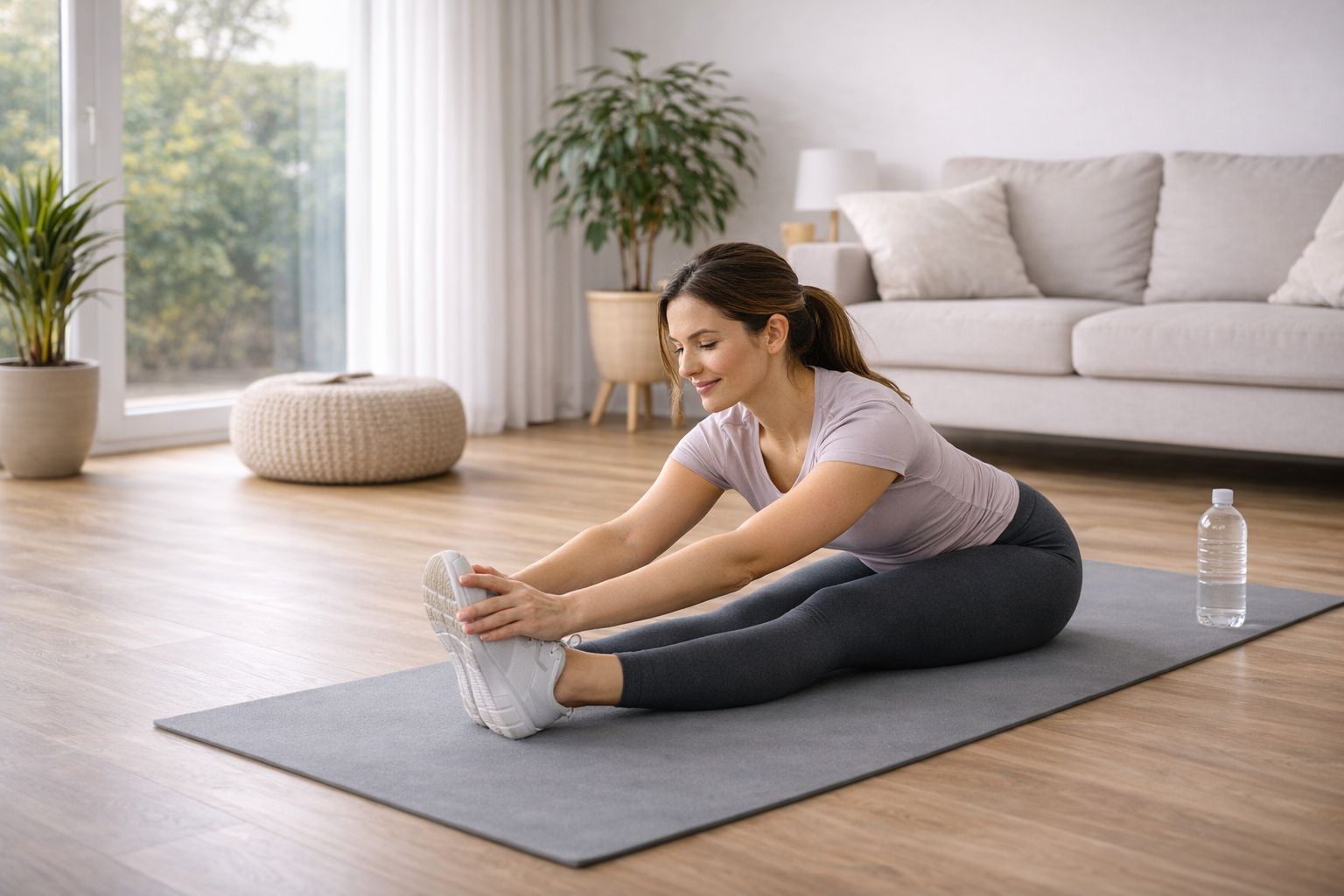
Cooling down helps regulate heart rate and reduces muscle tightness.
Include:
- Standing hamstring stretch
- Quadriceps stretch
- Shoulder stretch
- Deep breathing
Inhale slowly through your nose. Exhale fully. Allow your body to relax.
Sample 4-Week Beginner Plan
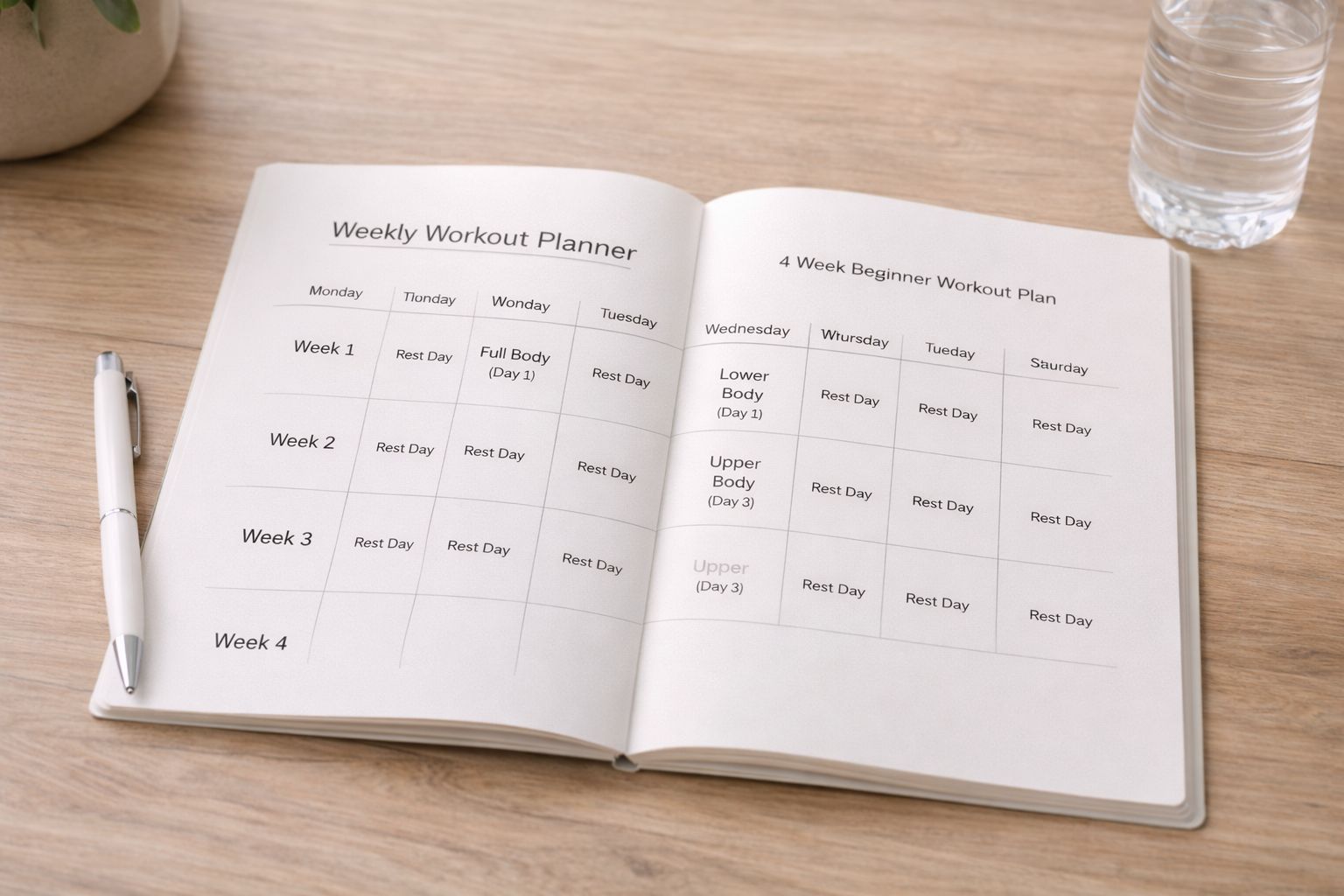
Weeks 1–2:
Perform 2 rounds. Focus on learning proper form.
Weeks 3–4:
Increase to 3 rounds if comfortable.
Optional: Add light walking on non-workout days.
Rest days are important. Muscles grow and repair during recovery.
Beginner Nutrition Basics to Support Results
Exercise builds strength. Nutrition supports body composition changes.
Focus on:
- Including protein in each meal
- Staying hydrated
- Avoiding extreme calorie restriction
- Eating balanced meals (protein, fiber, healthy fats)
Small, consistent habits produce long-term results.

How to Progress Safely After 4 Weeks
Once this routine feels manageable:
- Increase repetitions
- Slow down tempo for more muscle engagement
- Add light dumbbells
- Try resistance bands
Progression should feel challenging but controlled — not overwhelming.
Frequently Asked Questions (FAQs)
- How long does it take to see results from a full-body home workout routine?
Most beginner women start noticing improved energy and strength within 2 to 4 weeks of consistent training. Visible physical changes, such as improved muscle tone or fat loss, typically appear around 6 to 8 weeks, depending on nutrition, consistency, and individual metabolism.
However, the first change most women notice isn’t physical — it’s increased confidence and stamina. Staying consistent matters more than rushing results. - Is 30 minutes of home workout enough for beginners?
Yes. A well-structured 30-minute full-body home workout is more than enough for beginners. When exercises target multiple muscle groups, your body works efficiently without requiring long gym sessions.
Consistency (3–4 times per week) delivers far better results than occasional long workouts. - Is this routine safe for overweight or out-of-shape beginners?
Yes. This routine is designed to be low-impact and beginner-friendly, focusing on controlled movements rather than jumping or high-intensity exercises.
However, individuals with medical conditions, joint pain, or recent injuries should consult a healthcare professional before starting. - What is the best time of day to do a home workout?
The best time is the time you can stay consistent with.
Some women prefer mornings for energy and routine-building. Others prefer evenings to relieve stress. Choose a time that fits your lifestyle and feels sustainable.
Consistency is more important than timing. - Is 30 minutes enough?
Yes. Consistent 30-minute sessions are highly effective for beginners. - Can beginners lose weight with home workouts?
Yes, especially when combined with balanced nutrition and consistency.
Common Beginner Mistakes to Avoid
- Skipping warm-ups
- Rushing through repetitions
- Ignoring rest days
- Comparing your progress to others
- Expecting rapid results
Sustainable progress happens gradually.
Final Thoughts
You don’t need perfection to begin.
You don’t need advanced fitness knowledge.
You need a starting point — and consistency.
This full body home workout routine for women (beginner level) is designed to help you build strength safely and confidently.
Start where you are.
Move with control.
Stay consistent.
Progress will follow.