In today’s fast-paced world, many people feel overwhelmed by constant distractions, stress, and mental clutter. Between work responsibilities, social media notifications, and daily obligations, it can be difficult to stay present and fully engaged in life.
This is where mindfulness can make a profound difference.
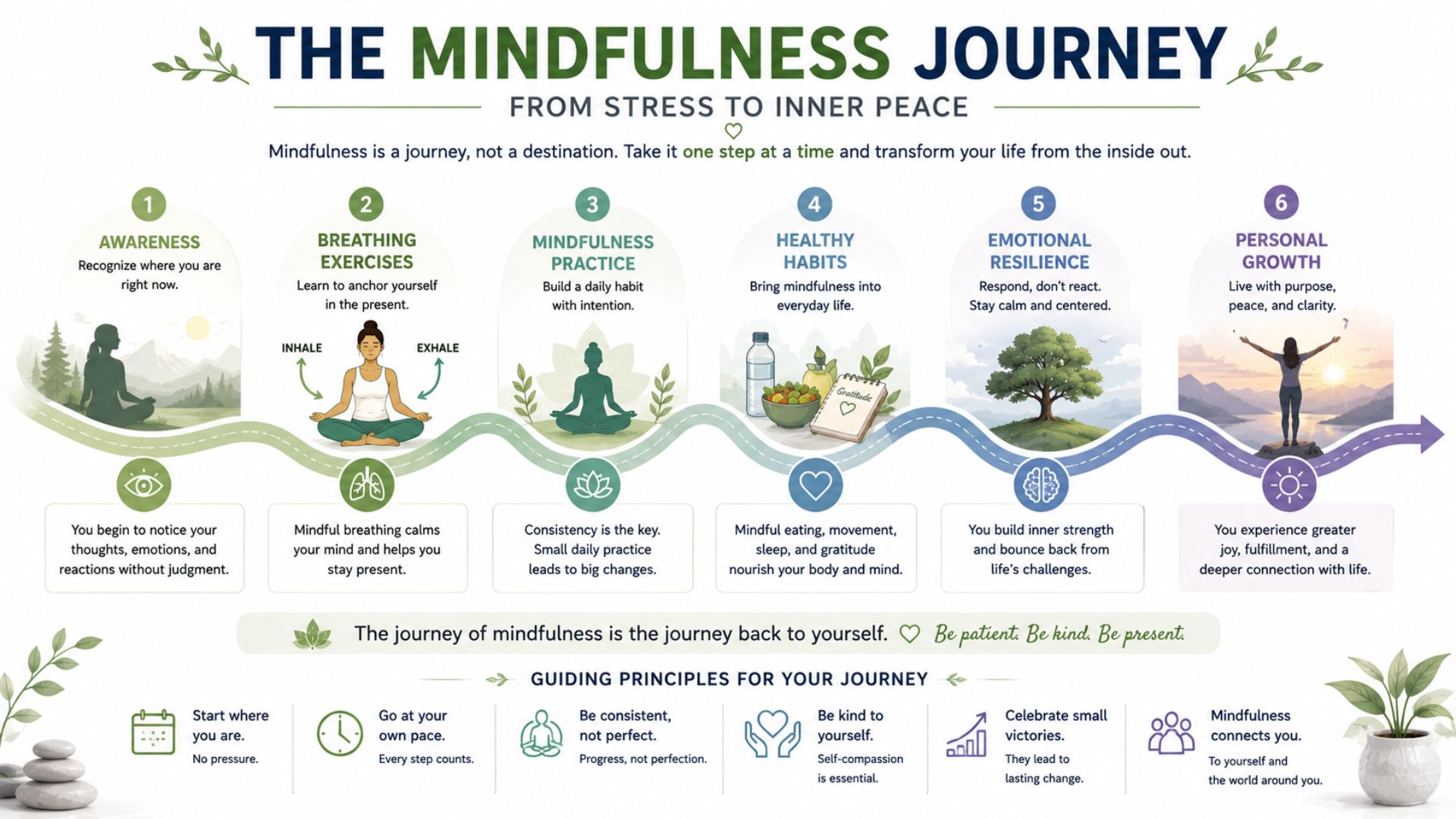
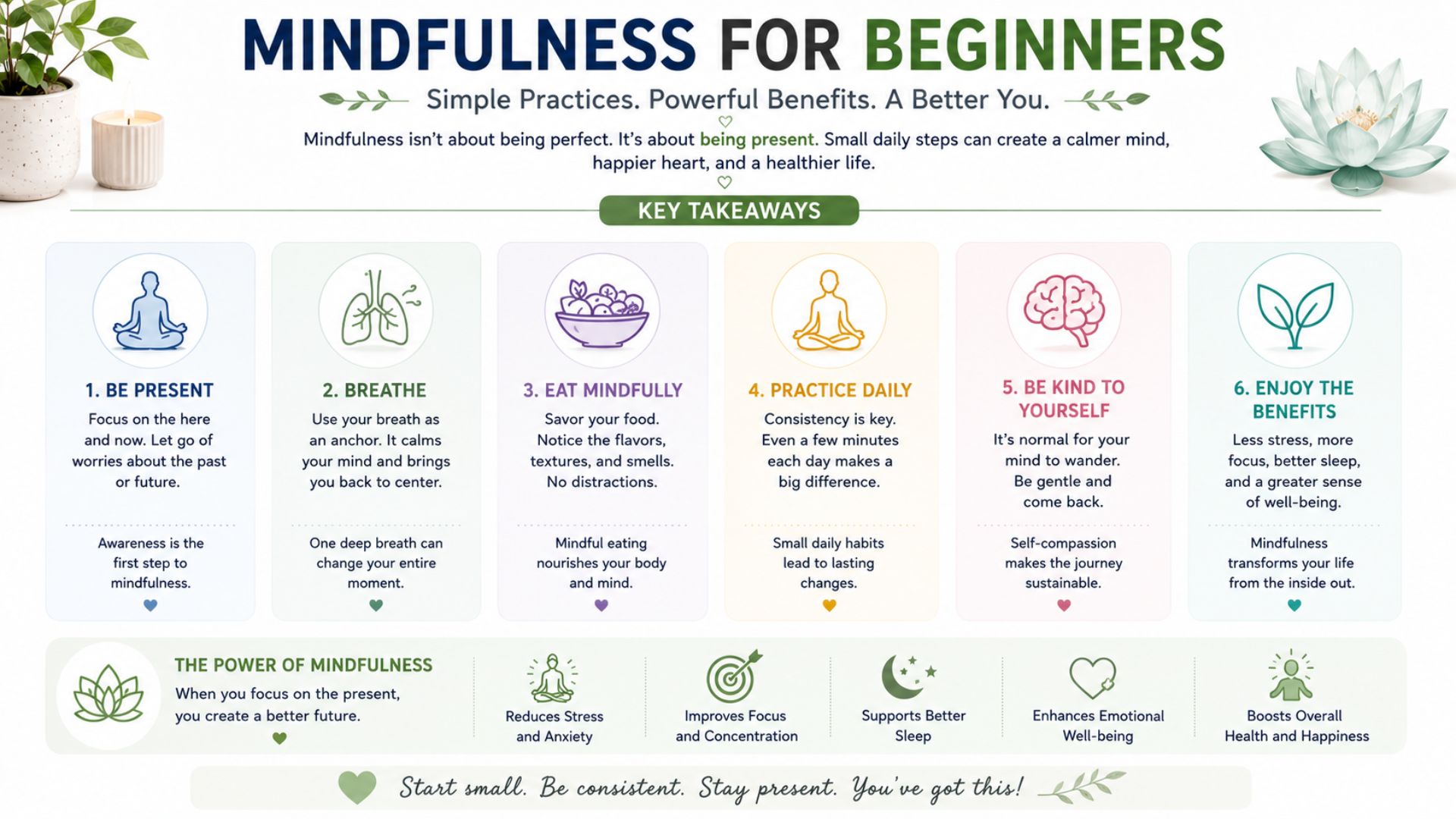
Mindfulness is the practice of paying attention to the present moment with openness, curiosity, and acceptance. Rather than dwelling on the past or worrying about the future, mindfulness teaches you to focus on what is happening right now.
Research has linked mindfulness to reduced stress, improved focus, better emotional regulation, and enhanced overall well-being. The good news is that mindfulness doesn’t require special skills, expensive equipment, or hours of practice each day. Anyone can begin developing mindfulness with simple techniques and daily habits.
In this ultimate guide, you’ll learn what mindfulness is, its benefits, practical exercises for beginners, and how to create a sustainable mindfulness routine.
What Is Mindfulness?
Mindfulness is the practice of intentionally bringing your attention to the present moment without judgment.
Instead of operating on autopilot, mindfulness encourages awareness of your:
- Thoughts
- Emotions
- Physical sensations
- Surroundings
- Behaviors
The goal is not to stop thinking but to observe thoughts without becoming overwhelmed by them.
For example, while drinking your morning coffee, mindfulness means noticing:
- The aroma
- The warmth of the cup
- The taste of each sip
- Your body’s sensations
Rather than scrolling through your phone or thinking about tomorrow’s tasks.
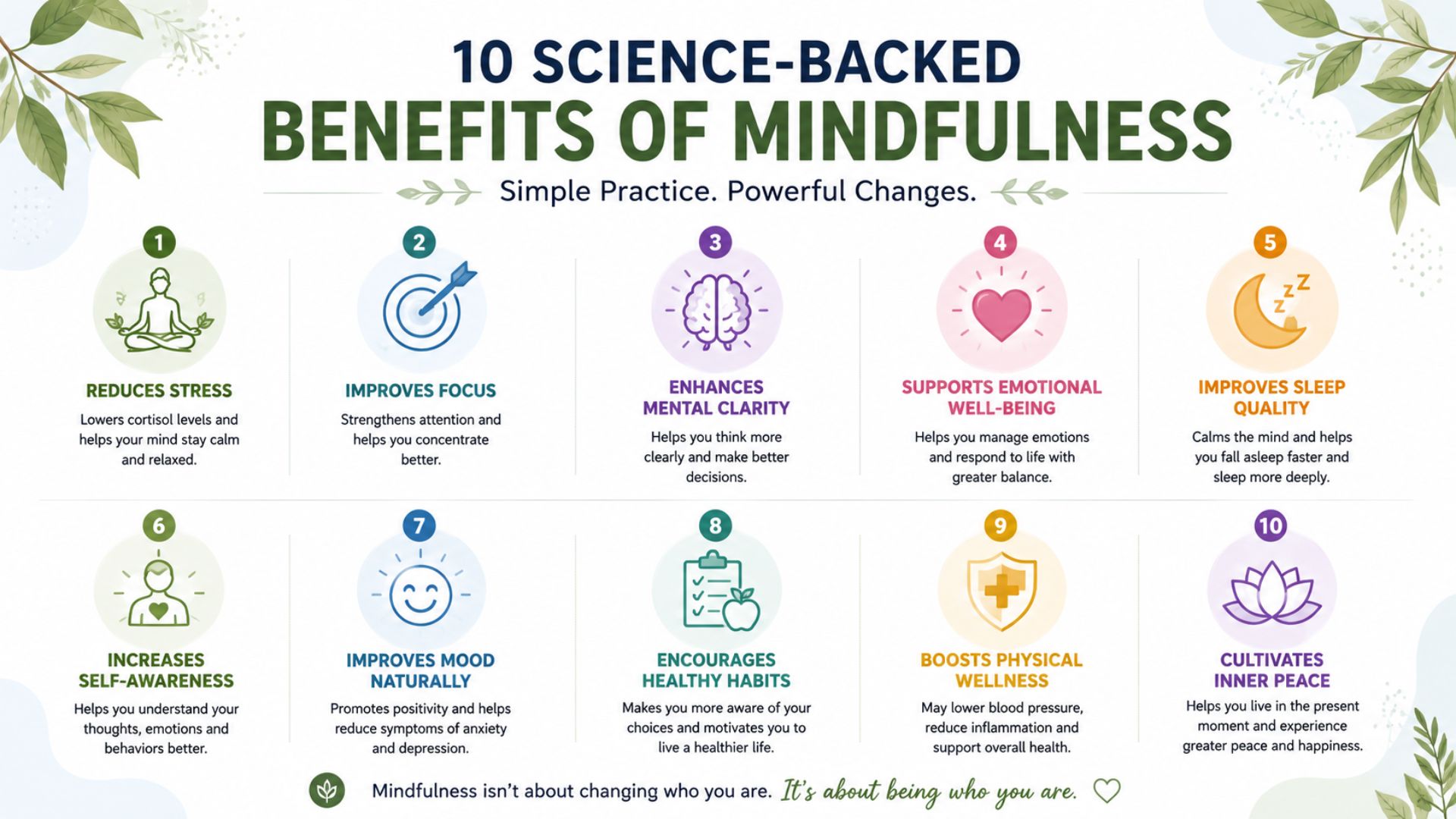
Benefits of Mindfulness
Reduces Stress
Mindfulness helps interrupt the cycle of worry and rumination that often fuels stress.
Improves Focus and Concentration
Regular mindfulness practice trains your brain to maintain attention for longer periods.
Enhances Emotional Well-Being
Mindfulness helps create awareness of emotions, allowing healthier responses to challenging situations.
Supports Better Sleep
Many people find mindfulness practices help quiet mental chatter before bedtime.
Encourages Healthier Habits
Mindful awareness often improves eating habits, exercise consistency, and overall lifestyle choices.
The Science Behind Mindfulness
Research has shown that mindfulness may help:
- Reduce perceived stress
- Improve attention control
- Increase self-awareness
- Support emotional resilience
- Enhance overall quality of life
Many healthcare providers, therapists, and wellness professionals now incorporate mindfulness-based practices into treatment programs.
The Science Behind Mindfulness
Research has shown that mindfulness may help:
- Reduce perceived stress
- Improve attention control
- Increase self-awareness
- Support emotional resilience
- Enhance overall quality of life
Many healthcare providers, therapists, and wellness professionals now incorporate mindfulness-based practices into treatment programs.
How to Start Practicing Mindfulness
1. Begin with One Minute
Start small.
Set a timer for one minute and simply observe your breathing.
Notice:
- Inhale
- Exhale
- Physical sensations
When your mind wanders, gently return attention to your breath.
2. Practice Mindful Breathing

Mindful breathing is one of the easiest beginner techniques.
Steps:
- Sit comfortably.
- Close your eyes.
- Focus on your breath.
- Notice each inhale and exhale.
- Return attention whenever distractions arise.
3. Use Mindful Observation
Choose an object nearby.
Spend one minute observing:
- Shape
- Texture
- Color
- Details
This exercise strengthens present-moment awareness.
4. Try Mindful Walking

While walking:
- Notice each step
- Feel your feet touching the ground
- Observe sounds around you
- Pay attention to your breathing
- Walking meditation is excellent for beginners who struggle with seated meditation.
5. Practice Mindful Eating

Mindful eating involves:
- Eating slowly
- Noticing flavors
- Paying attention to hunger signals
- Avoiding distractions
This habit can improve your relationship with food and reduce emotional eating.
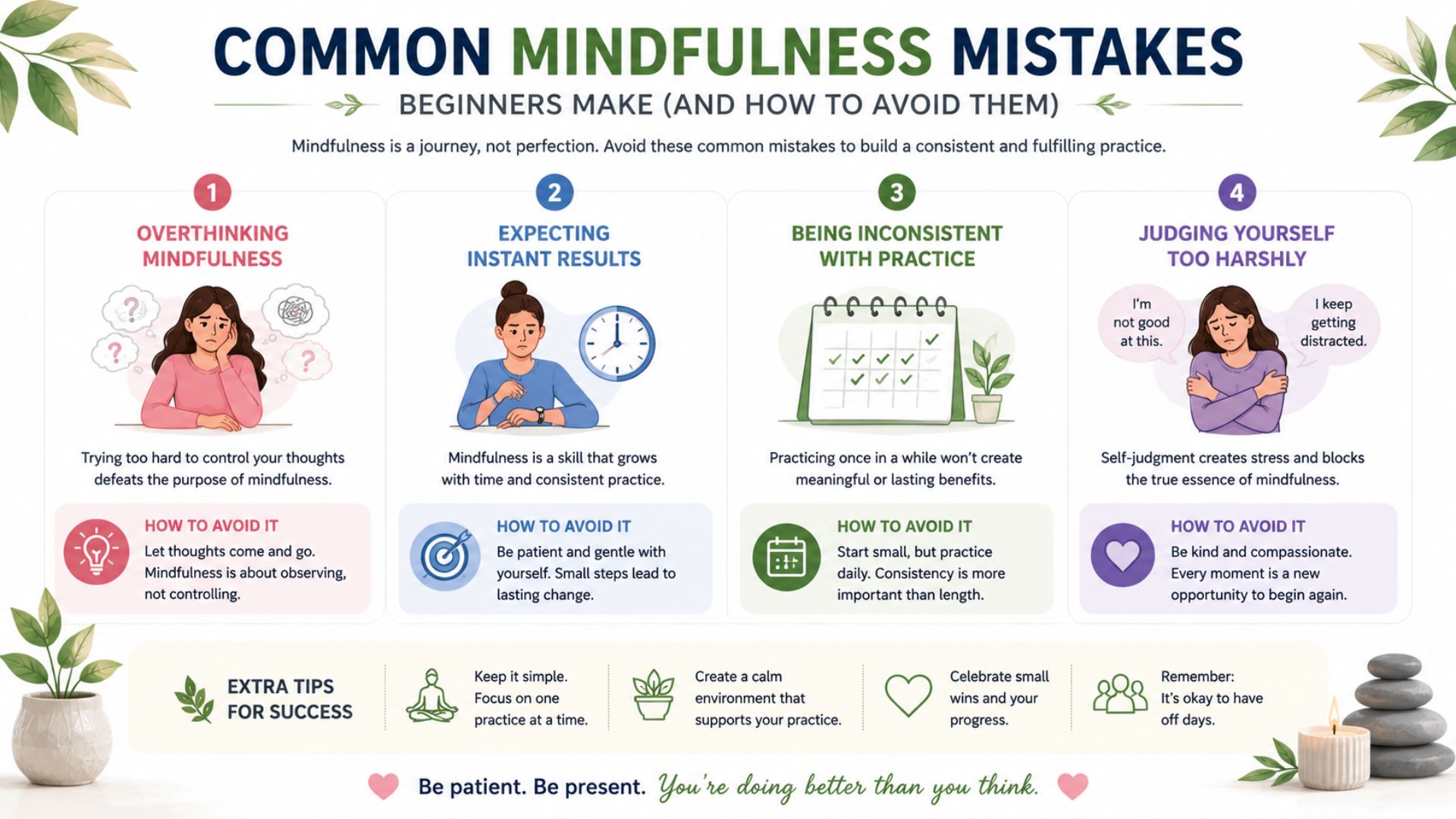
Common Mindfulness Mistakes Beginners Make
Expecting Immediate Results
Mindfulness is a skill developed through consistent practice.
Trying to Stop Thoughts
The goal isn’t to eliminate thoughts.
The goal is to observe them without judgment.
Practicing Inconsistently
Small daily sessions are more effective than occasional long sessions.
Being Too Critical
Mindfulness involves self-compassion.
Avoid judging yourself when your mind wanders.
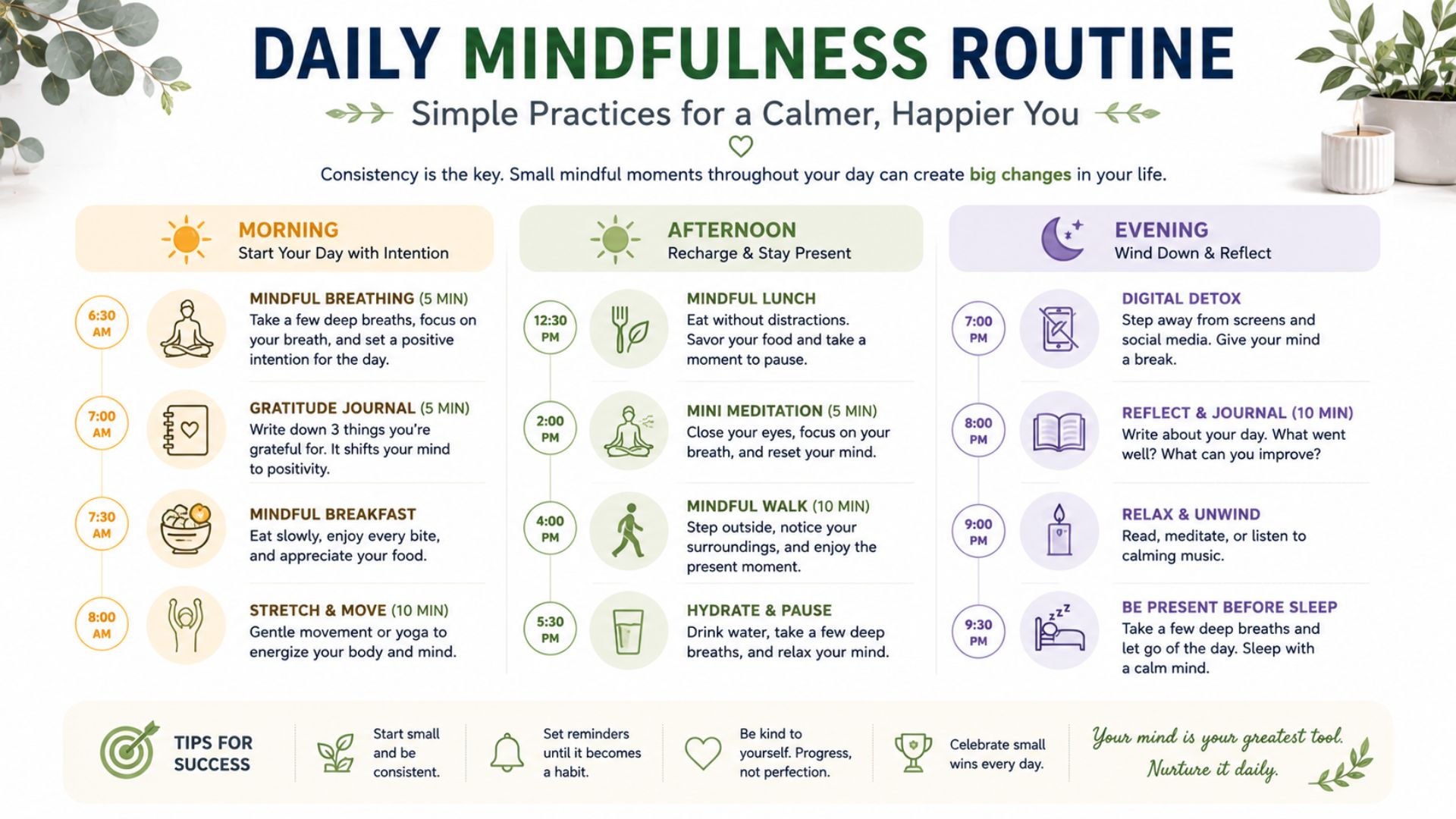
Creating a Daily Mindfulness Routine
Morning
- 5 minutes mindful breathing
- Gratitude practice
- Intentional goal setting
Afternoon
- Mindful lunch
- Brief breathing break
Evening
- Reflection journaling
- Guided meditation
- Digital detox
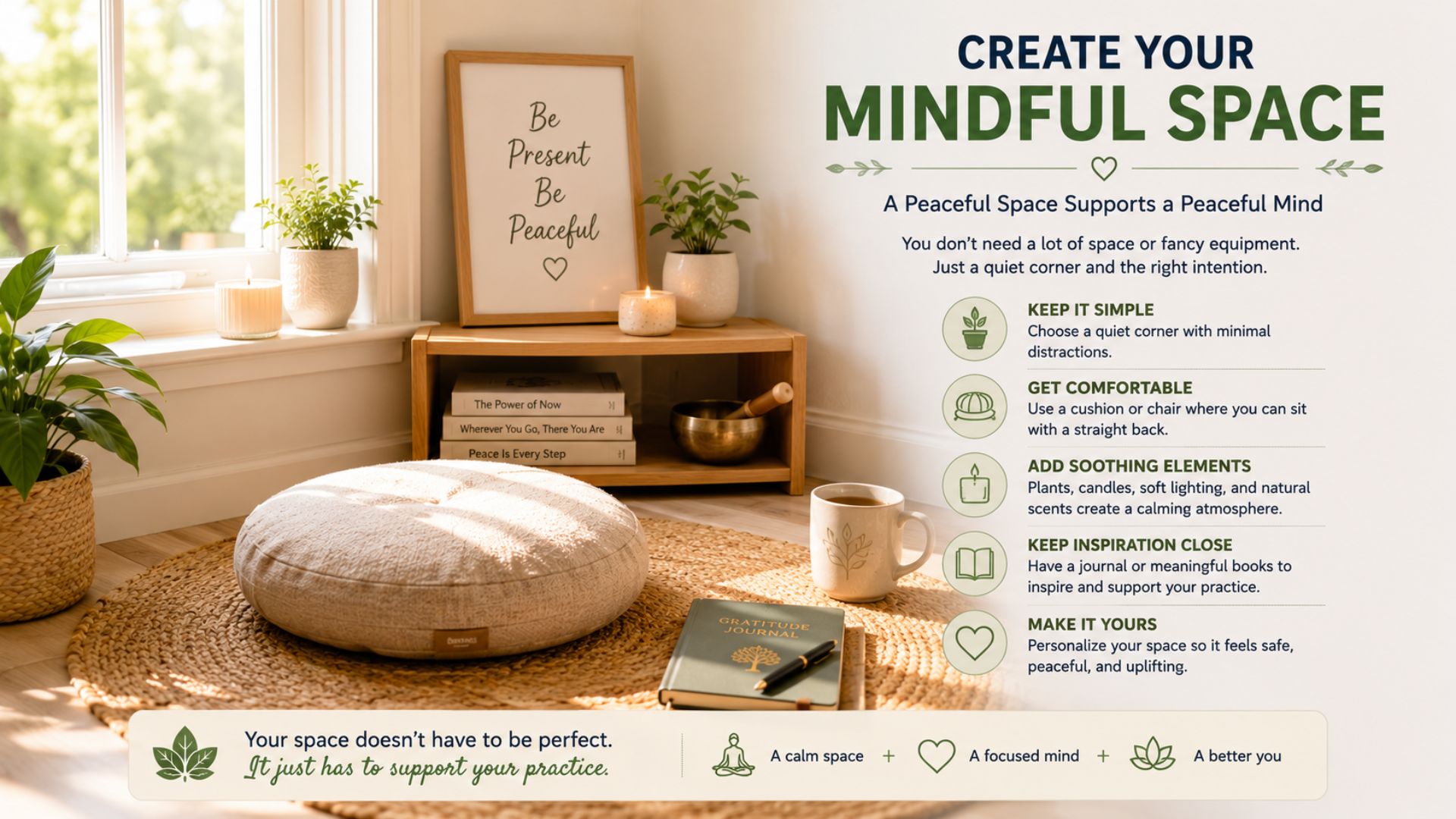
Best Tools for Mindfulness Beginners
Meditation Cushion
A comfortable meditation cushion helps maintain proper posture during practice.
Best Meditation Cushions For Beginners
Gratitude Journal
Writing down daily gratitude can strengthen mindfulness habits.
Best Gratitude Journals for Daily Reflection
Essential Oil Diffuser
Many people enjoy creating a relaxing environment during meditation.
Mindfulness Course
The Genius Switch: Audio-Based Brain Training for Focus and Mental Clarity (Recommended Programme)
If you find it difficult to stay focused, constantly battle distractions, or struggle with mental fatigue, The Genius Switch is a digital audio program designed to help you enter a calmer, more productive mental state.
Unlike traditional courses that require hours of learning, The Genius Switch uses specially engineered audio frequencies, including binaural beats and brainwave entrainment technology, to help guide your brain toward improved focus, creativity, and mental clarity. The program is designed to be simple: put on your headphones, press play, and allow the audio sessions to help quiet mental noise and improve concentration.
What Is Included?
When you purchase The Genius Switch, you’ll receive:
- Digital brainwave audio sessions
- Guided focus and creativity activation tracks
- Whole Brain Activation technology
- Instant digital access
- Bonus resources and guides
- 90-day money-back guarantee
The program is designed to fit easily into your daily routine and typically requires only 10–15 minutes per session.
Key Benefits
The creators of The Genius Switch claim that regular use may help:
- Improve focus and concentration
- Increase creativity and idea generation
- Reduce mental clutter and distractions
- Enhance productivity
- Improve memory and learning retention
- Support emotional balance
- Reduce stress and mental fatigue
The program is particularly popular among entrepreneurs, students, remote workers, writers, creatives, and professionals who need to perform mentally demanding tasks.
Who Is It Best For?
The Genius Switch may be a good fit if you:
- Struggle with focus and distractions
- Feel mentally overwhelmed or overstimulated
- Want to improve productivity naturally
- Enjoy meditation or mindfulness practices
- Want a simple daily mental reset routine
Why It Fits a Mindfulness Practice
Mindfulness is about becoming more present, aware, and mentally clear. Many users combine mindfulness exercises with focus-enhancing audio programs to create a more effective daily routine.
For example:
- Listen to The Genius Switch audio session.
- Practice 5 minutes of mindful breathing.
- Begin your most important task of the day.
This combination can help create a smoother transition from distraction to focused work.
Get Started
Price: Approximately $39 one-time payment with a 90-day money-back guarantee.
Note: Results vary from person to person. The Genius Switch is a self-improvement audio program and is not intended to diagnose, treat, cure, or prevent any medical condition.

Frequently Asked Questions
How long should beginners practice mindfulness?
Start with 1–5 minutes daily and gradually increase to 10–20 minutes.
Is mindfulness the same as meditation?
No. Meditation is one method of practicing mindfulness, but mindfulness can be practiced throughout daily life.
Can mindfulness reduce anxiety?
Many people find mindfulness helpful for managing stress and anxious thoughts by focusing attention on the present moment.
Do I need special equipment?
No. Mindfulness can be practiced anywhere without equipment, though tools such as journals and meditation cushions can enhance the experience.
How quickly will I notice benefits?
Some people notice increased calmness after a few sessions, while others experience benefits gradually over weeks of consistent practice.
Conclusion
Mindfulness is one of the simplest and most effective practices for improving mental clarity, reducing stress, and creating a healthier relationship with yourself and the world around you.
The key is consistency rather than perfection. Even a few minutes of mindfulness each day can help cultivate greater awareness, emotional resilience, and overall well-being.
Start small, stay patient, and remember that mindfulness is a lifelong journey rather than a destination.