
For many professionals, the day begins before they even get out of bed. A quick glance at the phone turns into checking emails, scrolling through notifications, reviewing calendar reminders, and mentally preparing for meetings that haven’t even started yet. Within minutes of waking up, the mind is already racing.
If this sounds familiar, you’re certainly not alone.
The modern workplace moves fast, and the constant flow of information can leave even highly organized professionals feeling overwhelmed. By the time breakfast is finished, stress levels are already climbing, attention is scattered, and the day can feel like a series of reactions rather than intentional choices.
The encouraging news is that creating a calmer, more focused morning doesn’t require waking up at 5 a.m., attending lengthy meditation sessions, or completely restructuring your lifestyle. In fact, one of the most effective mindfulness habits can be completed in just ten minutes.
A simple morning mindfulness routine can help you start the day with greater clarity, reduced stress, and a stronger sense of control. Over time, these small daily practices can positively influence everything from productivity and decision-making to emotional well-being and overall job satisfaction.
In this beginner-friendly guide, you’ll learn a practical 10-minute morning mindfulness routine designed specifically for busy professionals who want meaningful results without adding another complicated task to their schedule.
What Is Mindfulness?
Mindfulness is often misunderstood as simply sitting quietly and trying not to think. In reality, it’s much more practical than that.
At its core, mindfulness is the practice of paying attention to the present moment with awareness and without judgment. Rather than becoming caught up in regrets about the past or worries about the future, mindfulness encourages you to focus on what is happening right now.
This doesn’t mean eliminating thoughts or forcing yourself to feel calm all the time. Instead, it involves noticing your thoughts, emotions, physical sensations, and surroundings with curiosity and acceptance.
For professionals navigating deadlines, meetings, emails, and constant demands, this skill can be surprisingly valuable.
When practiced consistently, mindfulness may help:
- Reduce stress and anxiety
- Improve concentration and mental clarity
- Strengthen emotional intelligence
- Increase productivity
- Support better decision-making
- Promote healthier sleep patterns
One of the reasons mindfulness has become so popular among executives, entrepreneurs, and high-performing professionals is that the benefits don’t necessarily require large time commitments. Even a few intentional minutes each morning can make a noticeable difference in how you approach the rest of your day.
Why Busy Professionals Need Morning Mindfulness
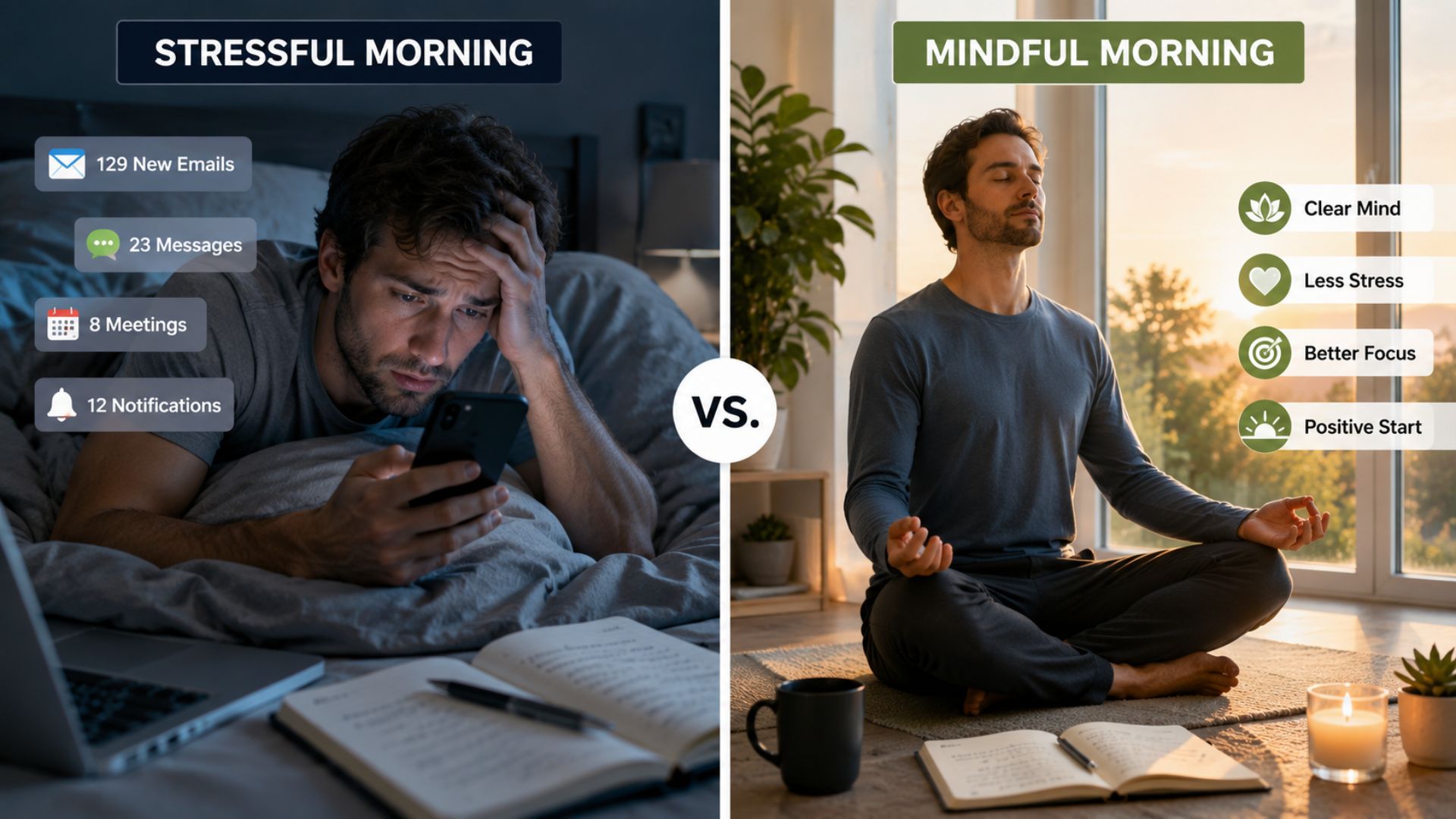
The way you begin your morning often influences how the rest of the day unfolds.
Think about what typically happens when you wake up and immediately dive into emails, news headlines, text messages, and social media updates. Before you’ve had a chance to establish your own priorities, other people’s demands are already competing for your attention.
This puts the brain into a reactive mode.
Instead of moving through the day with purpose, you may find yourself constantly responding to interruptions, putting out fires, and feeling mentally drained by lunchtime.
Morning mindfulness offers a different approach.
By dedicating just a few minutes to intentional awareness before engaging with external distractions, you create space to center yourself and establish a more focused mindset.
Gain Mental Clarity
Many professionals carry mental clutter from the moment they wake up. Upcoming presentations, unfinished projects, personal responsibilities, and countless to-do lists can create a sense of overload before the workday even begins.
A mindful start helps clear some of that mental noise, making it easier to prioritize what truly matters.
Lower Stress Levels
Stress often begins with the feeling that everything demands your attention at once. Mindfulness practices encourage slower breathing and greater awareness, which can activate the body’s natural relaxation response and help reduce feelings of tension.
Even a brief mindfulness session can create a noticeable shift in how you experience the day ahead.
Improve Productivity
Productivity isn’t always about working harder. More often, it’s about maintaining focus on the right tasks.
When your mind feels calm and organized, you’re less likely to become distracted by every notification, email, or unexpected interruption that appears throughout the day.
Enhance Emotional Regulation
Workplace challenges are inevitable. Difficult conversations, shifting priorities, and unexpected setbacks happen in every profession.
Mindfulness helps develop the ability to pause before reacting. Instead of responding impulsively in stressful situations, you’re better equipped to approach challenges thoughtfully and professionally.
Science-Backed Benefits of Mindfulness
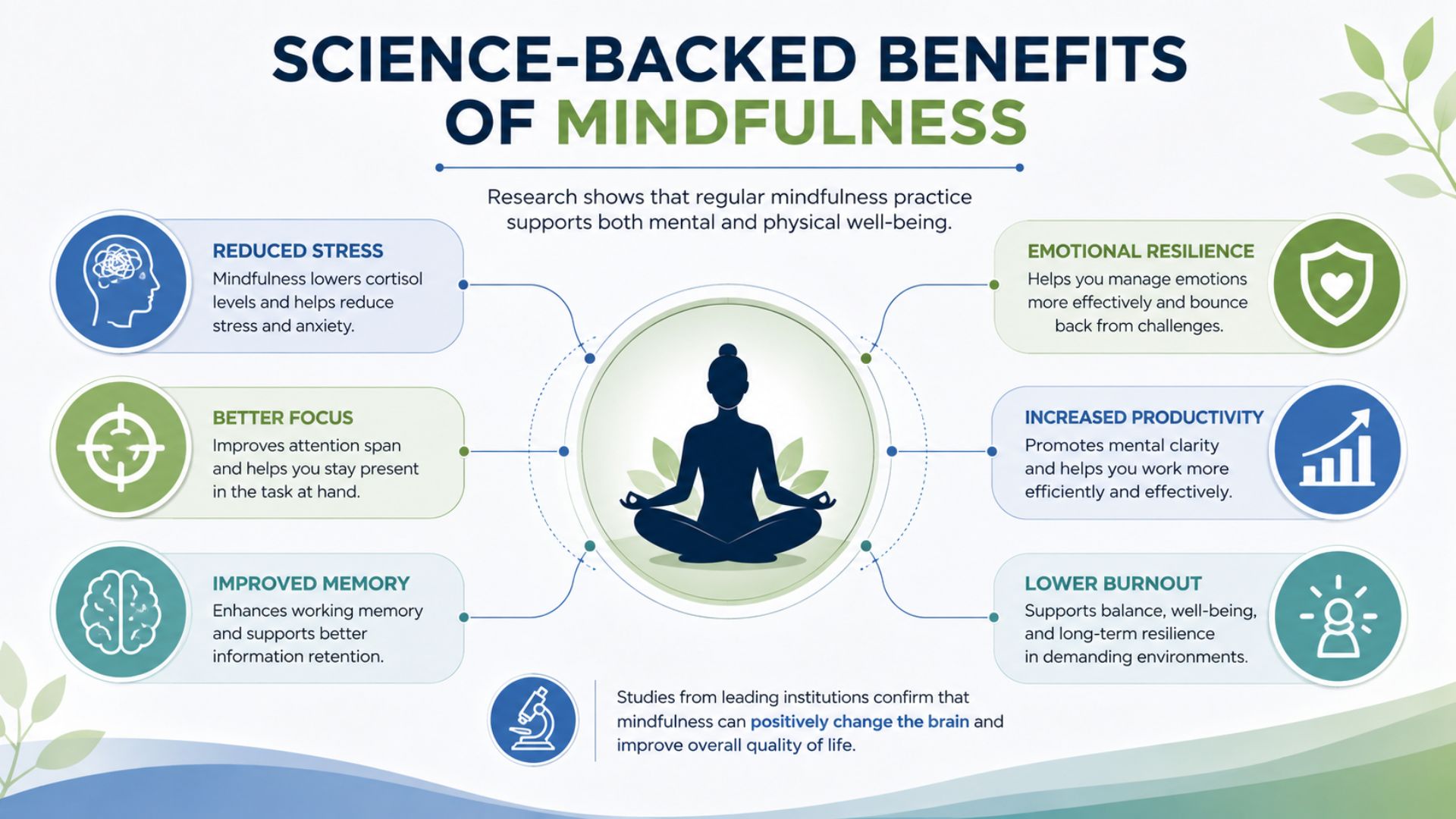
One reason mindfulness continues to gain attention among health professionals, psychologists, and workplace wellness experts is the growing body of research supporting its effectiveness.
Over the past several decades, numerous studies have explored how mindfulness influences mental performance, emotional well-being, and overall health. The findings consistently suggest that regular mindfulness practice can provide meaningful benefits across multiple areas of life.
Research has linked mindfulness practices to:
- Reduced symptoms of anxiety
- Improved memory retention
- Better attention and concentration
- Increased emotional resilience
- Enhanced job satisfaction
- Lower levels of burnout
These benefits are particularly relevant for professionals who spend much of their day making decisions, solving problems, managing teams, and navigating constant streams of information.
While mindfulness isn’t a magic solution that eliminates stress entirely, it can provide practical tools for handling pressure more effectively and maintaining focus in demanding environments.
For many busy professionals, that alone makes the investment of ten minutes each morning worthwhile.

The Perfect 10-Minute Morning Mindfulness Routine
One of the biggest misconceptions about mindfulness is that it requires a quiet retreat, expensive equipment, or a significant amount of free time. The reality is much simpler. A few intentional minutes can be enough to create a noticeable shift in your mindset before the workday begins.
The following routine was designed specifically for busy professionals who want a practical, sustainable habit that fits into real life. Whether you’re working from home, commuting to an office, or managing a packed schedule, these five steps can be completed in just ten minutes.
The goal isn’t perfection. It’s simply creating a calm and focused foundation for the day ahead.
Step 1: Mindful Awakening (1 Minute)
Before reaching for your phone, checking notifications, or mentally reviewing your to-do list, take a moment to pause.
As simple as it sounds, this first minute can significantly influence the tone of your morning.
Instead of immediately engaging with external demands, bring your attention inward. Notice your breathing. Pay attention to how your body feels. Observe your thoughts without trying to change them.
Ask yourself:
- How do I feel today?
- What physical sensations do I notice?
- What emotions are present right now?
- What kind of energy am I bringing into this day?
There are no right or wrong answers. The purpose is simply awareness.
Many professionals spend their entire day responding to external stimuli. Taking sixty seconds to check in with yourself first can help create a stronger sense of intentionality before the day begins.
Quick Tip
If possible, keep your phone on airplane mode or avoid looking at notifications during the first ten minutes of your morning. This small boundary can prevent your attention from being hijacked before you’ve had an opportunity to center yourself.
Step 2: Deep Breathing Exercise (2 Minutes)
Once you’ve taken a moment to wake up mindfully, it’s time to calm the nervous system through intentional breathing.
Breathing exercises are one of the quickest and most effective ways to reduce feelings of stress and improve mental clarity. They require no equipment, can be done anywhere, and often produce immediate benefits.
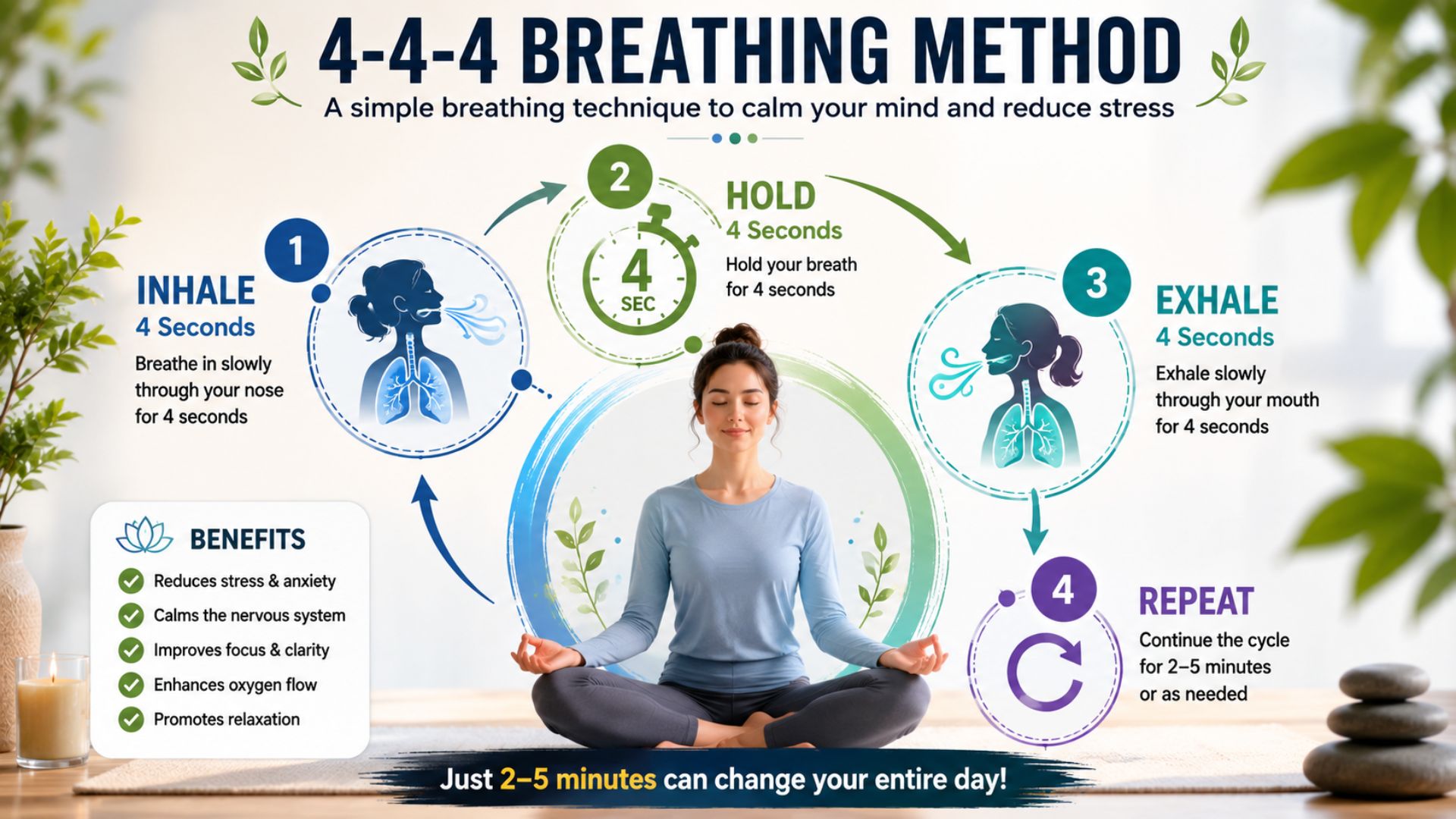
For this routine, try the simple 4-4-4 breathing method.
How to Practice It
- Inhale slowly through your nose for 4 seconds.
- Hold your breath for 4 seconds.
- Exhale gently through your mouth for 4 seconds.
- Repeat the cycle for approximately 2 minutes.
As you breathe, focus your attention on the sensation of air moving in and out of your body.
If your mind starts wandering toward work projects, meetings, or responsibilities, gently guide your attention back to your breathing.
This isn’t about forcing concentration. It’s about repeatedly returning your focus whenever it drifts.
Benefits of Deep Breathing
Regular breathing exercises may help:
- Reduce anxiety and nervous tension
- Improve oxygen delivery throughout the body
- Enhance concentration and alertness
- Lower feelings of stress and overwhelm
- Create a sense of calm before a busy day
Many people are surprised by how different they feel after just two minutes of intentional breathing. Sometimes the simplest practices have the greatest impact.
Step 3: Gratitude Practice (2 Minutes)

After calming your mind through breathing, shift your attention toward gratitude.
At first glance, gratitude may seem unrelated to productivity or professional performance. However, research and personal experience consistently suggest that focusing on positive aspects of life can help counterbalance the brain’s natural tendency to focus on problems and threats.
In a demanding work environment, it’s easy to become consumed by deadlines, challenges, and unfinished tasks. A brief gratitude practice helps broaden your perspective and reminds you of the resources, relationships, and opportunities already present in your life.
Take a moment to think of three things you’re genuinely grateful for.
They don’t need to be extraordinary.
Examples might include:
- Supportive family members
- Good health
- Career opportunities
- Personal achievements
- Friends and mentors
- A safe home
- Meaningful work
- Positive relationships with colleagues
The key is sincerity.
Rather than rushing through the exercise, spend a few seconds reflecting on why each item matters to you.
If possible, write your answers in a journal or notebook. The act of writing often deepens the experience and makes gratitude feel more tangible.
Over time, this simple habit can help create a more positive and resilient mindset, particularly during stressful periods.
Step 4: Mindful Meditation (3 Minutes)

Now that you’ve settled your breathing and shifted your mindset toward gratitude, spend a few minutes practicing mindful meditation.
This is often the step people find most intimidating, especially if they’ve never meditated before. Fortunately, mindfulness meditation is much simpler than many people imagine.
You don’t need to empty your mind.
You don’t need to stop thinking.
And you certainly don’t need to achieve some perfect state of calm.
Instead, sit comfortably and bring your attention to your breath.
Notice:
- The sensation of air entering your nostrils
- The feeling of air leaving your body
- The gentle rise and fall of your chest
- The rhythm of your breathing
At some point, your mind will wander.
That’s completely normal.
You may start thinking about an upcoming presentation, a client meeting, household responsibilities, or something that happened yesterday. This isn’t failure. It’s simply how the mind works.
When you notice your attention drifting, gently return your focus to your breath.
Each return is part of the practice.
Over time, this repeated process strengthens your ability to remain present and focused throughout the day.
Even a short three-minute meditation session can help create a greater sense of calm, clarity, and emotional balance before you begin work.
Step 5: Daily Intention Setting (2 Minutes)
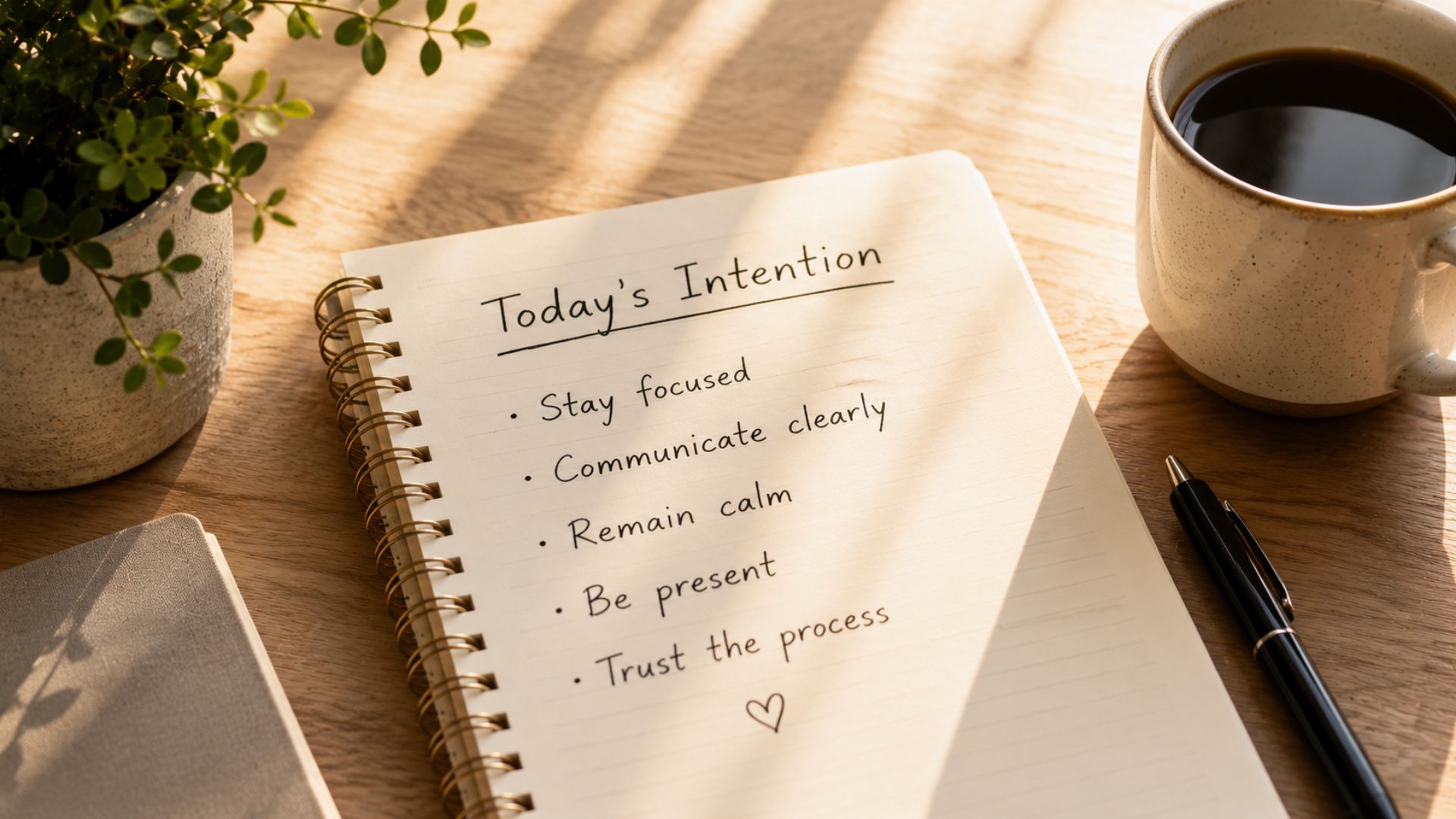
The final step is one of the most practical and powerful parts of the routine.
Before moving into the demands of the day, take two minutes to establish a clear intention.
Unlike a lengthy goal or complex productivity system, an intention is simply a guiding principle that influences how you want to show up throughout the day.
Think about what would make today successful beyond just checking tasks off a list.
Examples include:
- I will stay focused during meetings.
- I will respond calmly to challenges.
- I will prioritize my most important tasks.
- I will communicate clearly and respectfully.
- I will remain present during conversations.
- I will approach problems with patience and curiosity.
Choose one intention that feels meaningful and realistic.
You might write it down, repeat it silently, or place it somewhere visible throughout the day.
Intentions create direction. They help bridge the gap between awareness and action by reminding you how you want to respond when challenges inevitably arise.
By the time you’ve completed this final step, you’ve invested just ten minutes in your mental and emotional well-being—and you’ve already positioned yourself to approach the day with greater focus and purpose.
Learn about the 10 Benefits of Daily Mindfulness Practice Backed by Science
Sample 10-Minute Morning Mindfulness Schedule
If you’re wondering how all of these practices fit into a single routine, here’s a simple breakdown:
Time | Activity |
1 Minute | Mindful Awakening |
2 Minutes | Deep Breathing Exercise |
2 Minutes | Gratitude Practice |
3 Minutes | Mindful Meditation |
2 Minutes | Daily Intention Setting |
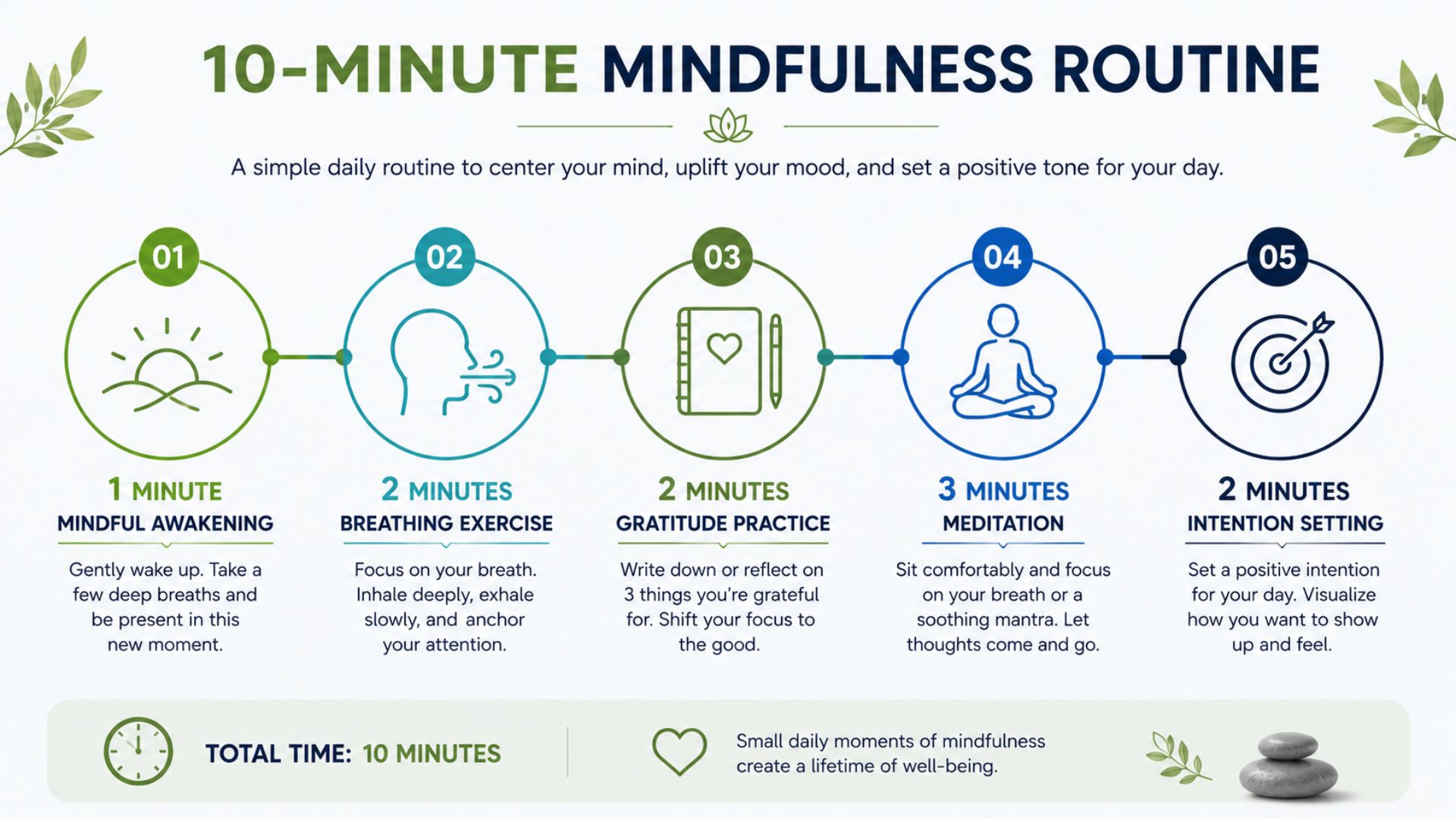 Total Time: 10 Minutes
One of the biggest advantages of this routine is its simplicity. There’s no complicated system to learn and no special equipment required. All you need is a few minutes of uninterrupted attention each morning.
For most professionals, that’s a small investment compared to the potential benefits of reduced stress, improved focus, and greater productivity throughout the day.
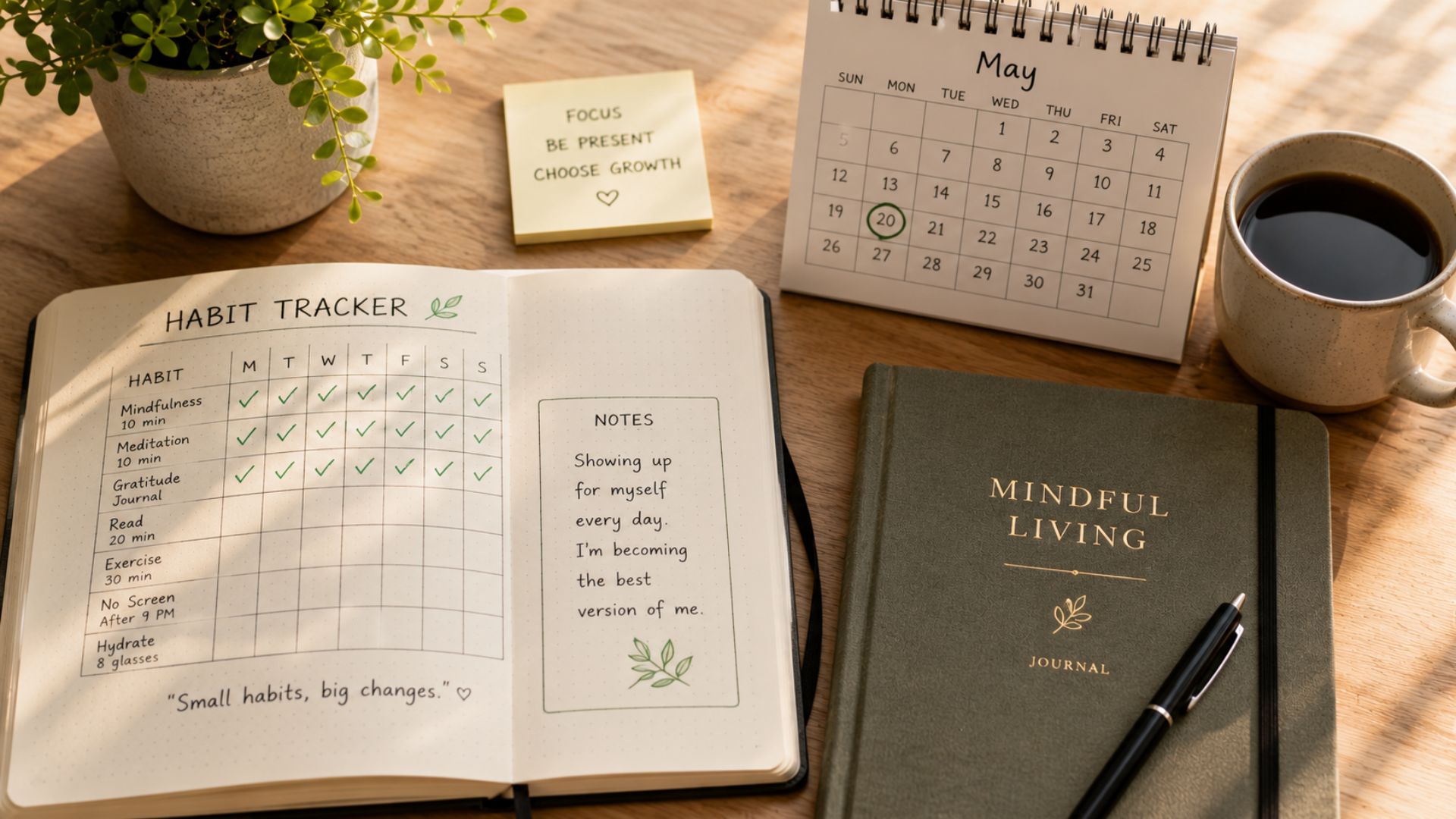
Tips for Building a Consistent Mindfulness Habit
Starting a mindfulness practice is usually the easy part. The real challenge is sticking with it long enough to experience meaningful results.
Like any worthwhile habit, mindfulness delivers the greatest benefits when practiced consistently. Fortunately, consistency doesn’t require perfection. In fact, most successful mindfulness practitioners aren’t those who meditate for hours every day—they’re the people who keep showing up, even when life gets busy.
If you’re new to mindfulness, these simple strategies can help you turn a short morning routine into a lasting habit.
Start Small
One of the most common mistakes people make is trying to do too much too soon.
They begin with ambitious goals, such as meditating for 30 minutes every morning, only to abandon the habit after a few days when their schedule becomes hectic.
A better approach is to focus on consistency rather than duration.
Even if you begin with just a few minutes each day, you’re building the foundation for a sustainable practice. Once the habit feels natural, you can always extend your sessions if you choose.
Remember, a short mindfulness routine performed regularly is far more valuable than a long session that happens only occasionally.
Use Habit Stacking
Building a new habit becomes much easier when you connect it to an existing one.
This technique, often called habit stacking, involves pairing a new behavior with something you already do automatically.
For example, you might practice mindfulness:
- Before drinking your morning coffee
- After brushing your teeth
- Immediately after making your bed
- Before opening your email inbox
- Before starting your workday
By linking mindfulness to a familiar routine, you reduce the mental effort required to remember it.
Create a Dedicated Space
You don’t need a meditation room or a perfectly quiet environment.
However, having a designated space can help reinforce the habit.
Choose a comfortable location where you can sit without distractions for a few minutes each morning. This might be a chair near a window, a corner of your bedroom, a spot in your home office, or even a quiet area on your balcony.
Over time, your brain begins associating that space with calmness and focus, making it easier to settle into the practice.
Track Your Progress
Many people find it motivating to monitor their consistency.
Consider using:
- A journal
- A habit-tracking app
- A mindfulness app
- A simple calendar
Checking off each completed session can provide a sense of accomplishment and help reinforce positive behavior.
Tracking also allows you to notice patterns. For example, you may discover that mindfulness feels easier on certain days or that your stress levels improve when you’re more consistent.
Focus on Consistency
It’s worth repeating because it’s so important: consistency matters more than perfection.
There will be mornings when you’re tired, traveling, running late, or simply not in the mood.
That’s normal.
Missing a day doesn’t erase your progress. What matters most is returning to the practice as soon as possible.
Ten minutes each day, practiced consistently over months and years, can have a far greater impact than occasional bursts of motivation followed by long periods of inactivity.
Common Mistakes Beginners Make
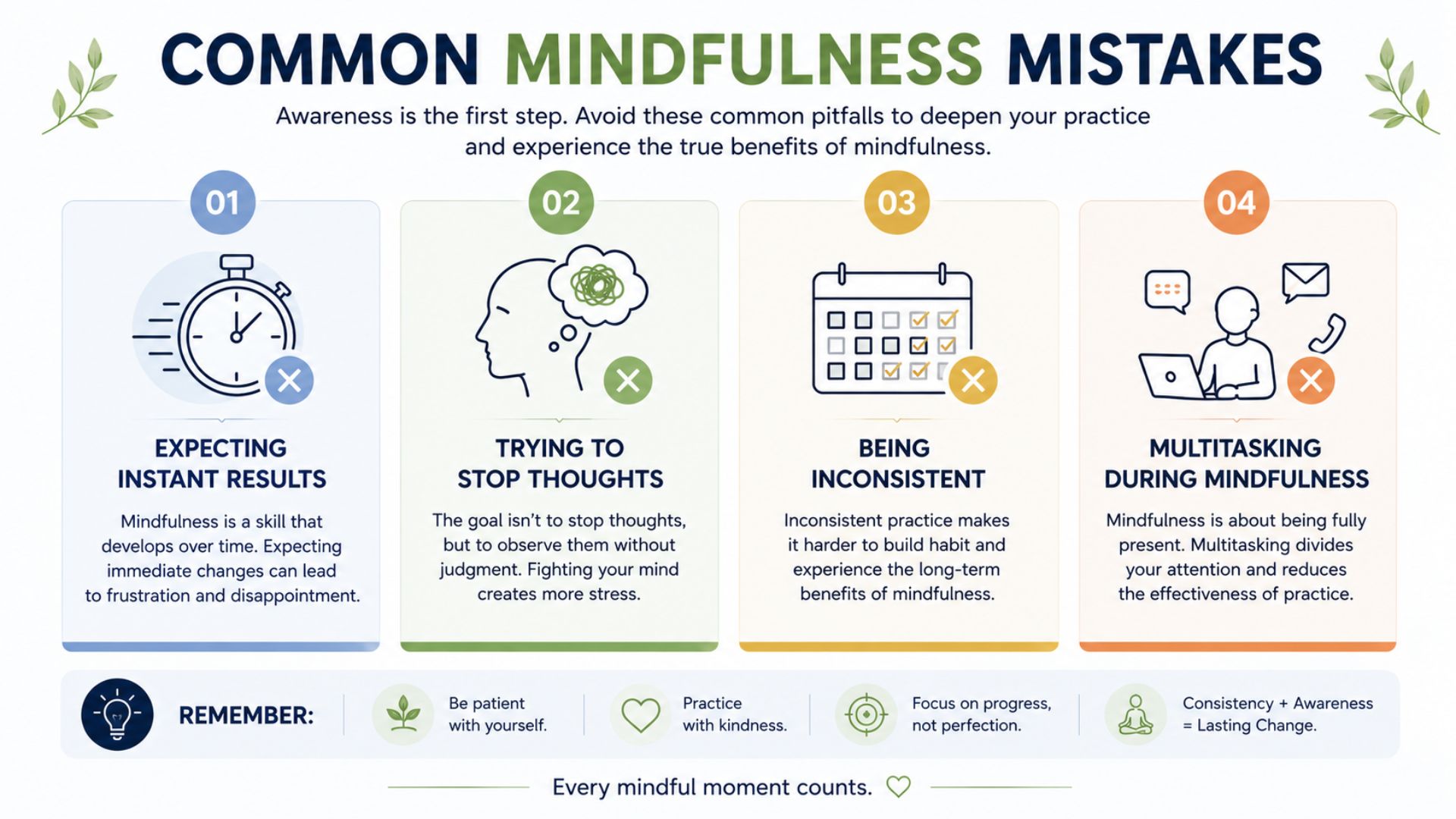
Mindfulness is simple, but that doesn’t mean it’s always easy.
Many beginners become frustrated because they expect immediate mastery or misunderstand what the practice is supposed to feel like.
If you’re just getting started, being aware of these common mistakes can help you avoid unnecessary discouragement.
Expecting Immediate Results
We live in a culture that often expects quick results.
Because of that, some people try mindfulness for a few days and assume it’s not working when they don’t experience dramatic changes.
The truth is that mindfulness is a skill, much like exercising a muscle. The benefits tend to develop gradually through consistent practice.
While some people notice reduced stress or improved focus within a few days, deeper changes often emerge over weeks or months.
Patience is an important part of the process.
Trying to Stop Thoughts
This may be the most widespread misconception about meditation.
Many beginners believe mindfulness means clearing the mind completely or preventing thoughts from occurring.
In reality, thoughts are a normal and unavoidable part of being human.
The goal isn’t to eliminate thinking.
The goal is to notice thoughts when they arise and gently return your attention to the present moment.
Even experienced meditators experience distractions. What changes over time is their ability to recognize those distractions without becoming completely absorbed by them.
Being Inconsistent
Like any habit, mindfulness produces the best results when practiced regularly.
Completing one long session every few weeks is unlikely to create lasting benefits.
Short, consistent sessions are usually much more effective.
Even on busy days, maintaining the habit with a brief practice can help preserve momentum and strengthen long-term commitment.
Multitasking During Mindfulness
In today’s fast-paced world, multitasking is often treated as a productivity skill.
Mindfulness works differently.
The practice is most effective when it receives your full attention.
Trying to meditate while checking messages, responding to emails, watching television, or completing other tasks reduces the quality of the experience.
For just ten minutes, give yourself permission to focus on a single thing.
Your mind will thank you for it.
Recommended Mindfulness Products on Amazon

While mindfulness itself doesn’t require any equipment, certain tools can make your practice more comfortable, enjoyable, and sustainable.
If you’re interested in enhancing your morning routine, the following products are commonly used by mindfulness practitioners.
Meditation Cushion
A comfortable seating position can make a significant difference, especially if you plan to meditate regularly.
A quality meditation cushion may help:
- Improve posture
- Increase comfort
- Reduce physical distractions
- Support longer meditation sessions
Sunrise Alarm Clock
The way you wake up can influence the rest of your morning.
Unlike traditional alarms that rely on sudden noise, sunrise alarm clocks gradually increase light levels to create a gentler waking experience.
Potential benefits include:
- A more natural wake-up process
- Reduced morning stress
- Better support for healthy sleep patterns
- A calmer transition into your mindfulness routine
Guided Meditation Journal
Journaling pairs naturally with mindfulness.
A guided meditation journal can provide structure and help you reflect on your experiences over time.
Benefits may include:
- Tracking mindfulness progress
- Reinforcing gratitude habits
- Increasing self-awareness
- Encouraging greater consistency
Noise-Canceling Headphones
For professionals who live in busy households, urban environments, or shared spaces, distractions can be a challenge.
Noise-canceling headphones can help create a more focused environment for mindfulness practice.
Potential advantages include:
- Reduced external distractions
- Improved meditation experiences
- Greater focus during work sessions
- Enhanced concentration throughout the day
Affiliate CTA
Browse highly rated noise-canceling headphones and compare features before making a decision.
Recommended ClickBank Products
Many people who practice mindfulness also explore personal development resources designed to support focus, self-awareness, and goal achievement.
The following programs are frequently promoted within the personal growth space.
The Genius Wave
The Genius Wave is a brain optimization and focus-enhancement program that has gained attention within the personal development community.
Potential benefits often highlighted include:
- Improved concentration
- Greater mental clarity
- Enhanced productivity habits
- Better focus during daily activities
As with any personal development product, individual experiences may vary.
Numerologist
Numerologist is a self-discovery program that combines personal reflection with insights intended to help users better understand themselves and their life paths.
Many individuals interested in mindfulness and personal growth explore programs like this as part of a broader self-awareness journey.
Manifestation Magic
Manifestation Magic is designed for individuals who are interested in mindset development, goal setting, and personal transformation.
The program focuses on helping users align their thinking with desired outcomes and long-term goals.
For those already practicing mindfulness, mindset-focused programs can sometimes complement existing personal development efforts.

Frequently Asked Questions
Is 10 minutes of mindfulness enough?
Yes.
While longer mindfulness sessions can provide additional benefits, consistency is far more important than duration. Practicing mindfulness for just ten minutes each day can lead to meaningful improvements in stress management, focus, emotional awareness, and overall well-being over time.
Can beginners practice mindfulness?
Absolutely.
In fact, this routine was specifically designed with beginners in mind. The exercises are simple, practical, and easy to follow, even if you’ve never practiced mindfulness or meditation before.
The most important thing is simply getting started.
Should I meditate before or after coffee?
Many mindfulness practitioners and wellness experts recommend practicing before caffeine whenever possible.
Meditating before your morning coffee allows you to experience a naturally calm and focused state without additional stimulation. However, if your schedule works better with coffee first, consistency is ultimately more important than timing.
What if I miss a day?
Don’t worry about it.
Missing one day doesn’t undo your progress.
The most effective approach is to simply resume your practice the following day. Long-term consistency matters far more than maintaining a perfect streak.
How long before I notice results?
Everyone’s experience is different.
Some people notice reduced stress, greater calmness, or improved focus within a few days. For others, the benefits emerge more gradually over several weeks of consistent practice.
The key is approaching mindfulness as a long-term habit rather than a quick fix.

Conclusion
A productive morning doesn’t require waking up before sunrise, following an elaborate routine, or spending hours in meditation.
For busy professionals, even a simple ten-minute mindfulness practice can create meaningful improvements in focus, productivity, stress management, and emotional resilience.
The beauty of mindfulness lies in its simplicity.
You don’t need special skills, expensive equipment, or large blocks of free time. All you need is a willingness to pause, pay attention, and begin your day with greater intention.
The ten-minute routine outlined in this guide provides a practical framework for doing exactly that. By incorporating mindful awakening, breathing exercises, gratitude, meditation, and intention setting into your mornings, you create an opportunity to start each day from a place of clarity rather than chaos.
Most importantly, remember that mindfulness is not about perfection.
There will be busy mornings. There will be distractions. There will be days when the practice feels easier than others.
What matters is continuing to return to it.
Start tomorrow with just ten intentional minutes. Over time, those small moments of awareness can compound into something much larger—a calmer mind, stronger focus, greater resilience, and a more balanced, productive life.